Ghost Signs, Ghost Town, and a Snowshoe to a Sad Cemetery

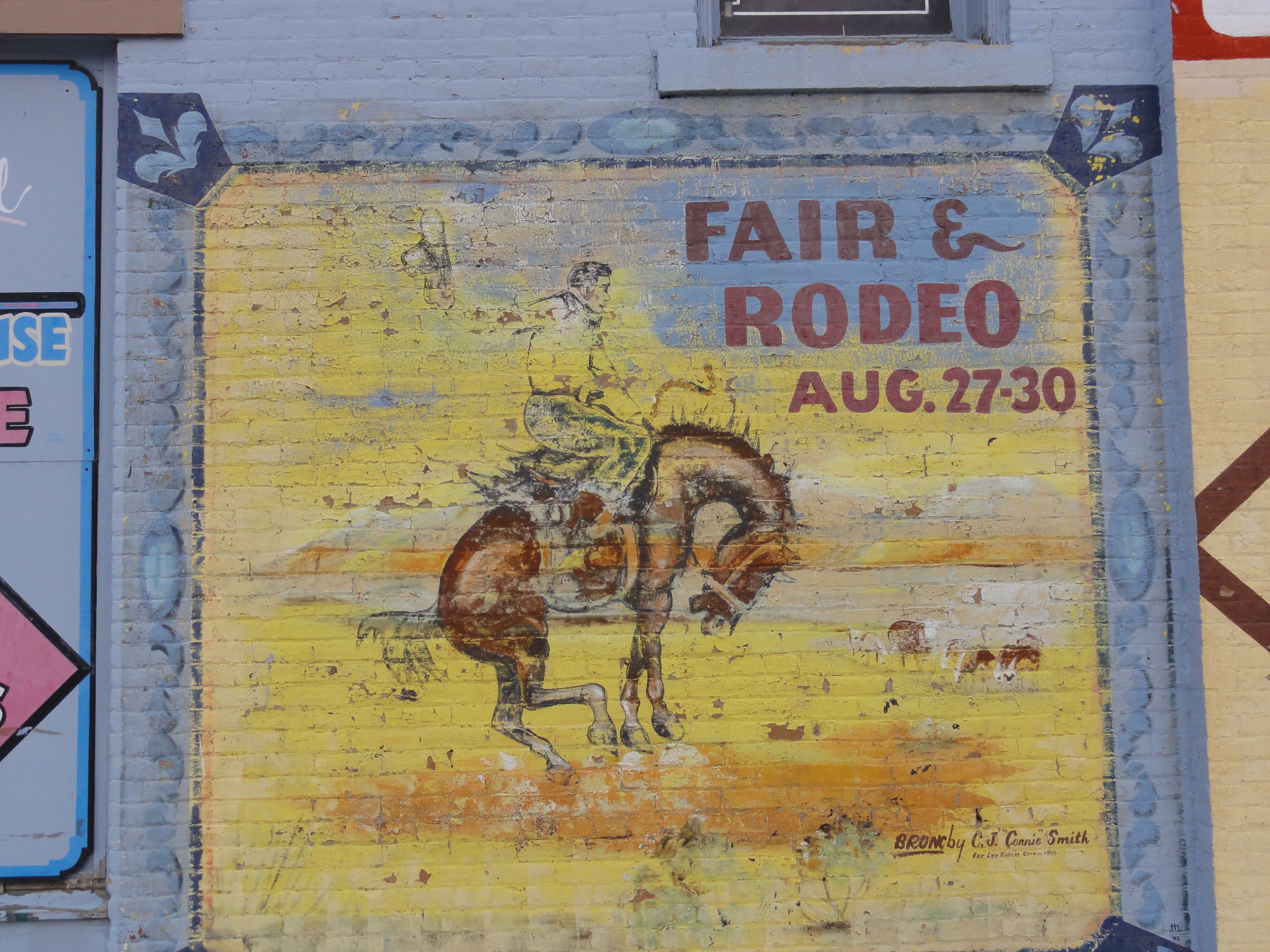
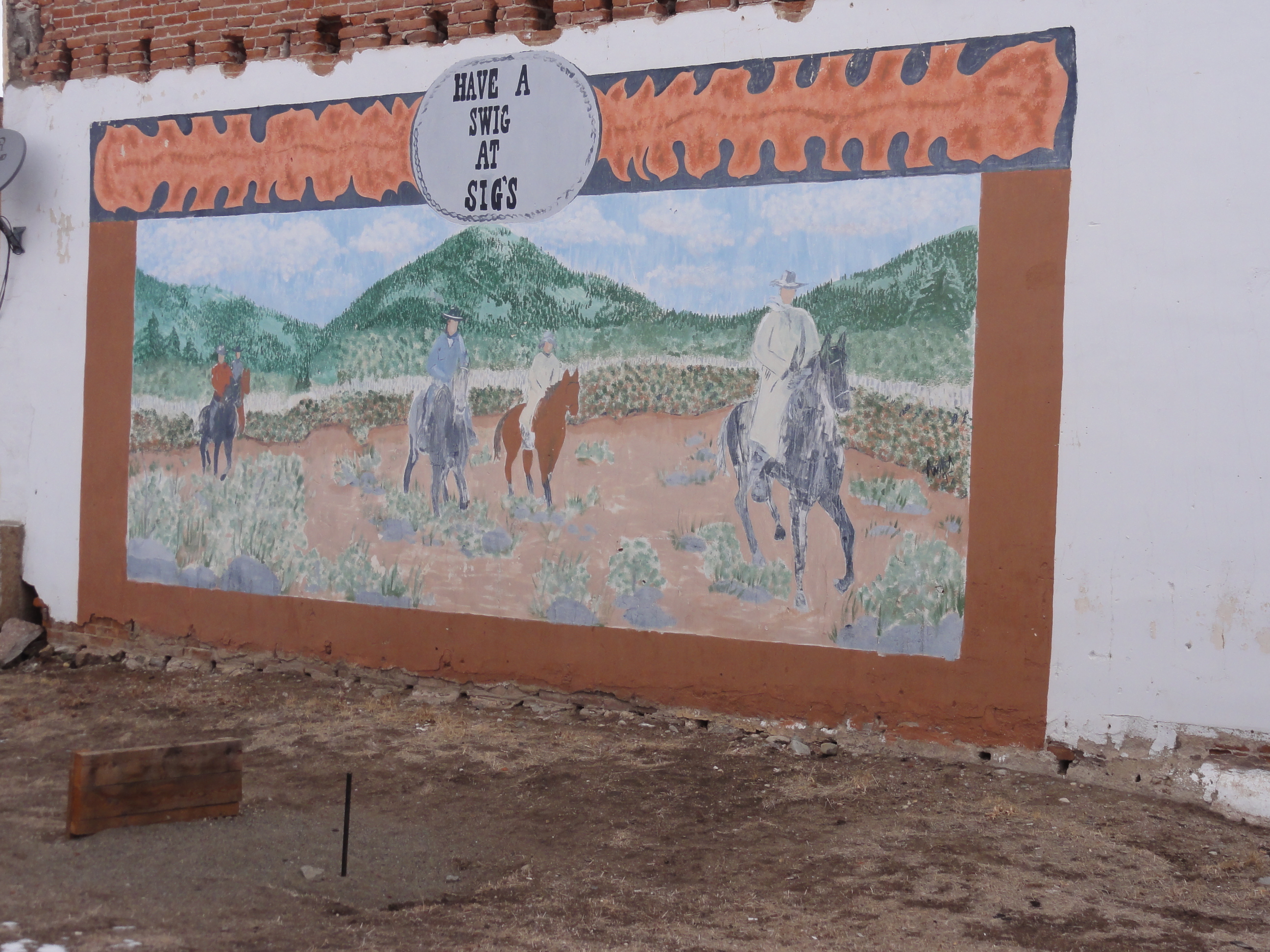
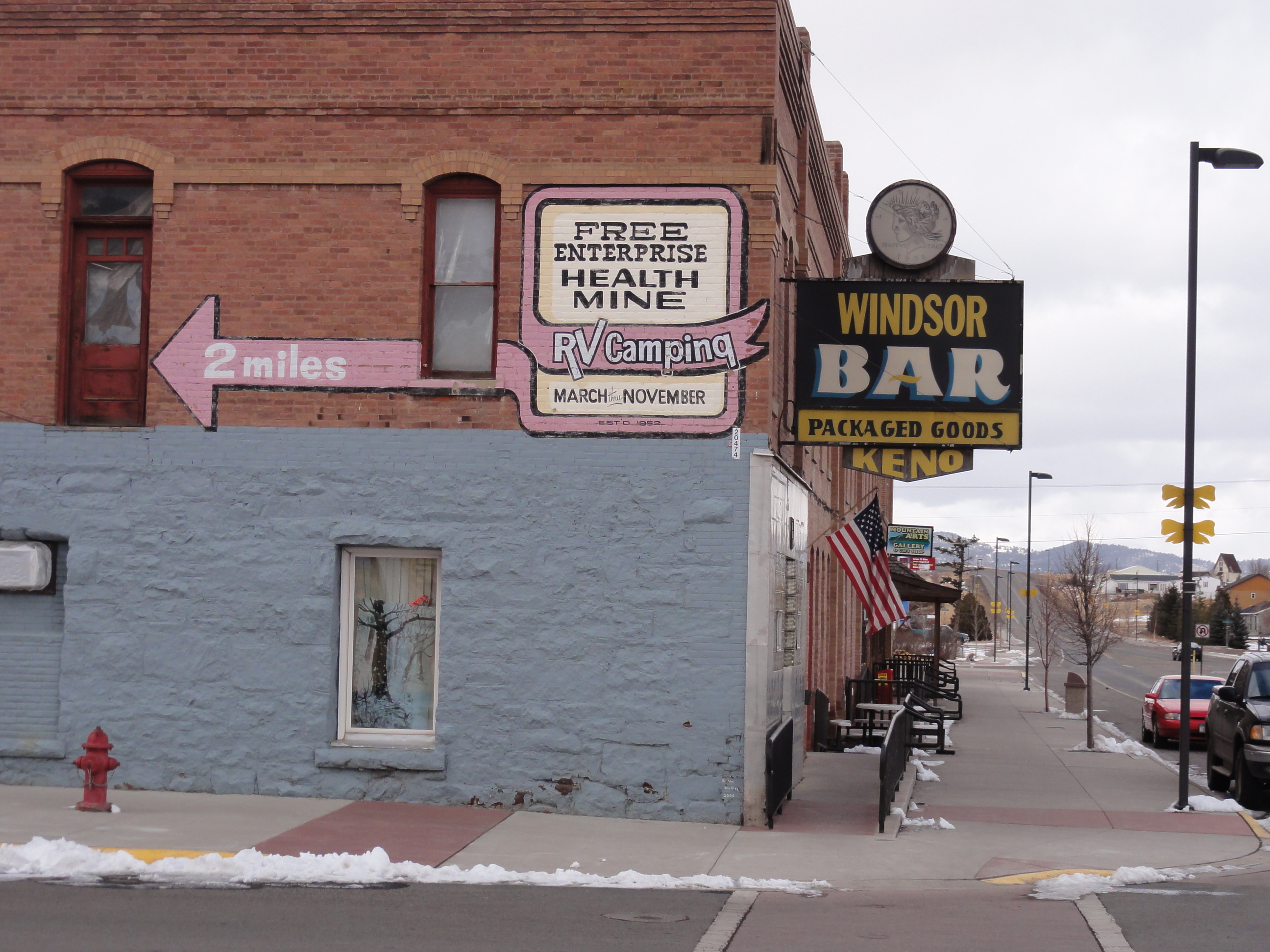
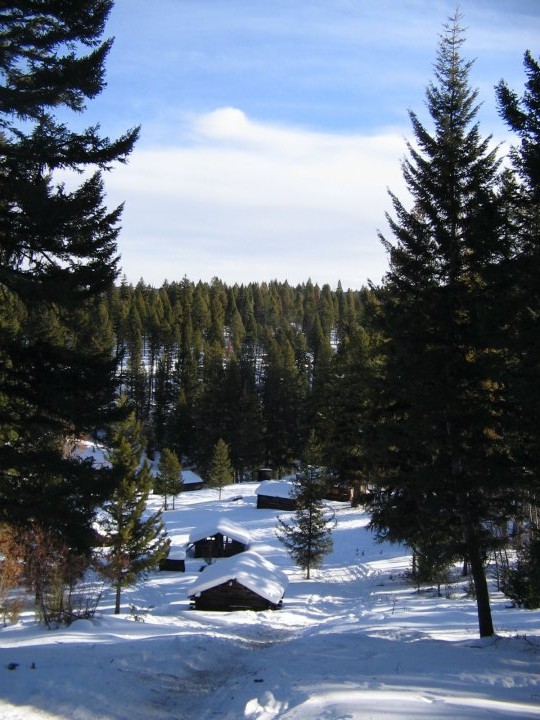
Today we headed for the ghost town of Elkhorn so that we could snowshoe to the  old Elkhorn cemetery, which is on a hilltop about a mile outside of town.  The nearest town to Elkhorn is Boulder, Montana, a little town with – I noticed today – some great old signs:

Not sure how old this sign is, but you can still go to the Boulder Rodeo at the end of August

Sig's Bar is no longer there, but this great sign lives on.

The "Health Mine" is actually a radon mine: good for your arthritis. That's what they say, anyway. Not planning to spend too much time there, myself.

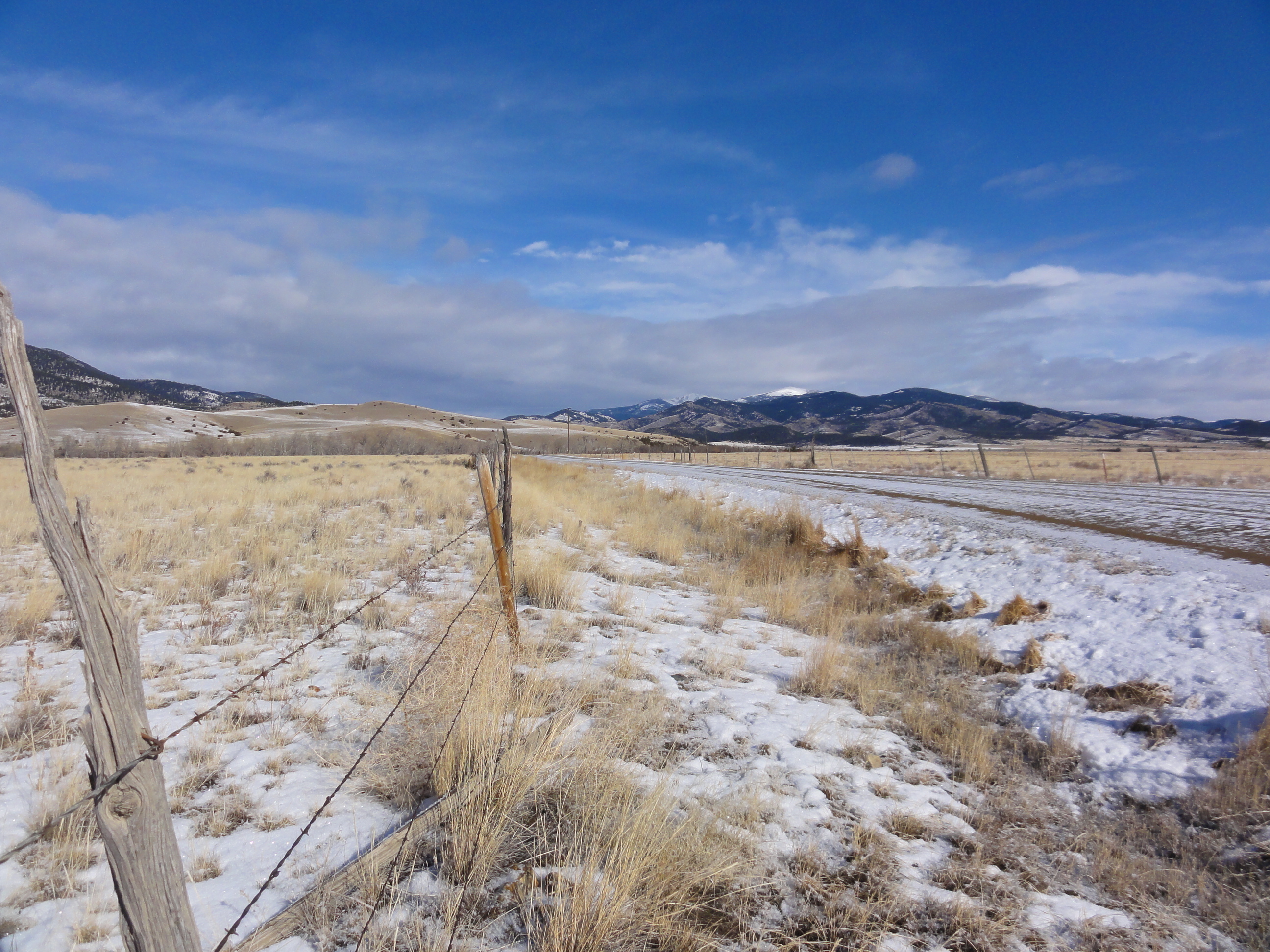
The country outside of Boulder is pure, wonderful, Montana:

Antelope are common, for sure, but this group struck me as particularly handsome:

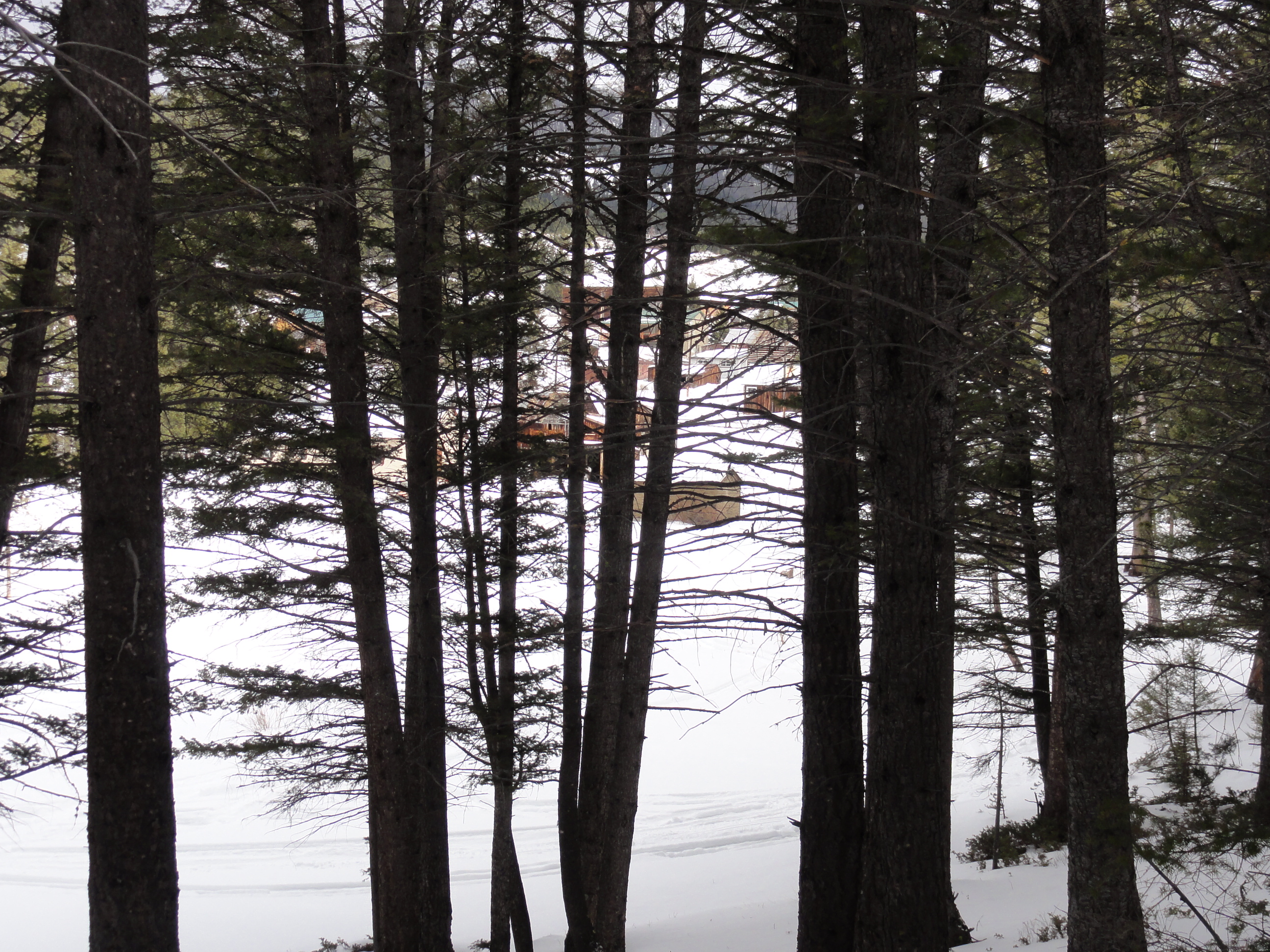
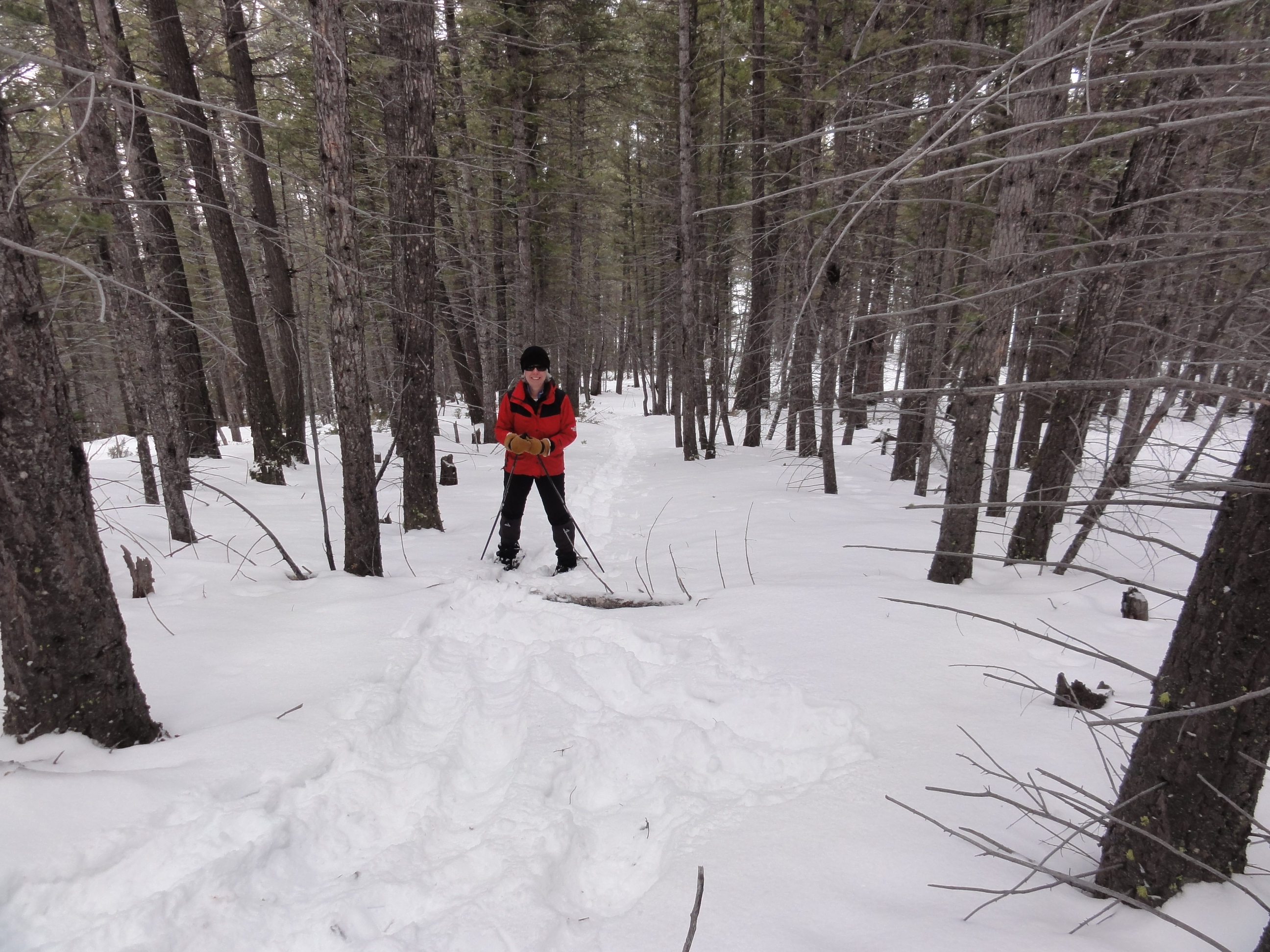
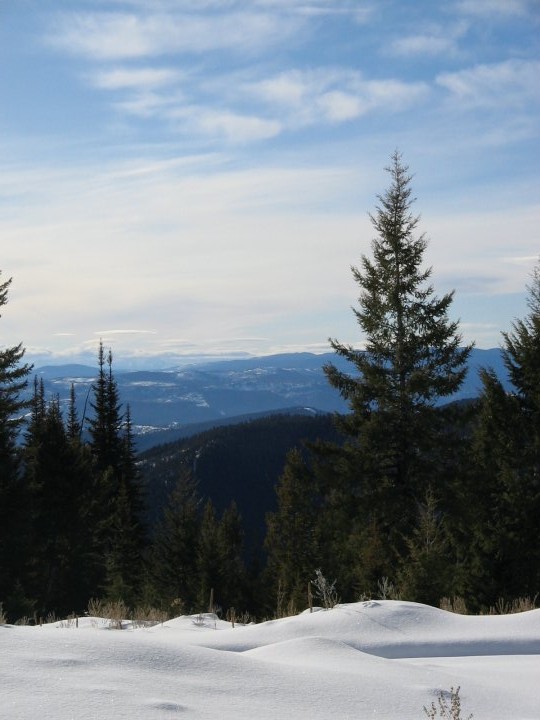
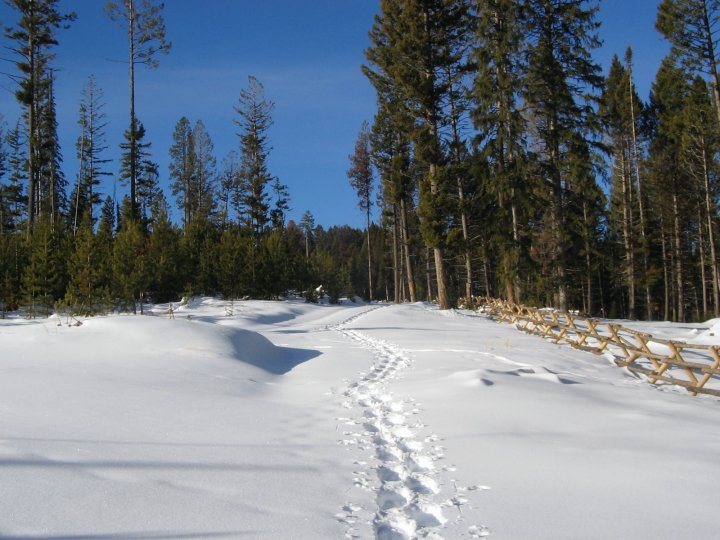
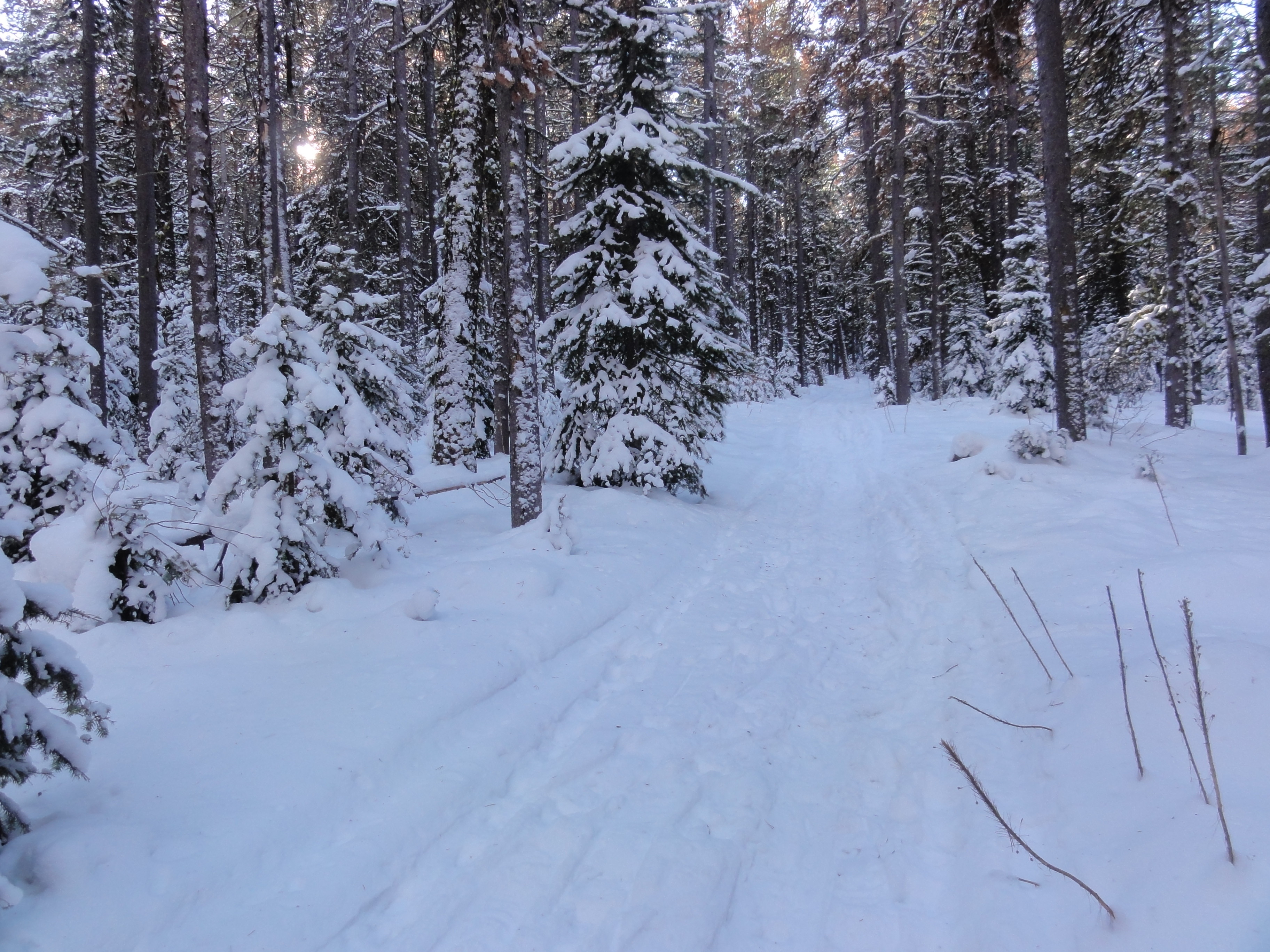
Elkhorn is at about 6500 feet, so there was plenty of snow for snowshoeing.  We parked at  the edge of town, and  started off through the trees.

The trail to the cemetery is only a mile, but it’s a steep climb in places.

Does this look steep?  If not, you just need to believe me!

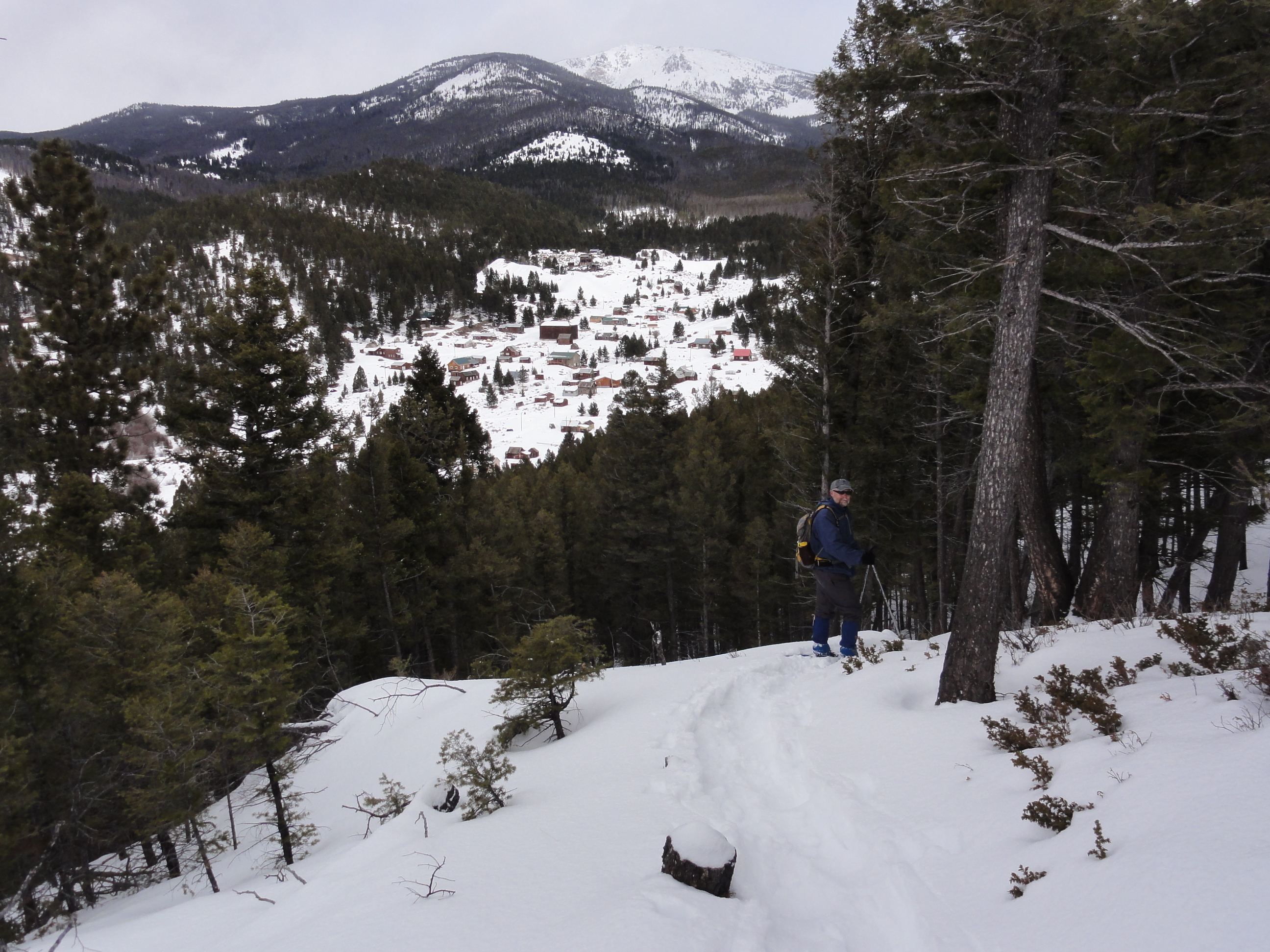
The view of the town from the top is worth it, naturally:

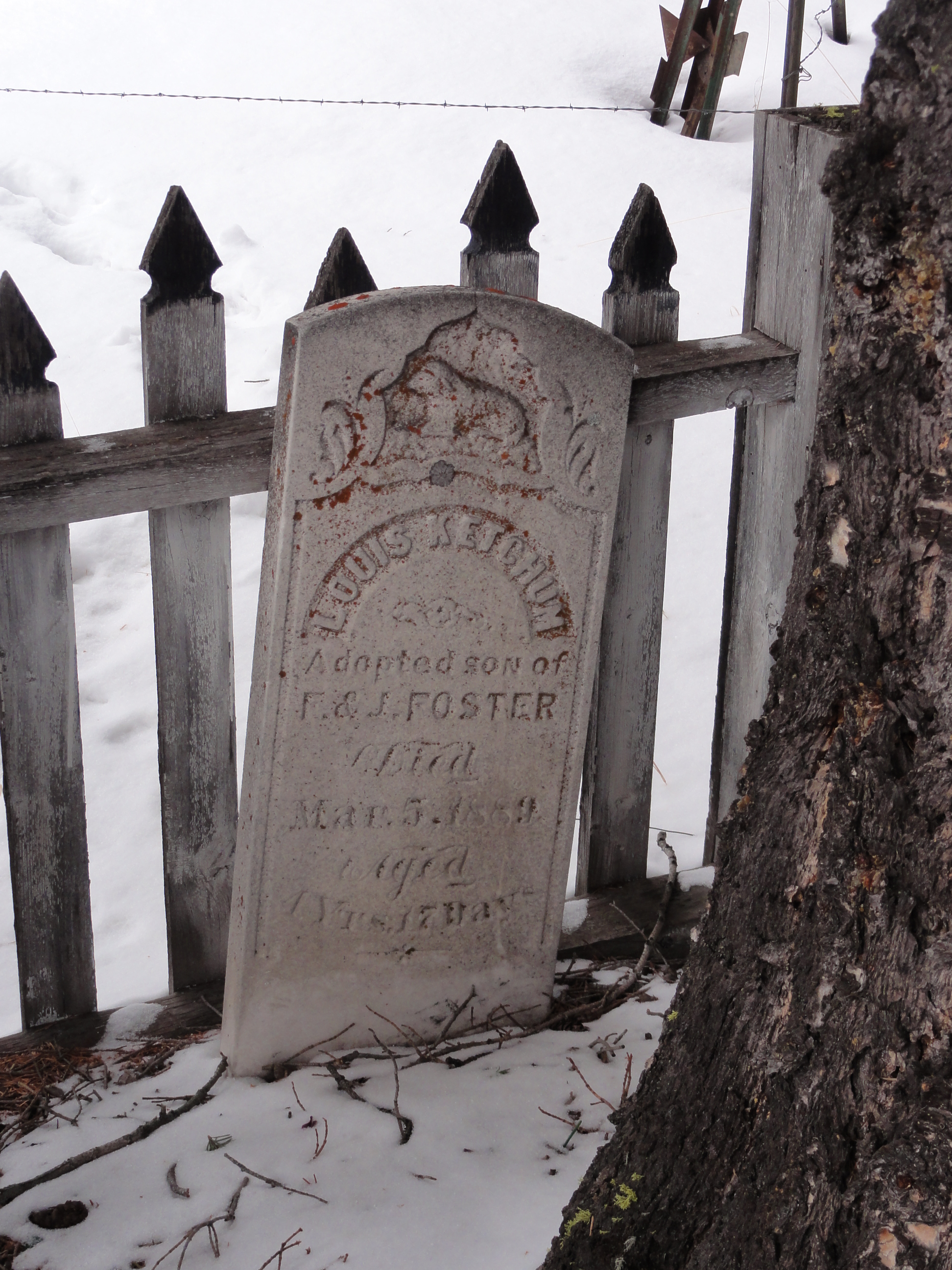
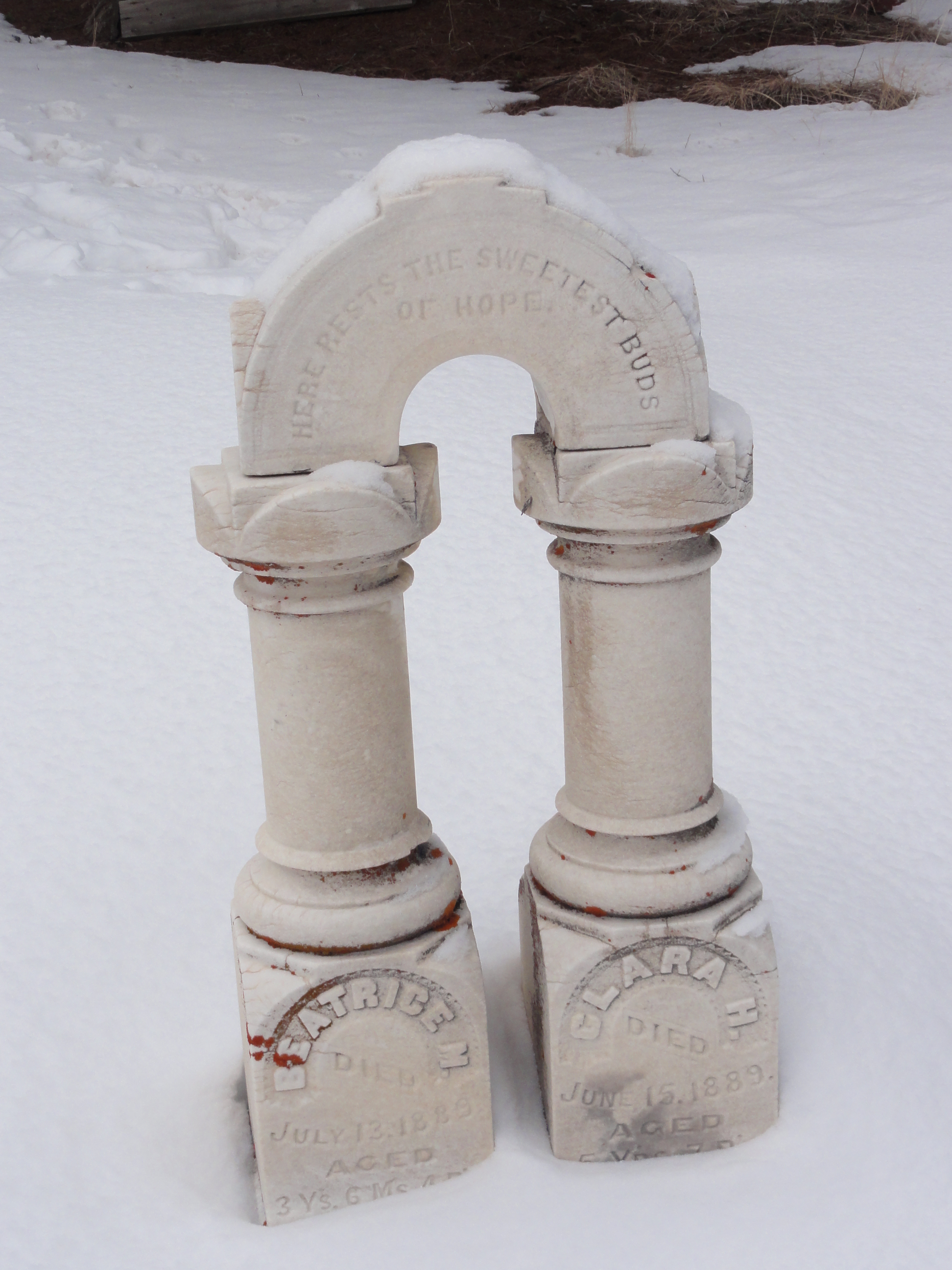
Of course, all cemeteries have an element of sadness, but the Elkhorn cemetery is particularly poignant because of the number of children buried there.  After the hard winter of 1888-89, a diphtheria epidemic tore through the town, taking many of the children with it.    I suppose it is a sad destination for a day trip, but I like to think that remembering the suffering of these poor families gives these short lives a little more meaning.   Here are some of the gravestones we saw today:


Posted in Adventure, Hiking, Montana, Nature, Outdoors, Photography, Travel | Tagged , , , , , , , , | 11 Comments

Some stunning lookout photographs.

jdhascup's avatarView from the Lookout

A few weeks ago, I wrote about the first time my youngest daughter spent a night at a fire lookout. With fall, approaching it was time for the second time. I was nervous that it would be in the clouds again as the morning was heavy overcast. We left to check in at the ranger station and pick up a replacement radio and keys. During the 30 minute drive to the lookout gate we never saw a glimpse of blue sky. It was not until we made the last turn up the forest road that the sky opened up and we arrived above the clouds.

We soaked up the sun and prepared for a night of star-gazing.

A few visitors came by to soak up the sun also.

The sun set to the west in a blaze of light.

To the northwest the creator painted the sky in a way that reminded…

View original post 95 more words

Posted in Hiking | Leave a comment

Sahara Spring: Southern Tunisia

It’s a 7 hour drive from Tunis to Tozeur, Tunisia.    And if you take a bus, and not the shared vans called louages in Tunisia, the trip is actually quite pleasant.   Tozeur is an ancient town in southern Tunisia, and was really at its peak during the 14th and 15th centuries when the trans-Saharan camel caravans were going strong.  Modern Tozeur is worth a visit on its own, but it’s also a great jumping off spot for trips to Berber villages on the Algerian border, and…the Sahara.

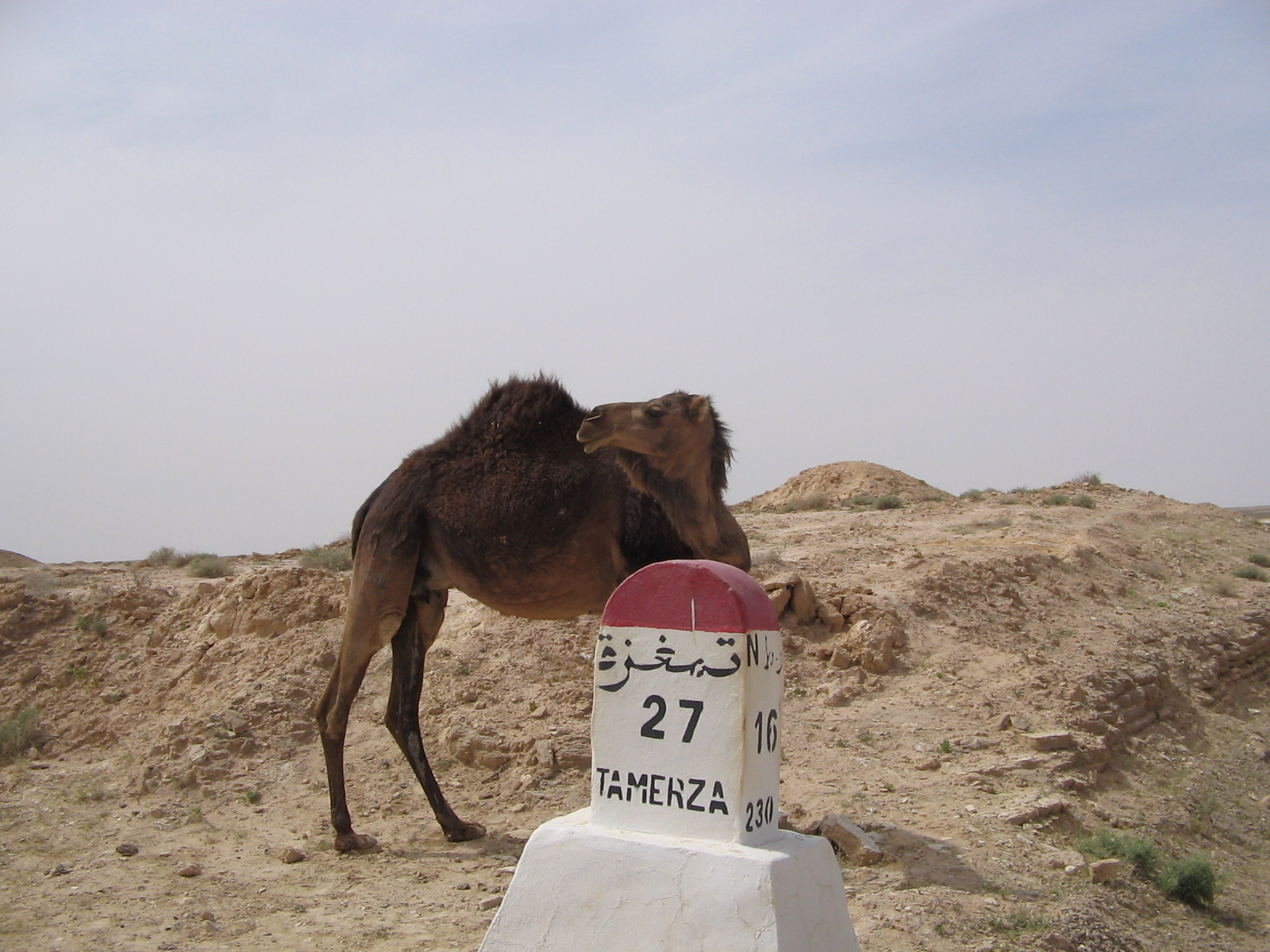
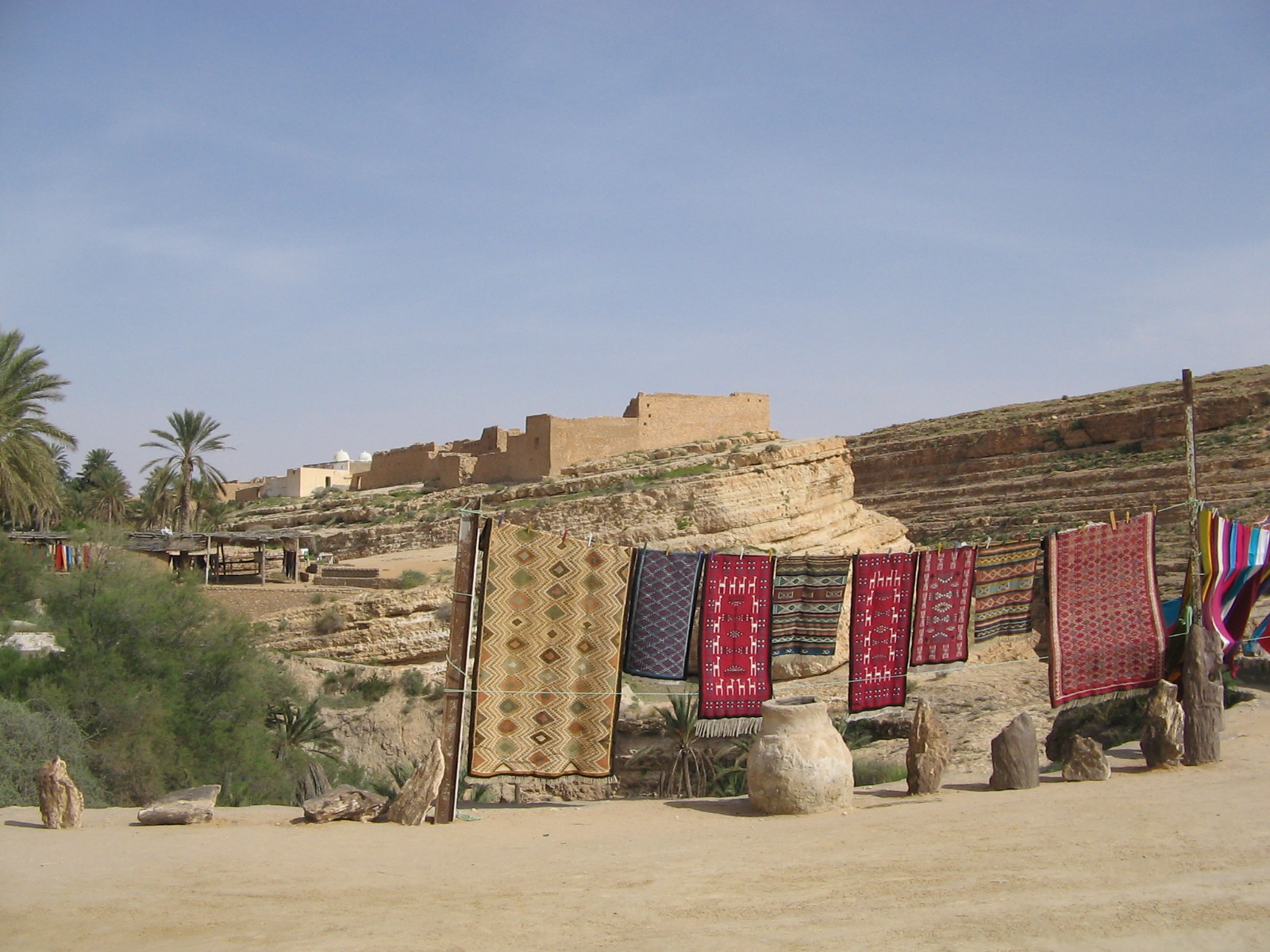
We spent a day exploring the surrounding countryside, including the Berber villages of Chebika and Tamerza:

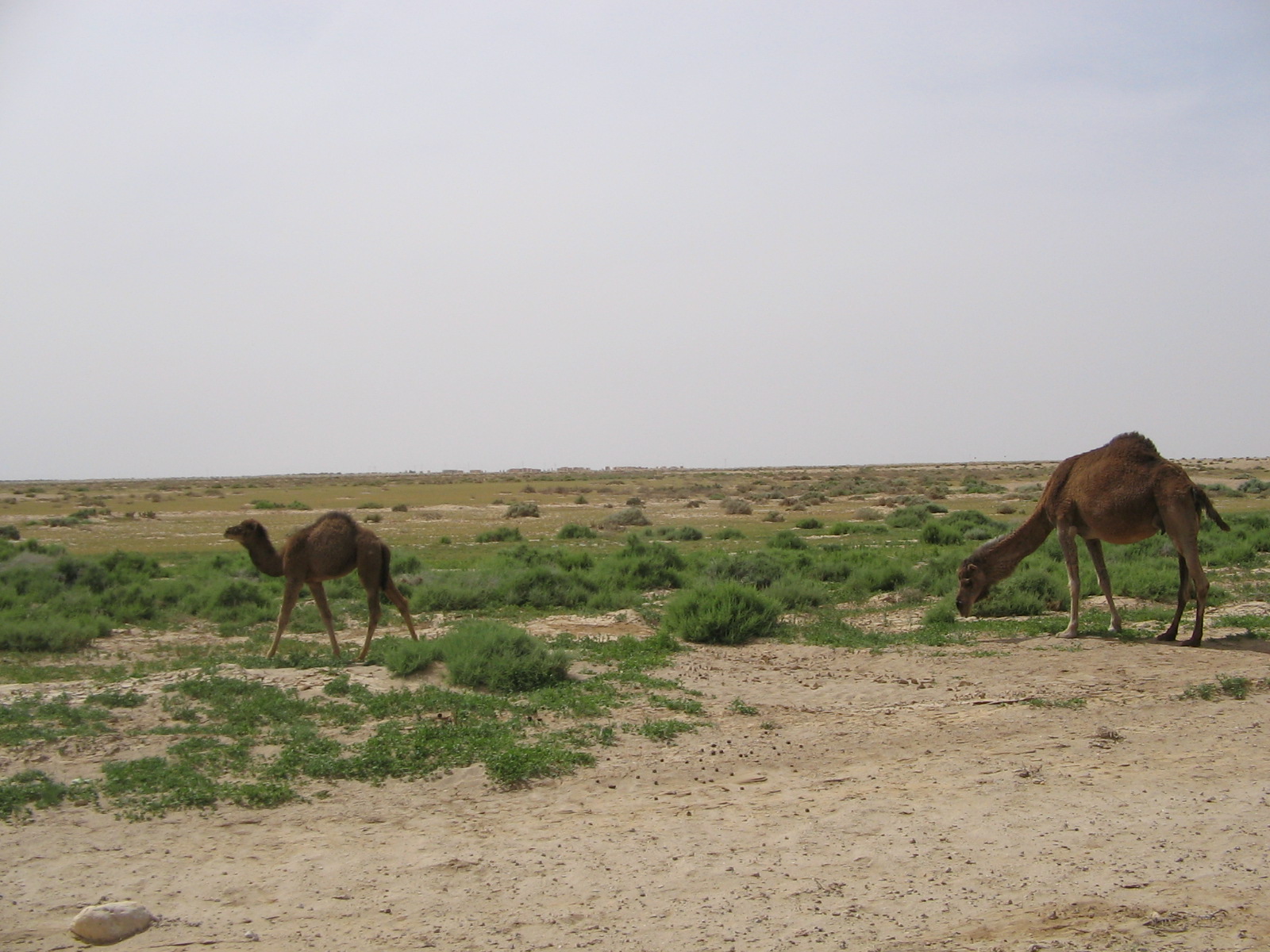
Camel grazing along the road to Tamerza

Rugs for sale outside of Chebika

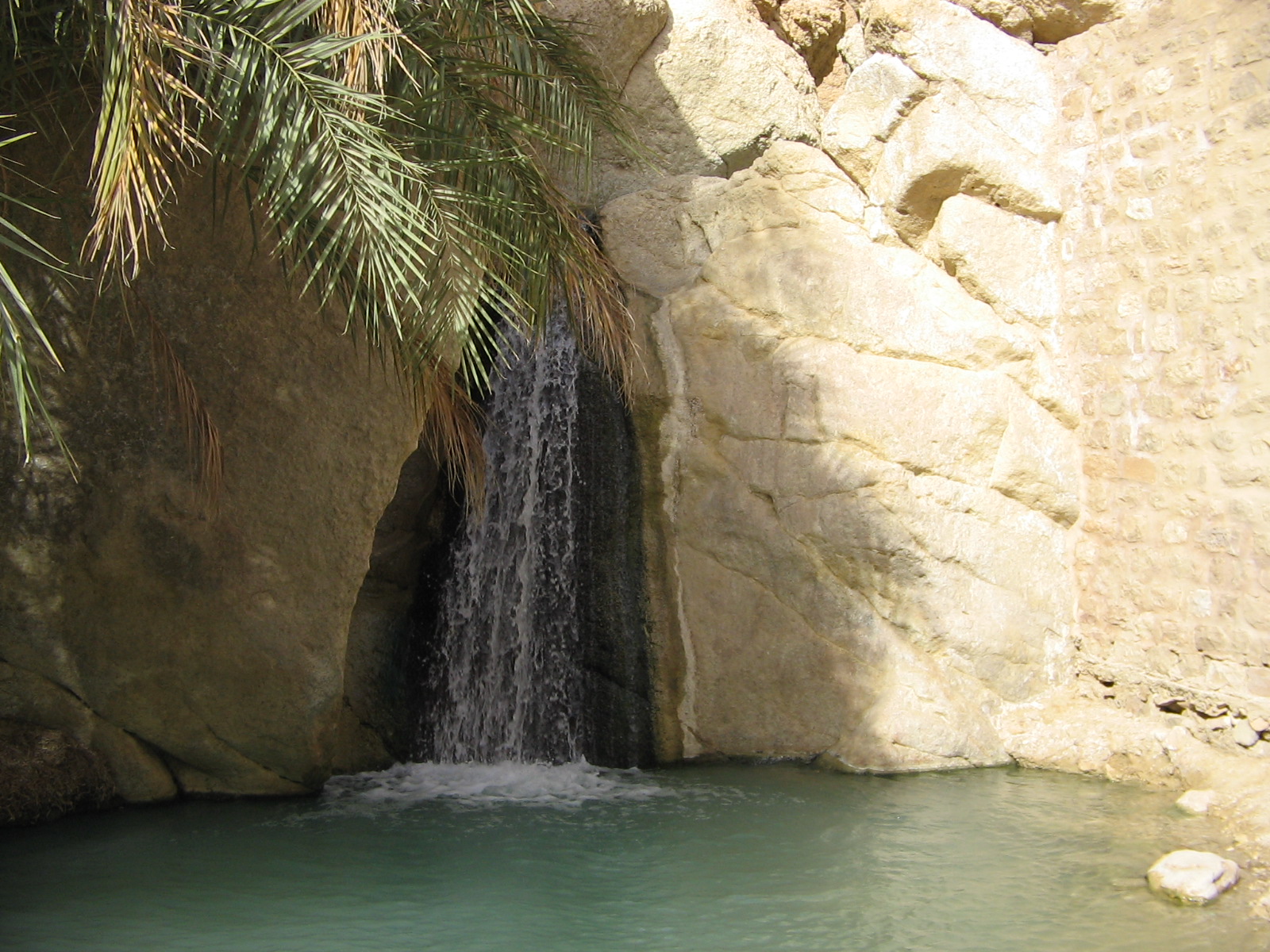
Idyllic oasis in the middle of the desert

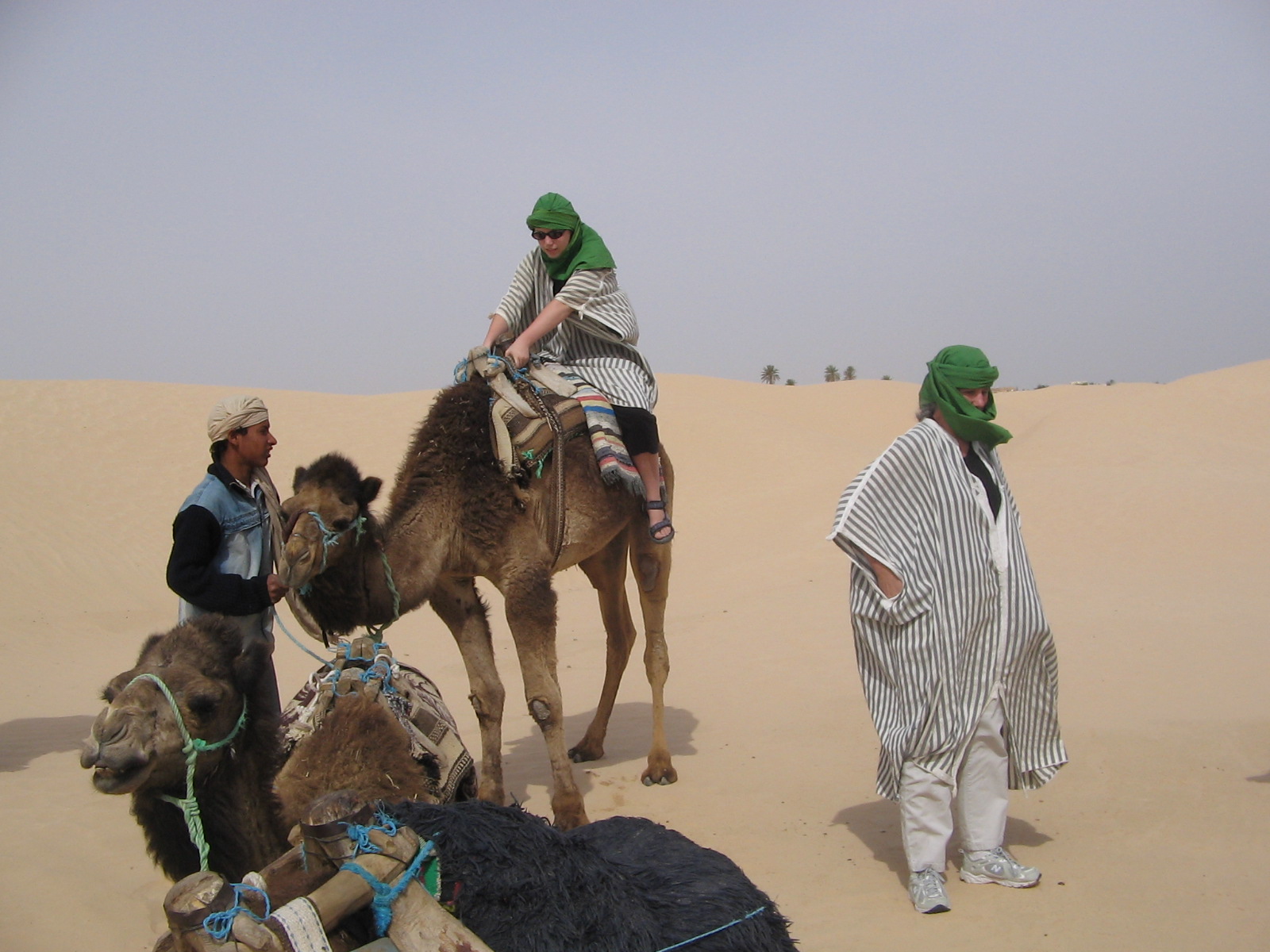
After this excursion we hired a driver to take us to Ksar Ghilane, a desert oasis on the edge of the Sahara and a long day’s drive from Tozeur.    The driver was a friendly enough guy, but he insisted that we stop at the camel station in Douz for a camel ride into the Sahara.  We weren’t planning on that, but it turned out to be an interesting  – even if rather touristy – experience.

Getting saddled up, after being outfitted in 'Sahara duds"

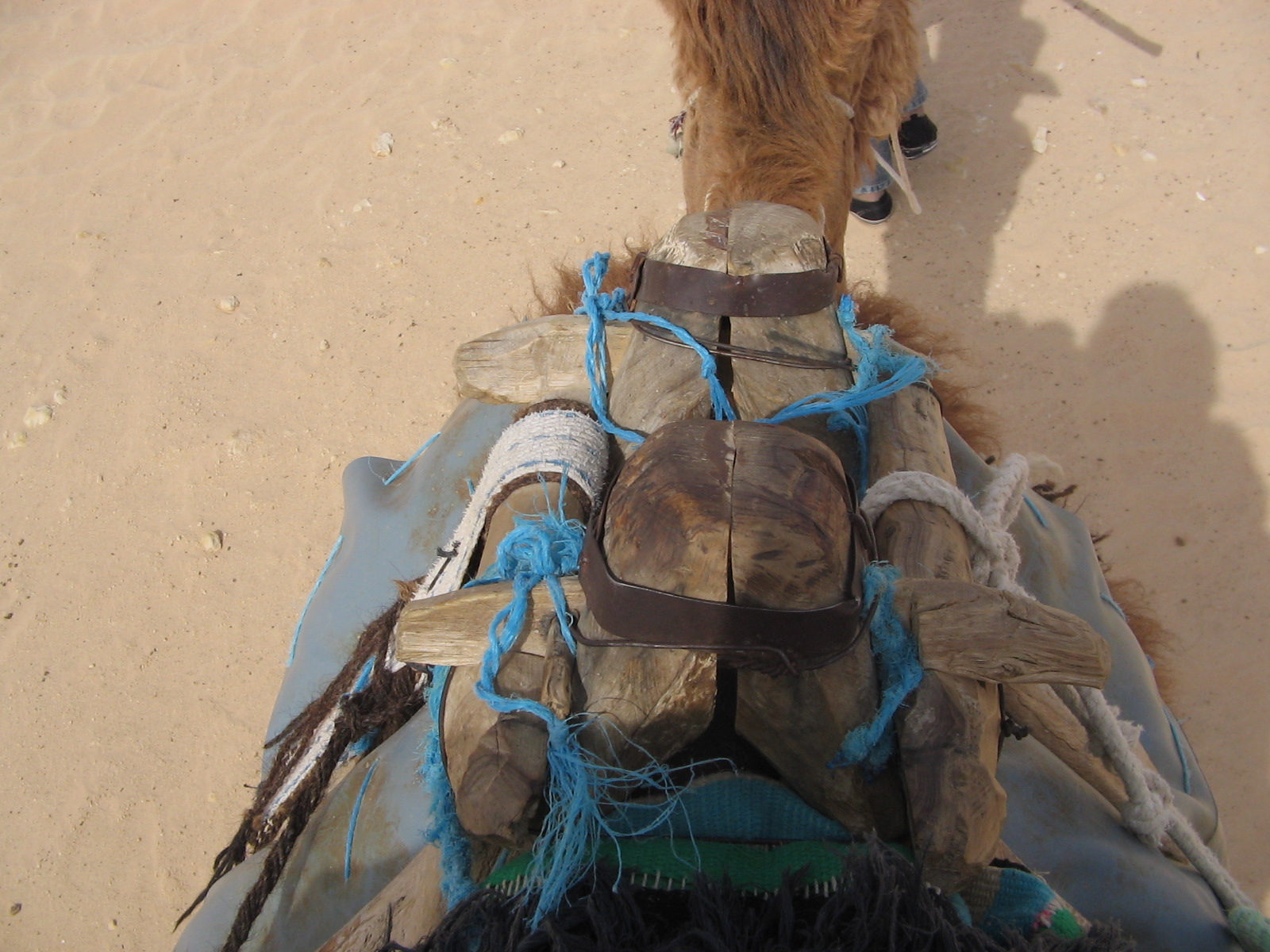
View from on top

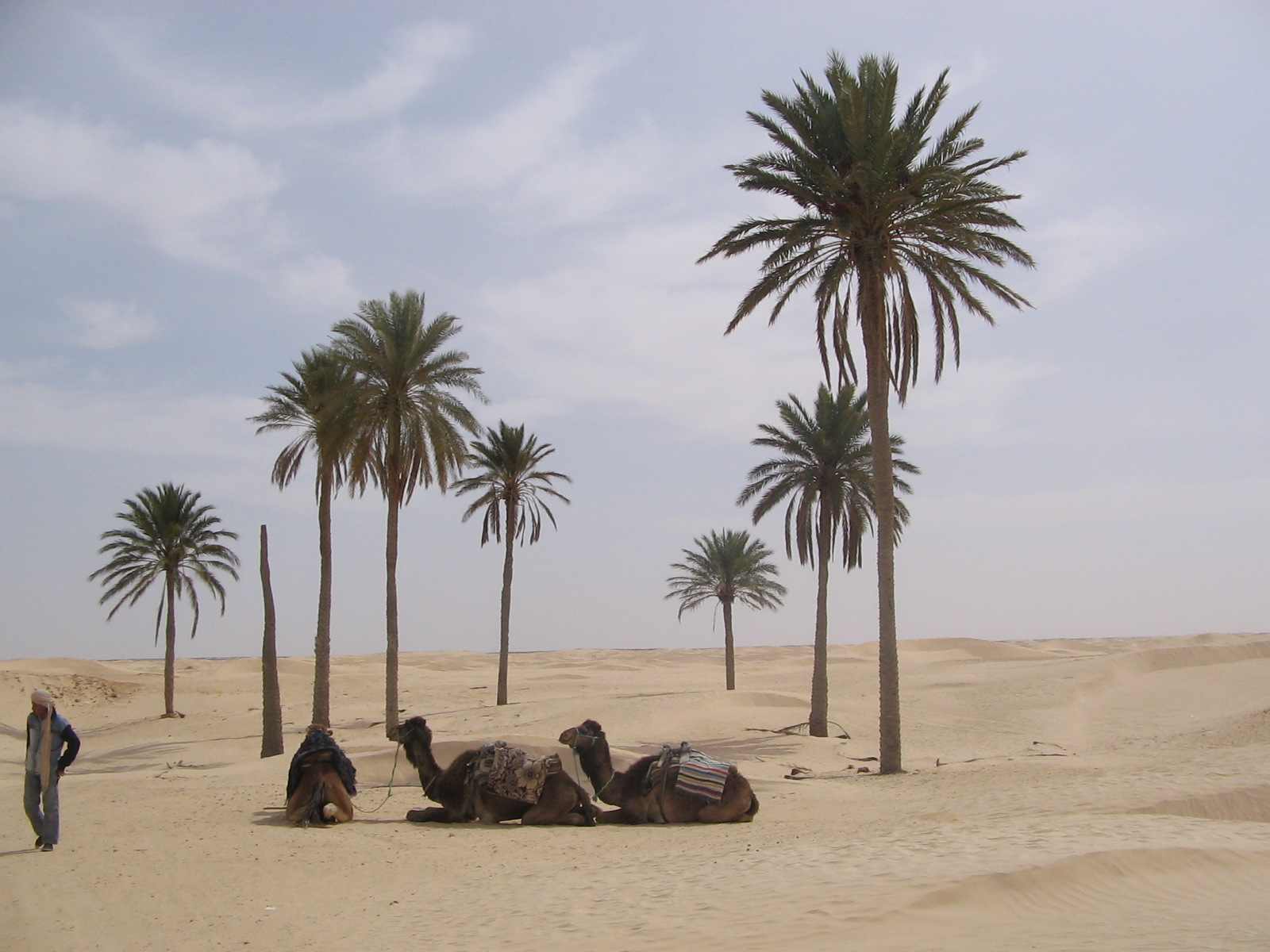
Our destination, an hour into the desert

You can hire camel guides to take you on overnight trips into the desert, which I think I would prefer.  Just need to watch out for scorpions in your shoes in the morning.

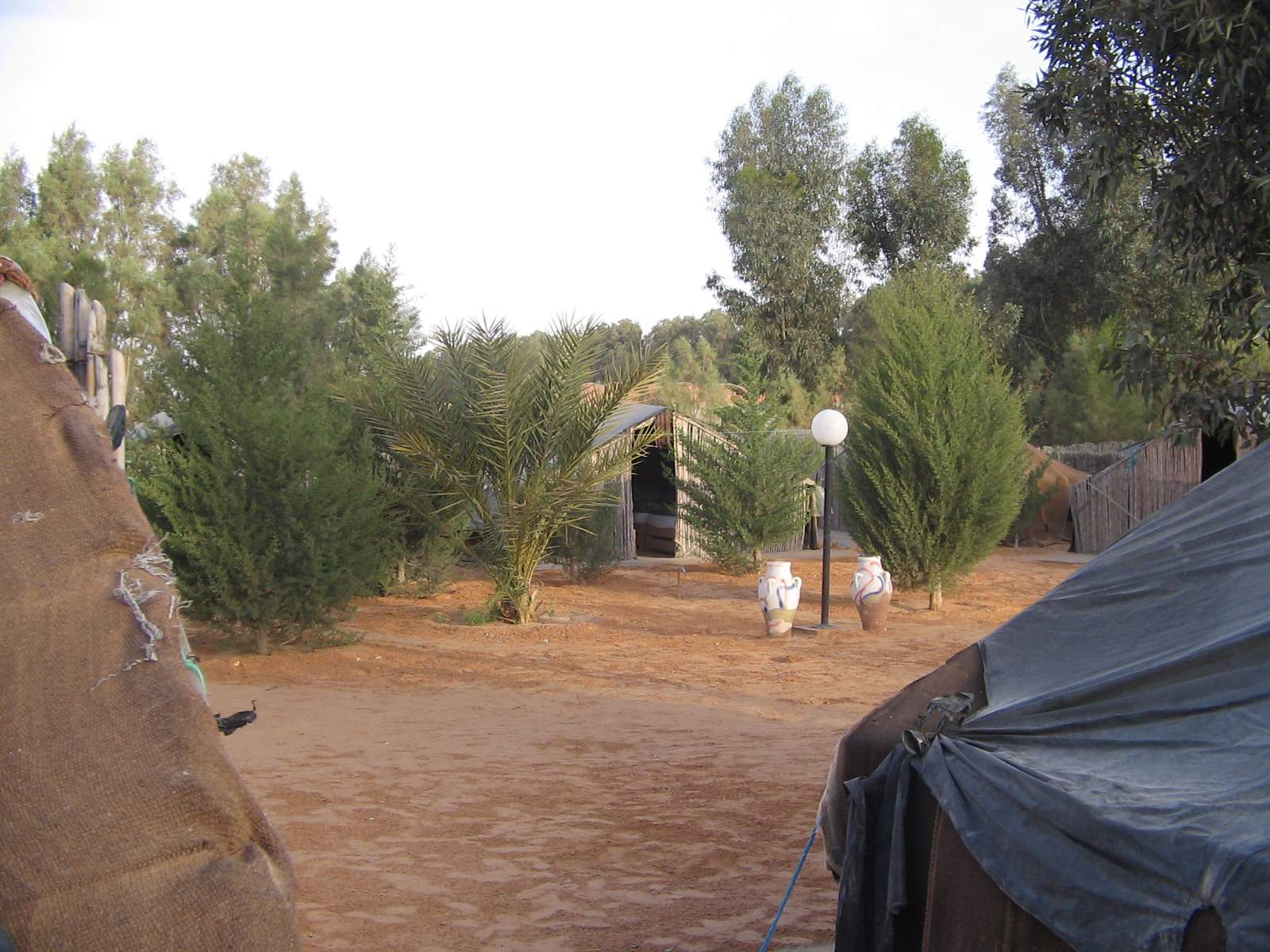
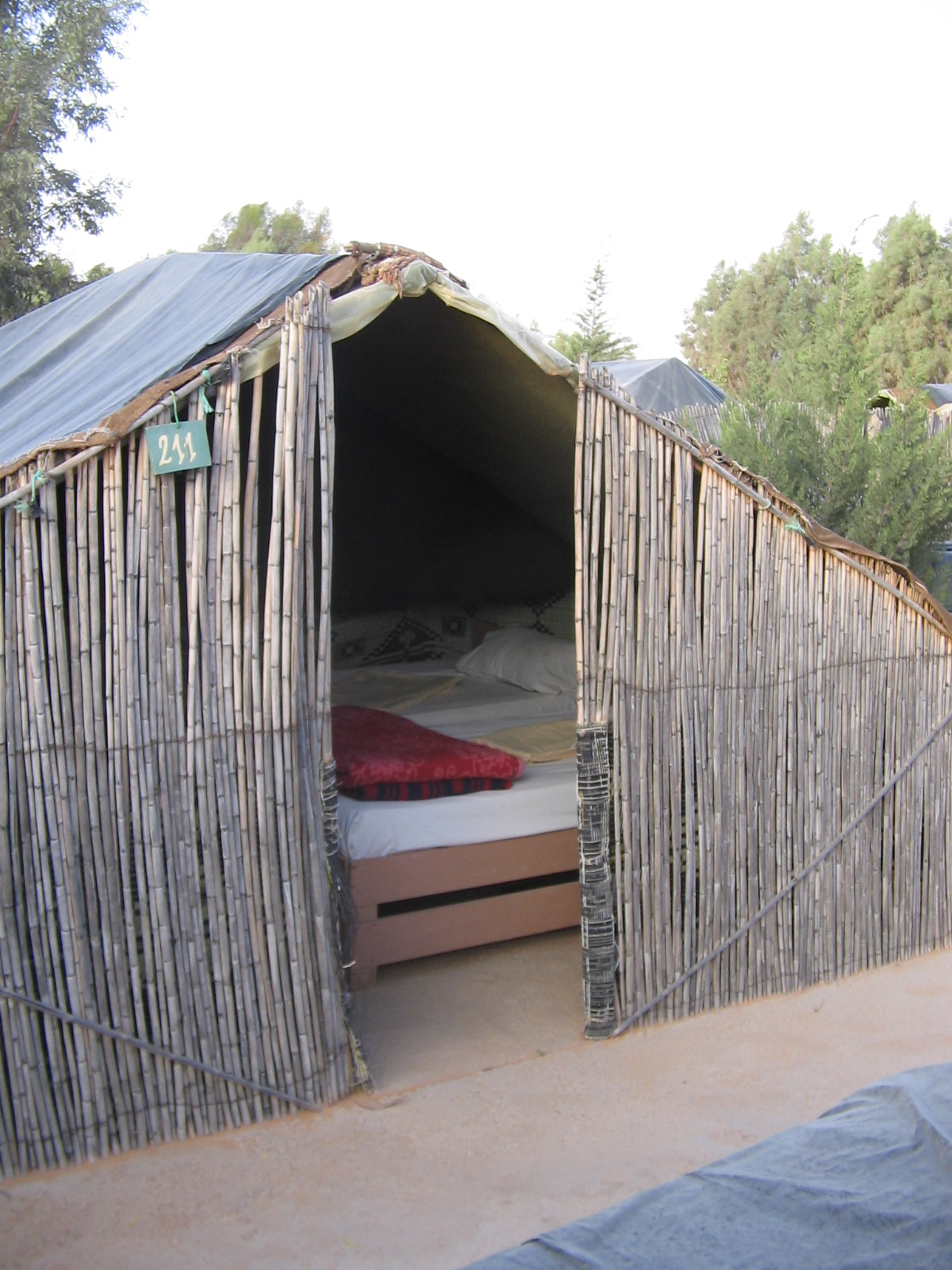
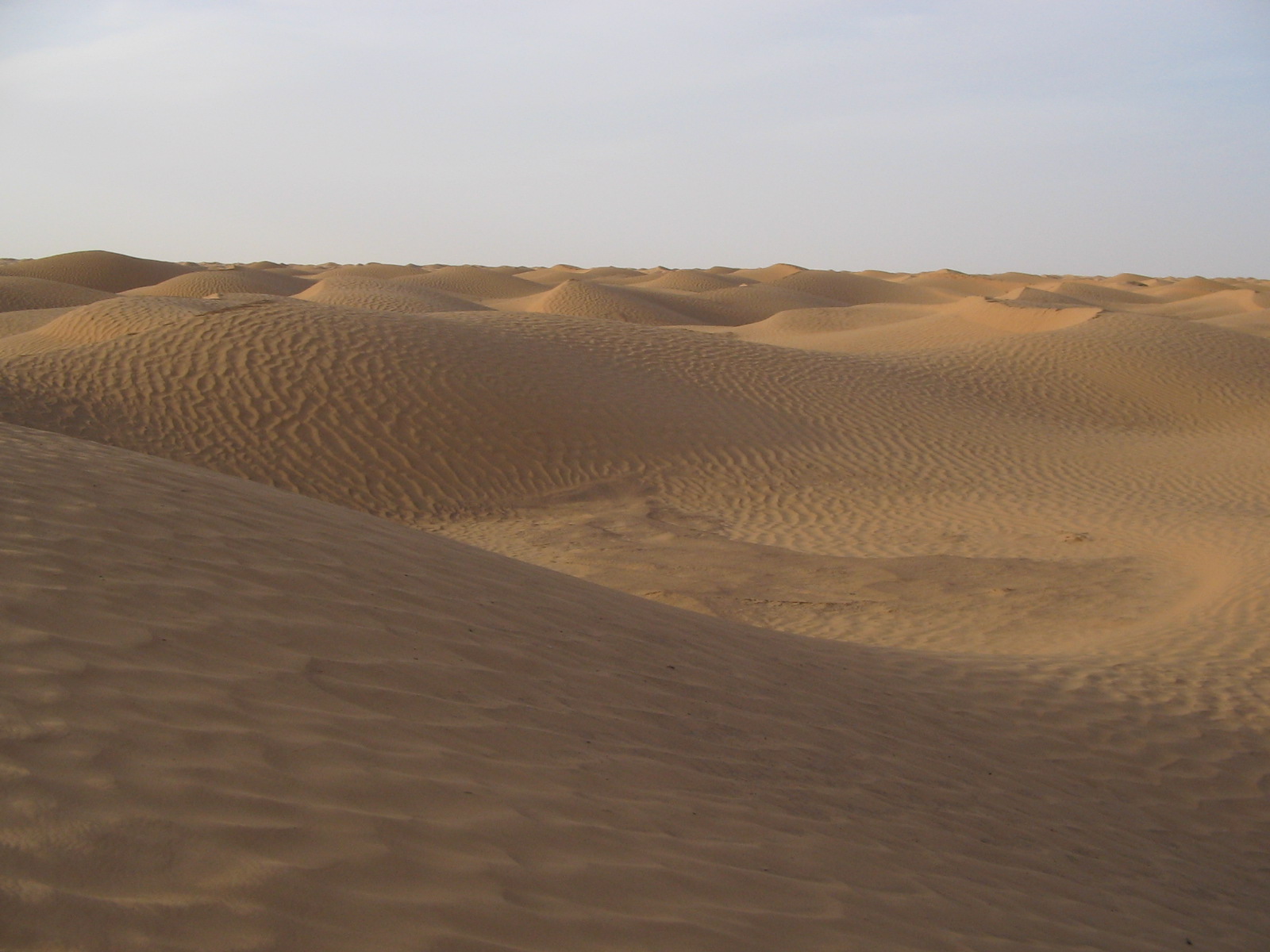
Ksar Ghilane is a little oasis with a lovely hot spring pool surrounded by tamarisk trees, and a few camp sites that rent nomad-style tents.  The large dunes of the Sahara start at the edge of the hot springs, and were stunning at sunset.  It was totally charming.

Our "nomad tent" in Ksar Ghilane

Sahara!

Posted in Adventure, Africa, Camping, Nature, Outdoors, Travel | Tagged , , , , | Leave a comment

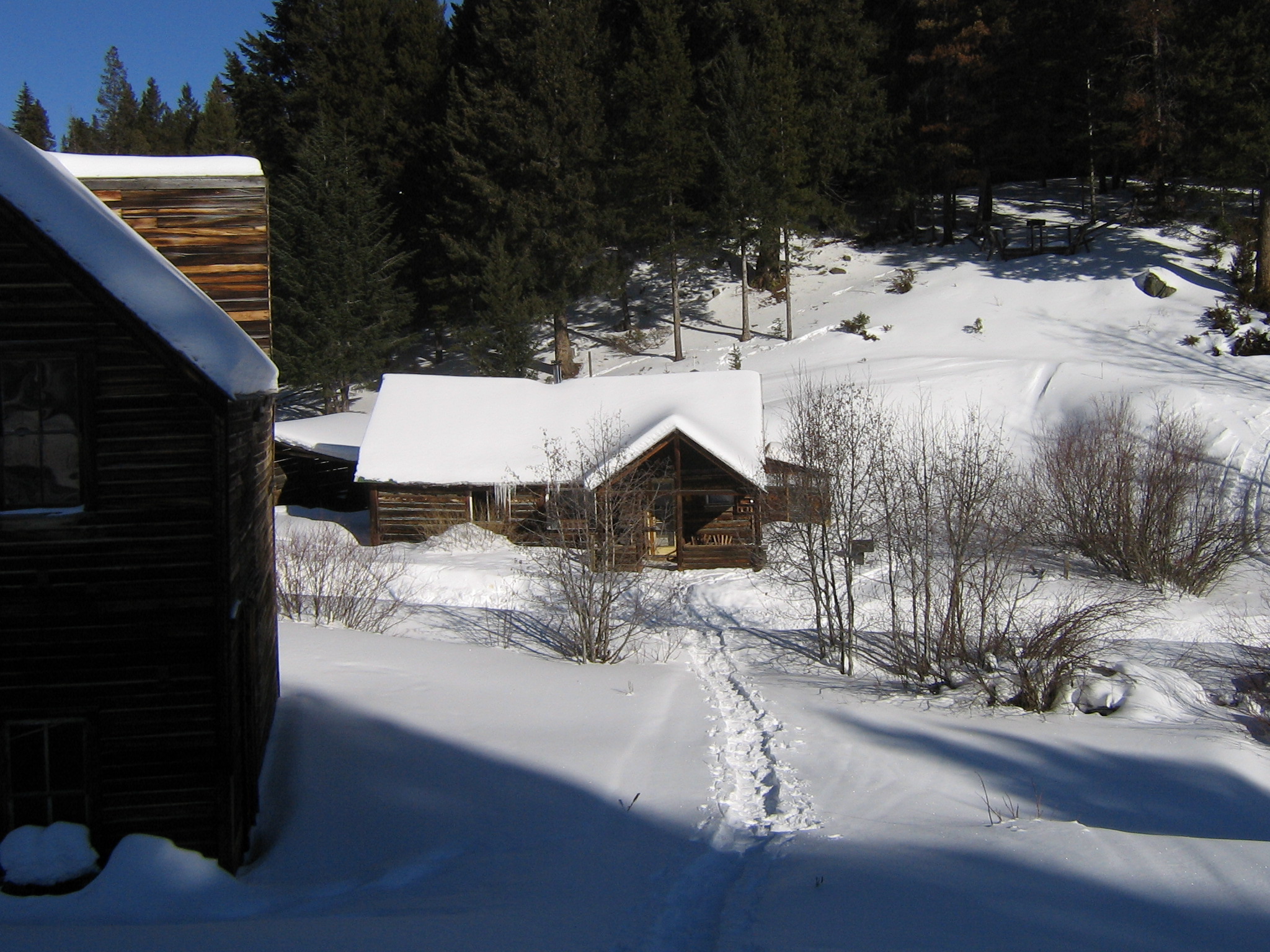
Garnet, Montana: Ghost Encounters of the Old Kind

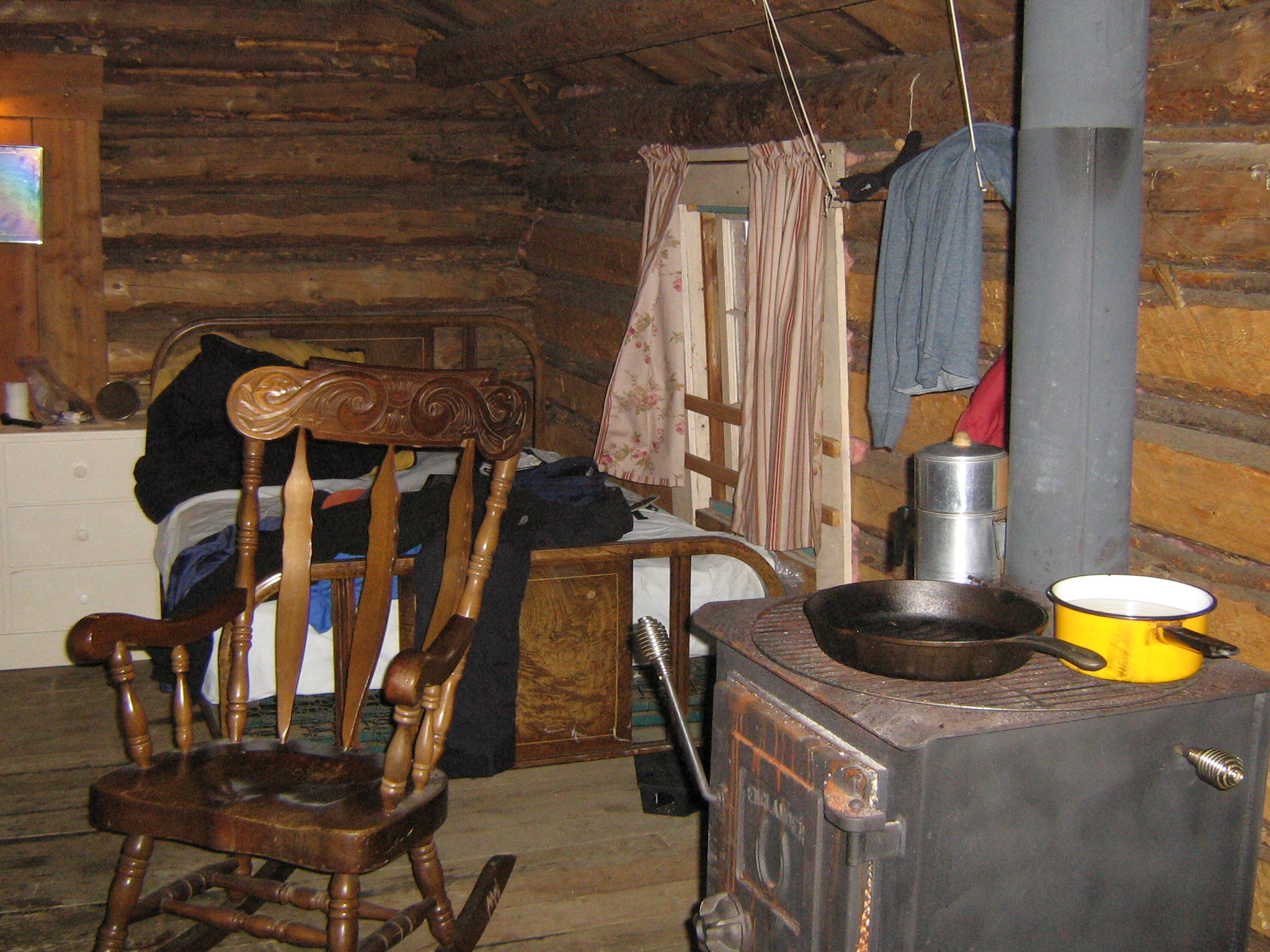
January, 2010.   Trudging up the steep and icy Forest Service road that leads to the ghost town of Garnet.   Cold feet, cold hands, runny nose.  Beautiful scenery, but still…cold feet, cold hands, runny nose.    To distract myself,  I think about Emily Thomas, who lived in Garnet during the winter of 1910.    Emily was 38, and married, but her husband had left long ago.    She cooked in a boarding house for seven miners.   The winter wind was bitterly cold, the boarding house was drafty, and the wood stove was as cantankerous as the miners.  I imagine Emily got pretty cantankerous herself at times.   Garnet is located high up in the Garnet Mountains, about 60 miles east of Missoula, and was pretty much snowed in and cut off from the rest of the world from November through April.     It still is.

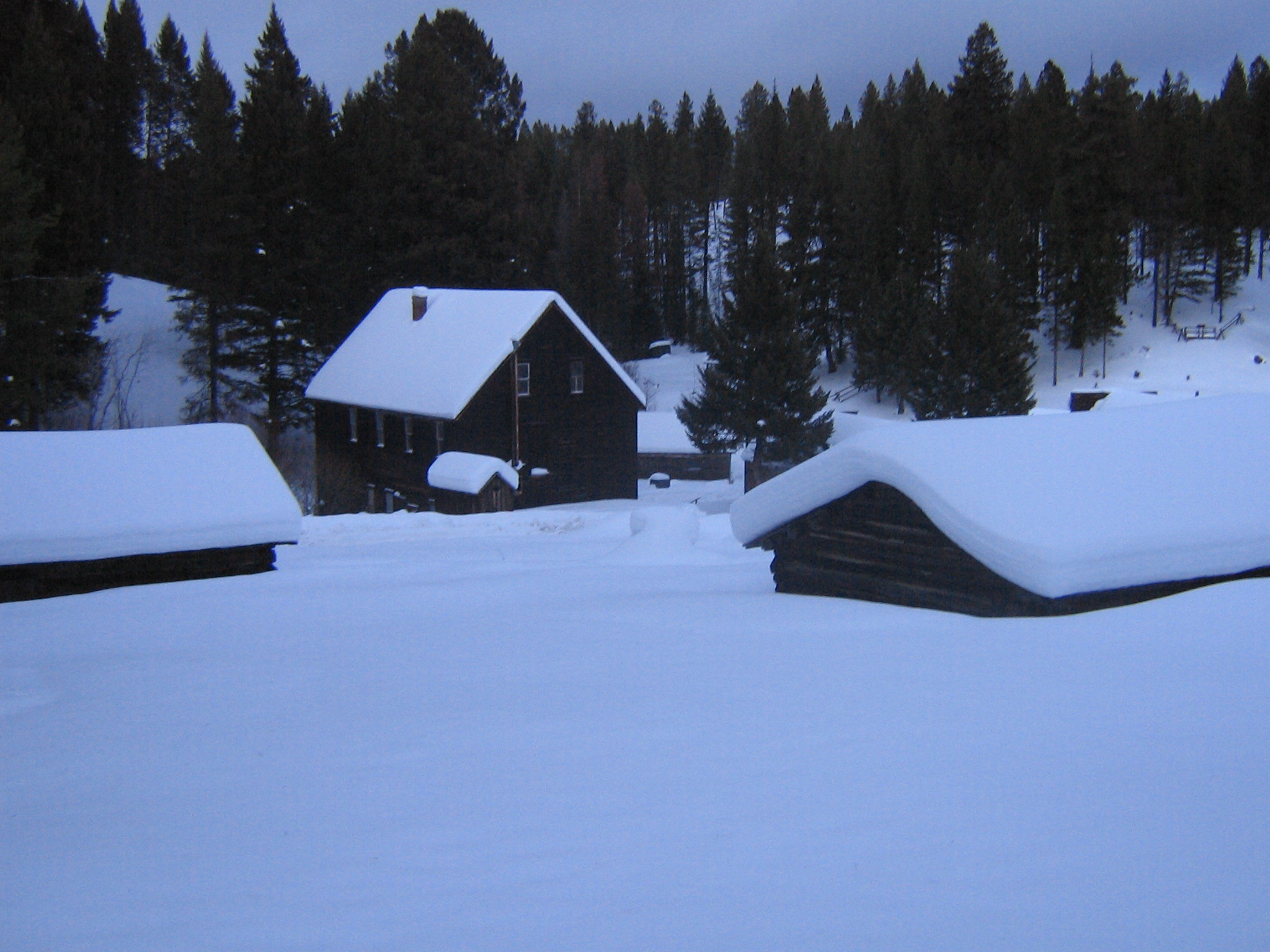
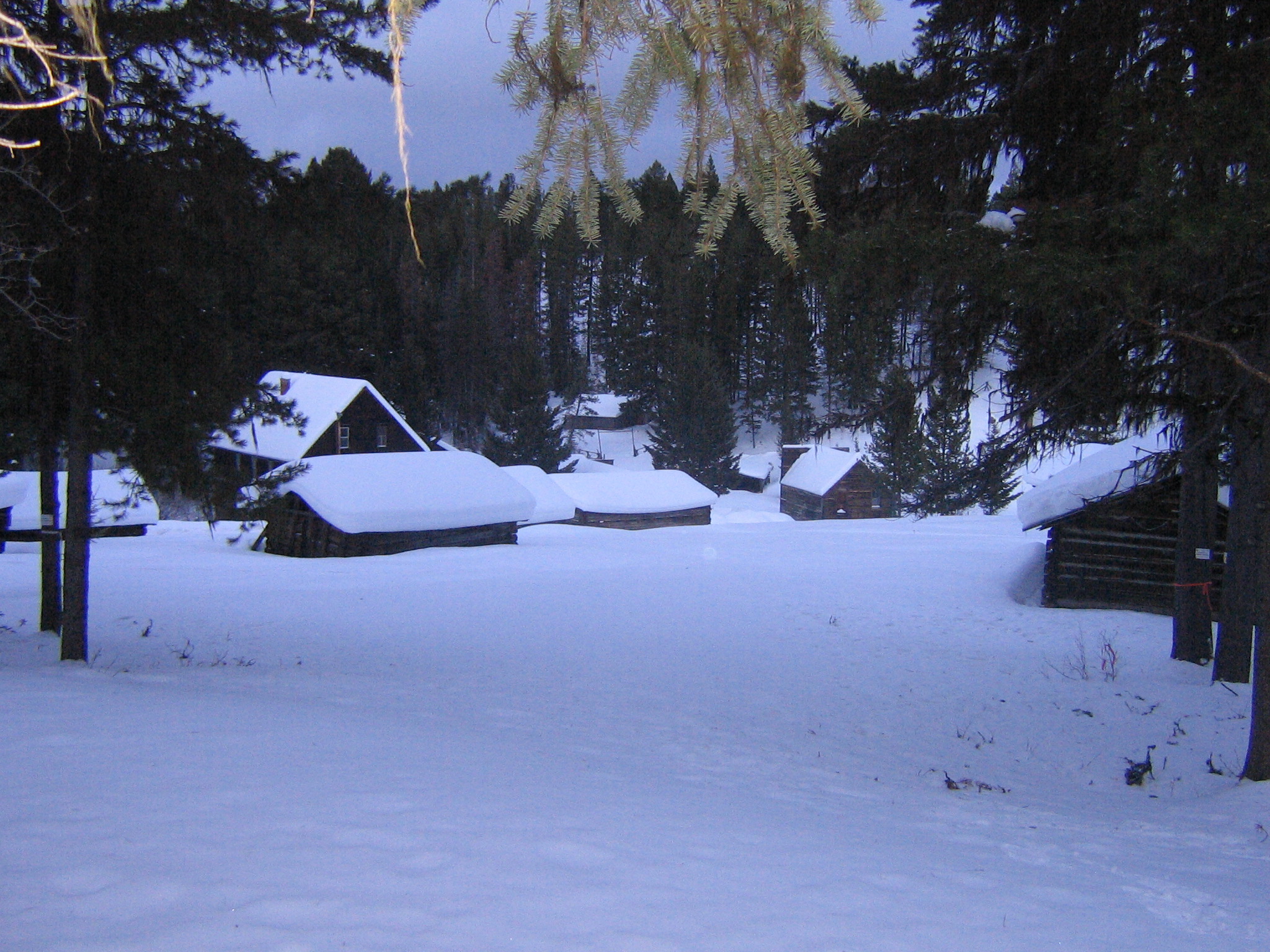
I don’t know what happened to Emily Thomas, but she was a nice diversion from my discomfort as we made our way up the 1500 foot climb from closed gate at the bottom of the 3 mile road that leads to Garnet.  In the summer, you can drive right to this ghost town, but the road is closed in the winter.     But, in the winter you can rent a cabin in Garnet, and actually see what it’s like to be all alone in a ghost town at night.

Well, you actually have your choice of one of two cabins, so if the other cabin is rented, you wouldn’t be all alone.  But we’ve been to Garnet three different winters, and we’ve always had the town all to ourselves.     The cabins are heated by wood stoves, so if you rent the larger cabin (the Dahl cabin) which has three rooms, it takes quite a few hours for the place to heat up.   The one room McDonald cabin heats up in in no time, though.

The Dahl cabin

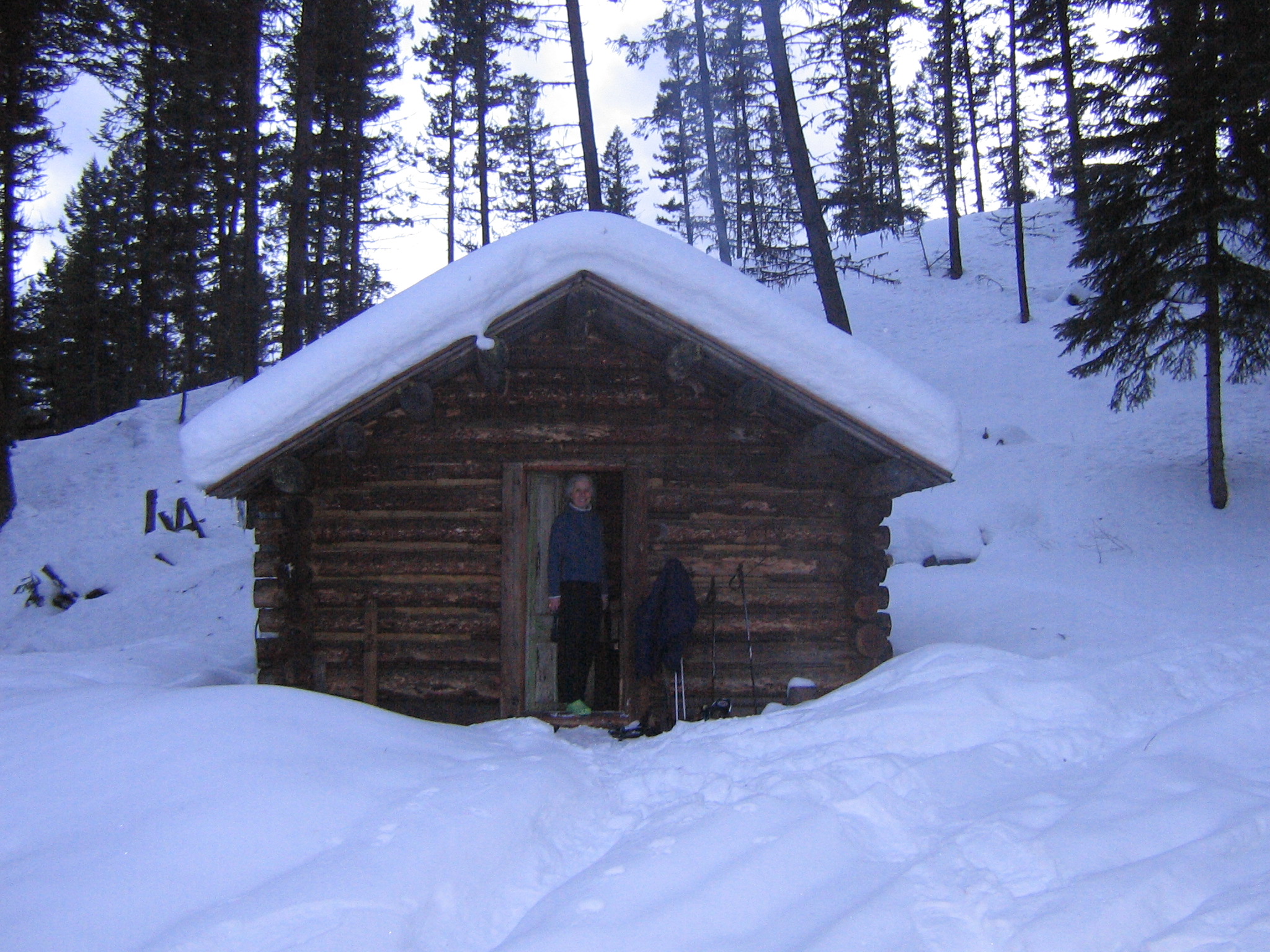
I prefer the smaller cabin:

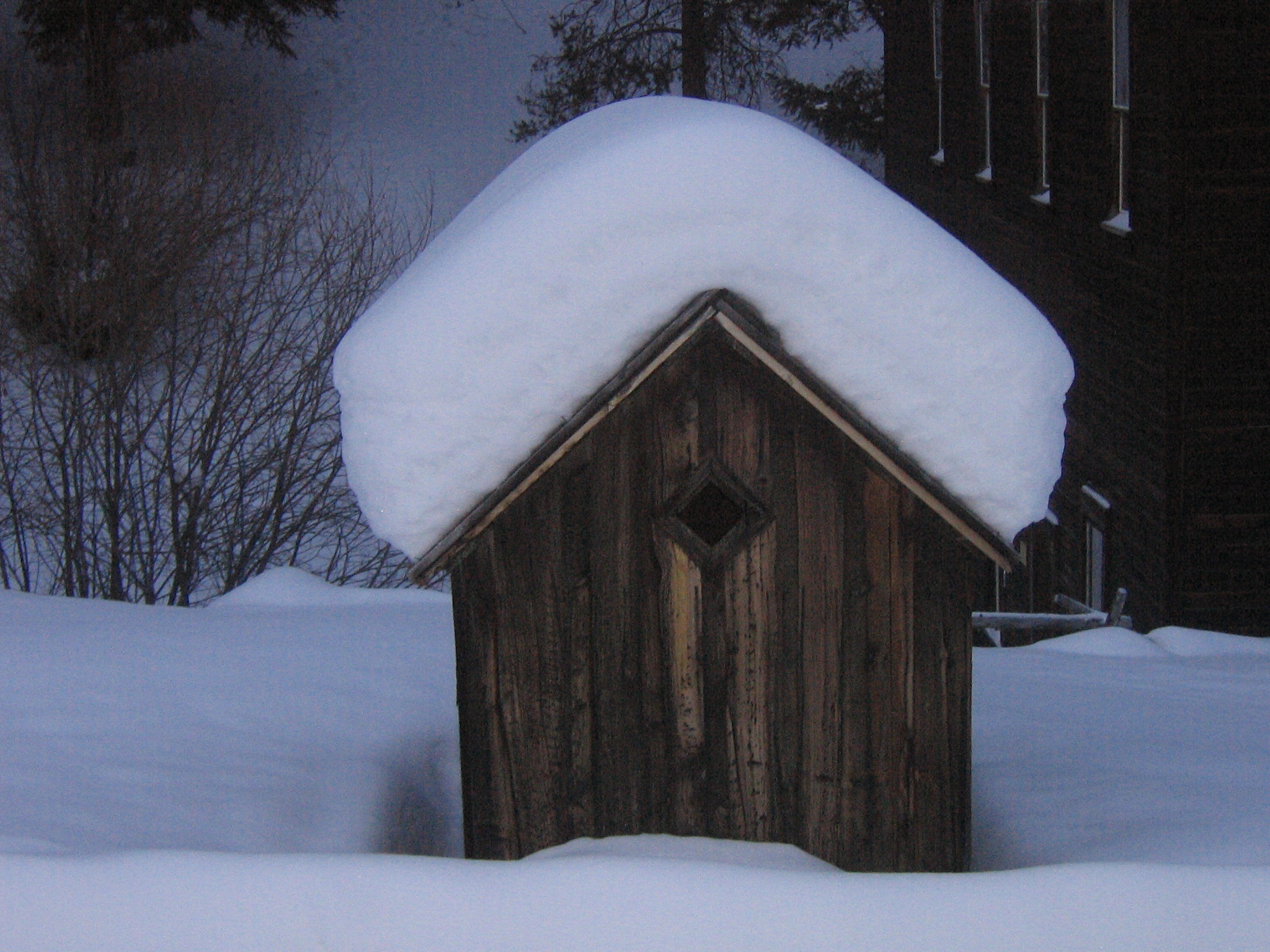
Who knows?  Maybe Emily Thomas lived in this very cabin.     Here are some more views of Garnet:

Posted in Adventure, Camping, Hiking, Montana, Nature, Outdoors, Photography, Travel | Tagged , , , , , , , | 11 Comments

Grand Gulch, Cedar Mesa, Utah

February.  Time to plan some desert hikes, because right now the trails from my back door are looking a little dicey.  (Dicey: a combination of dumb and icy?)

Grand Gulch Primitive Area, in southeastern Utah, is an ideal spring destination.  Sunny, warm days, water in the springs, and not too many people.   And, Grand Gulch is chock full of Anasazi rock art art and cliff dwellings, so you get the added bonus of the thrill of discovery.

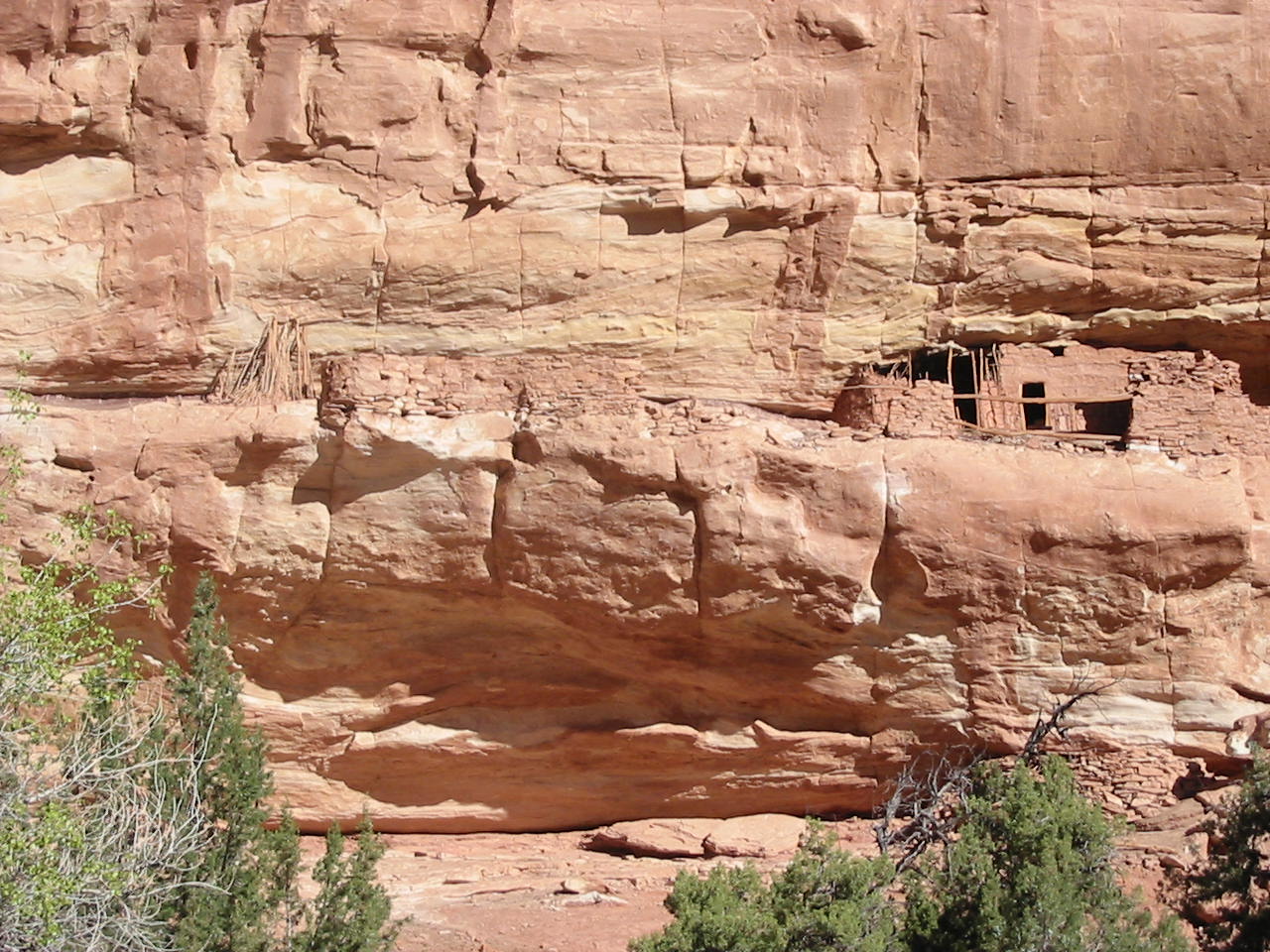
The Collins Canyon trailhead is a pretty easy way to enter the Gulch, although the drive to the trailhead can be rough in places.  It’s a two mile hike down Collins Canyon to the Gulch, and at that point you can go either up or down canyon.  Both routes are spectacular, and in the spring you can usually count on some pretty good water availability.   One April we headed up canyon, and camped near a particularly wonderful ruin called Bannister Ruin:

View of the ruin from our campsite

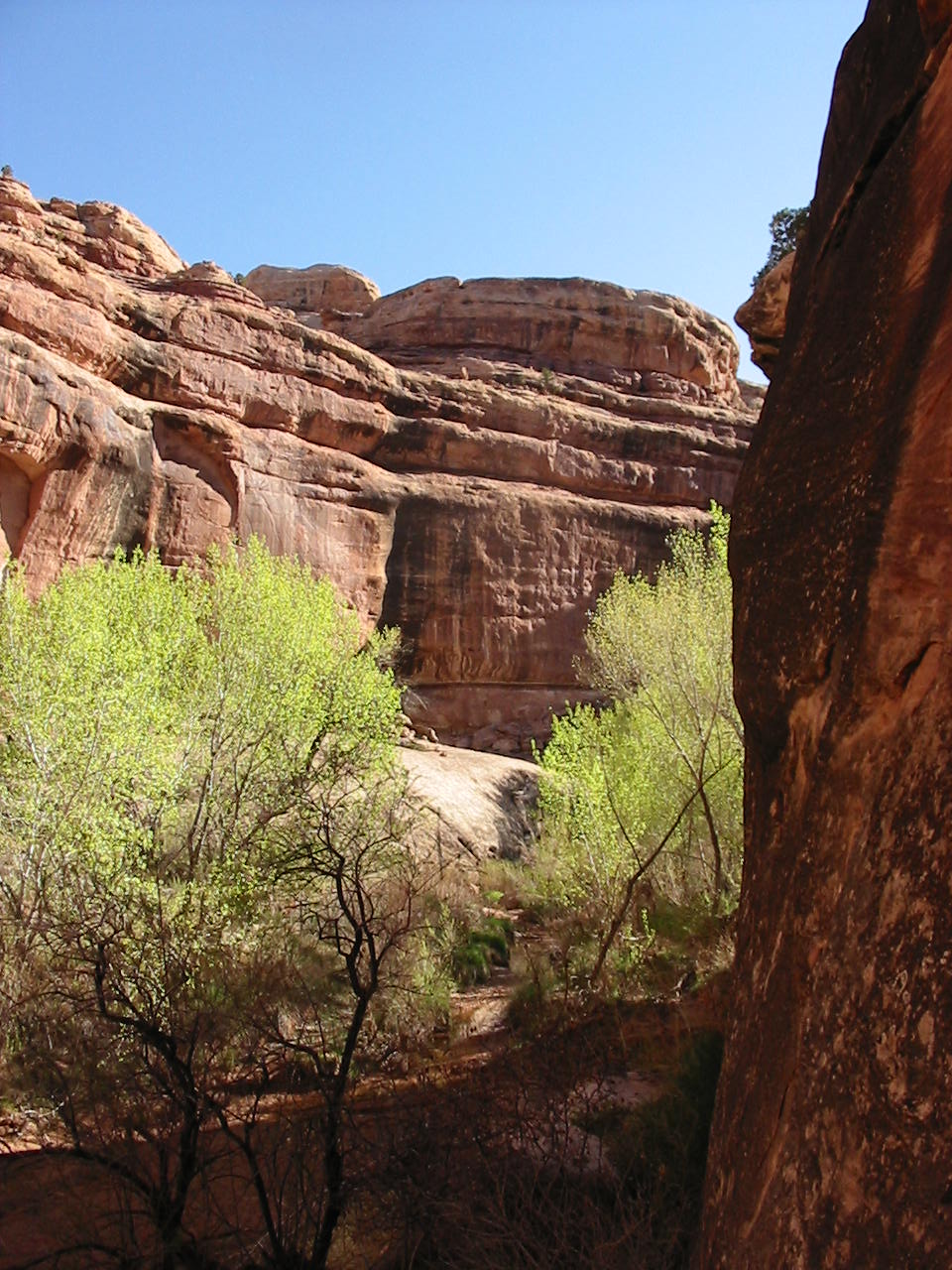
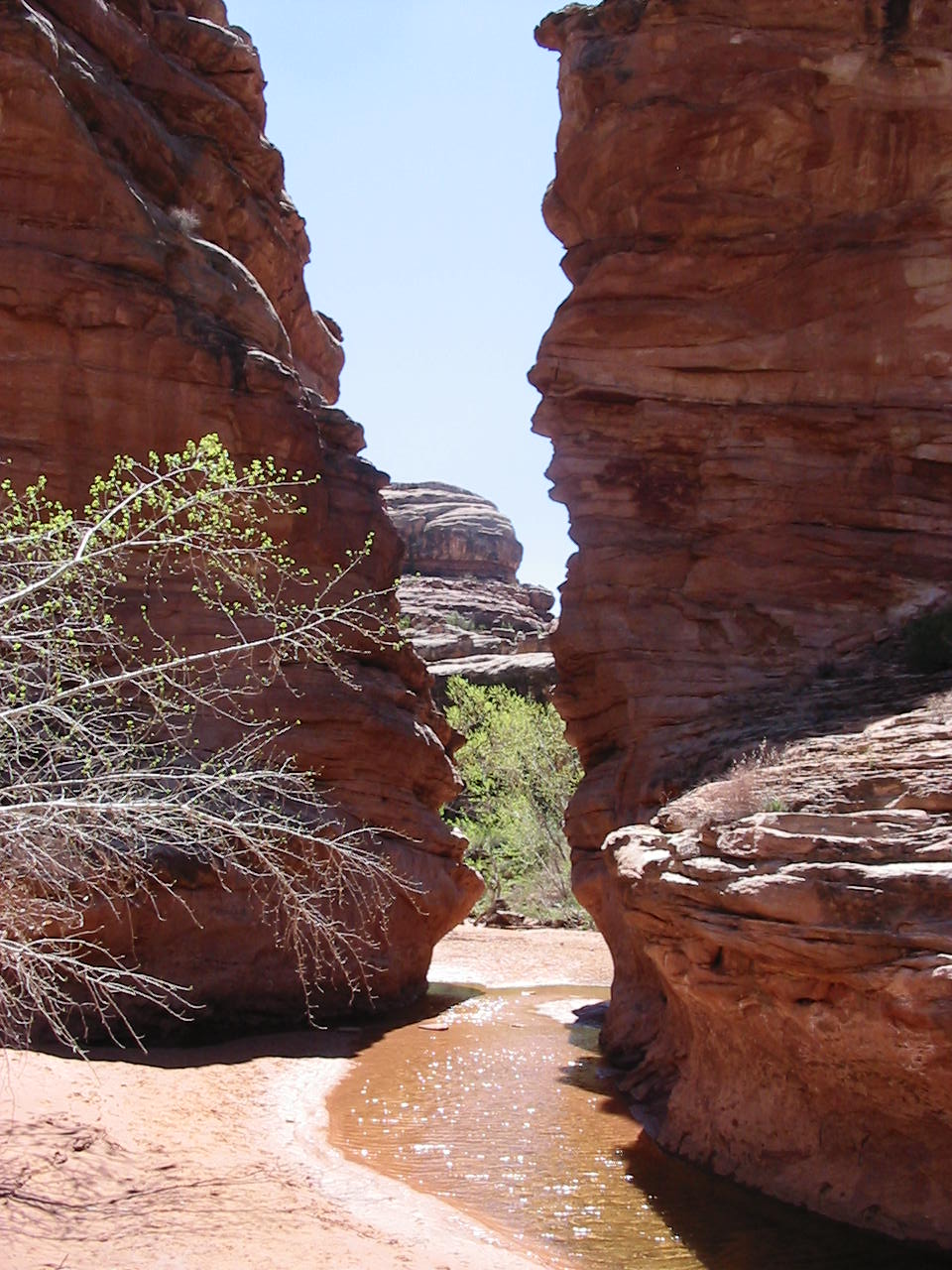
But, I prefer the route down canyon: even fewer people, and lots of possibilities for exploring.   This route took us first through a cleft in the rock called The Narrows:

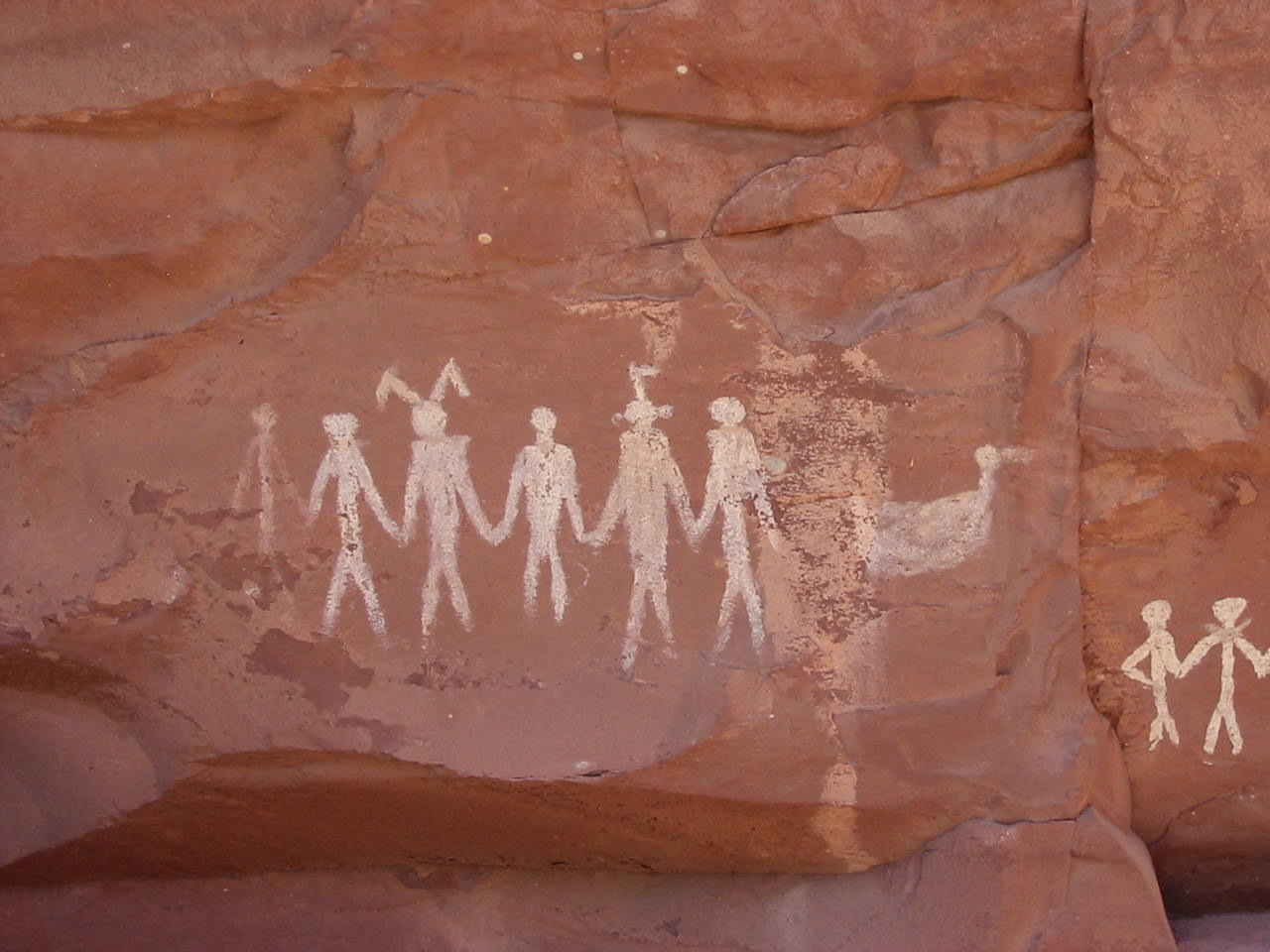
Once through the Narrows, we spent a day seeking out the intriguing rock art that is scattered across a fairly large “island” that was left after an old meander in the streambed was cut off.    We found some great art:

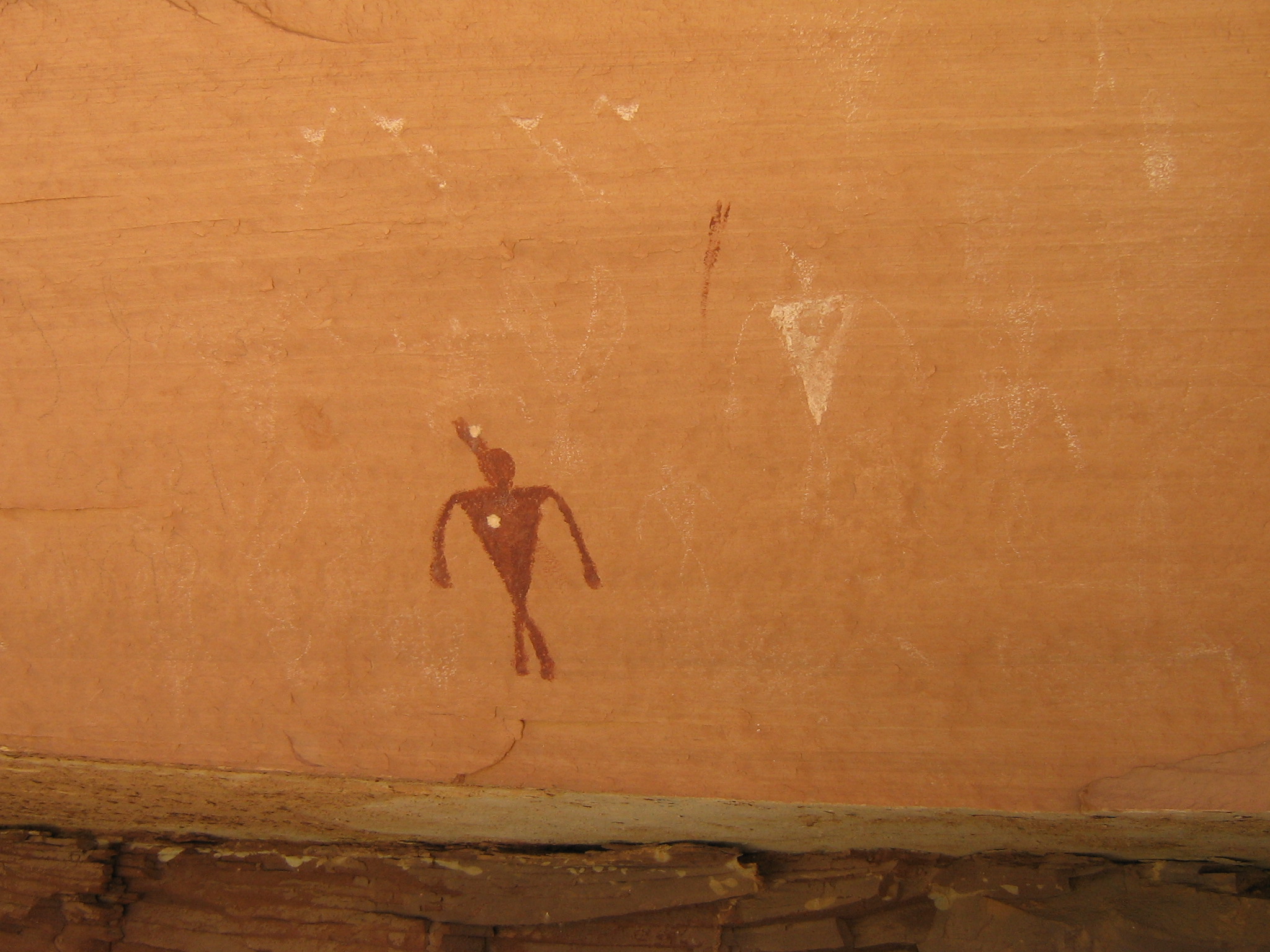
a family holding hands?

many hands

And an absolutely idyllic campsite on a ledge, with a pool and a waterfall just 100 yards away:

Still one of my all time favorite spots

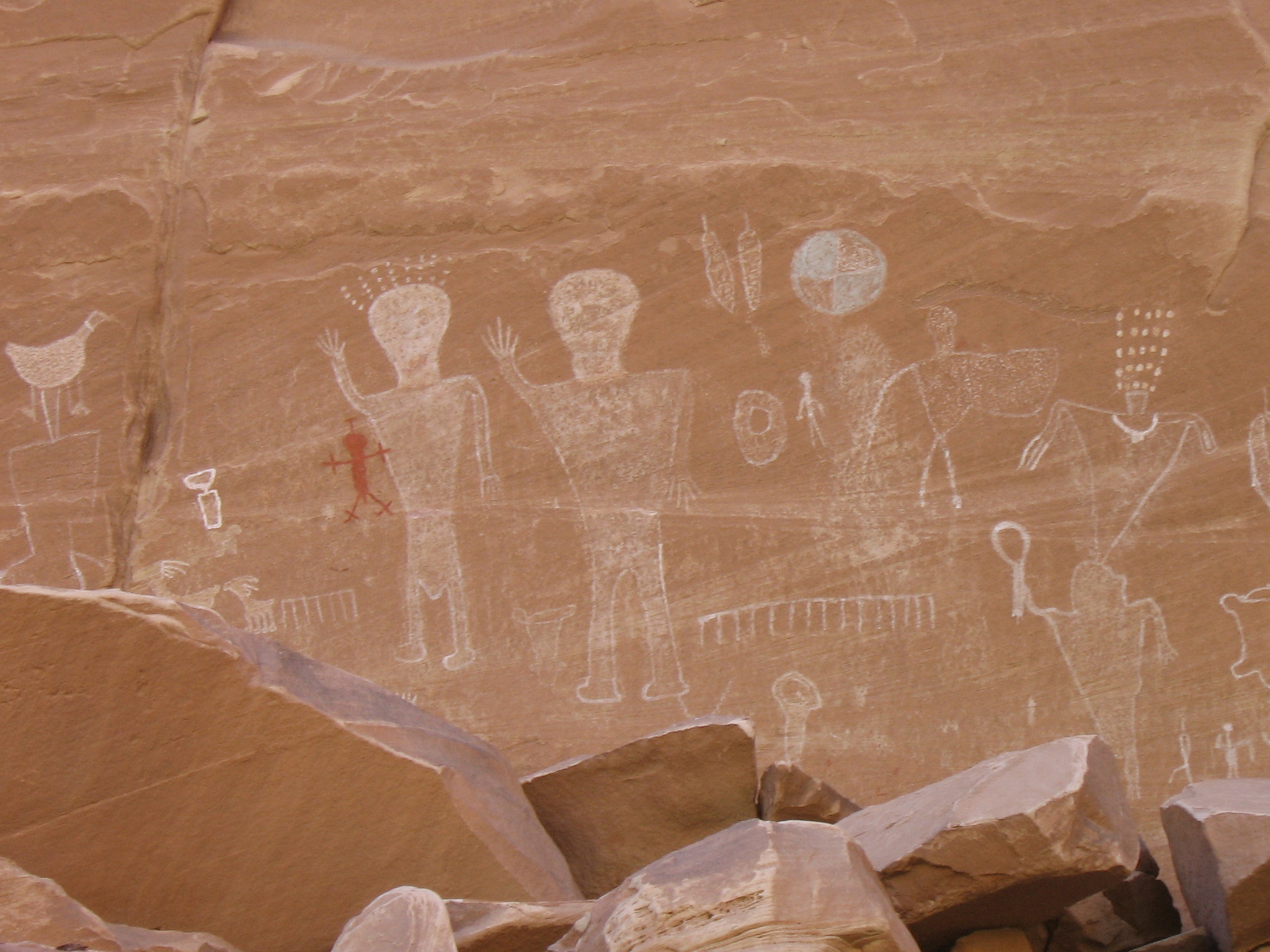
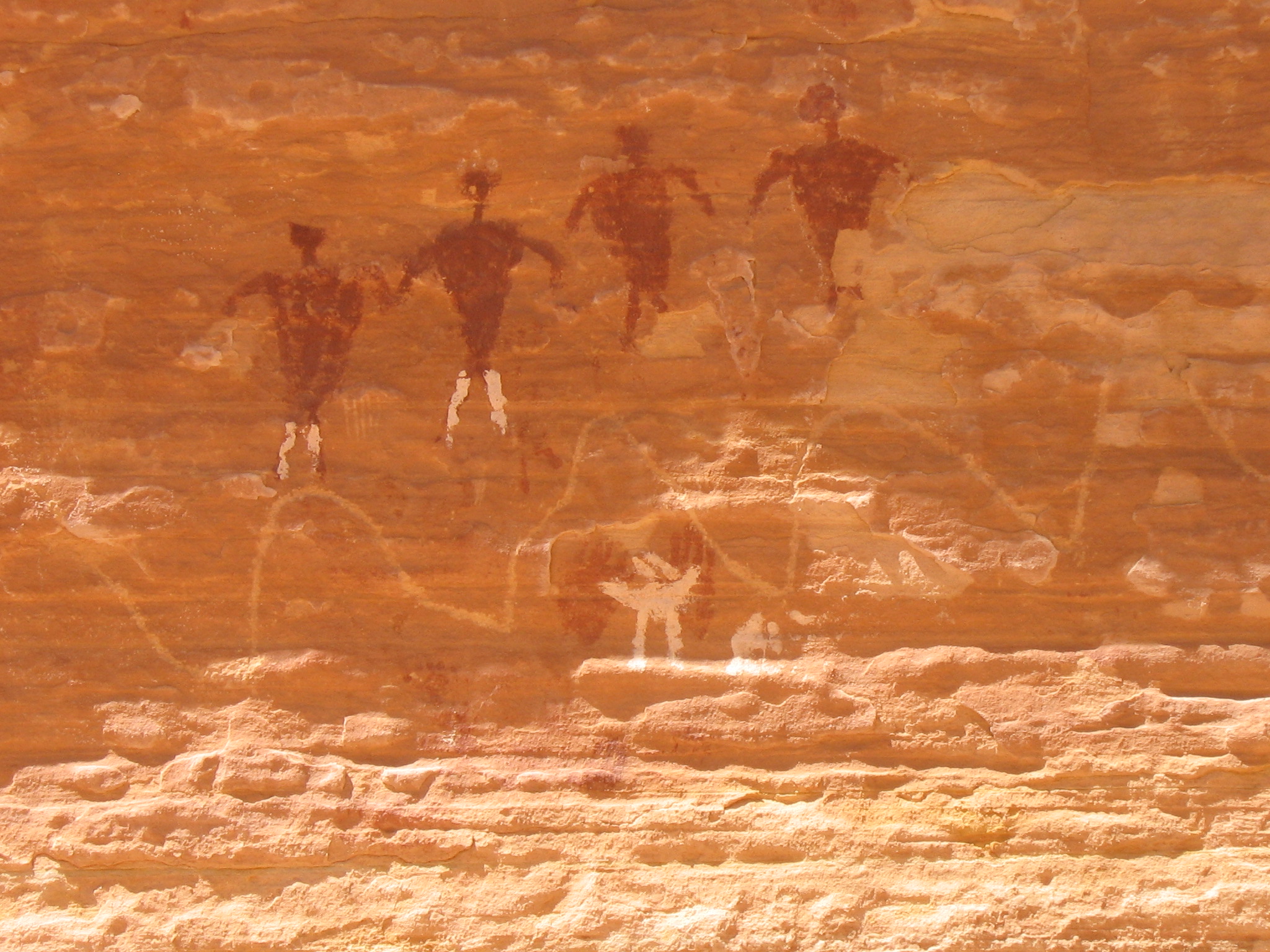
The campsite was a perfect base for exploring down the canyon, and up into a few side canyons, as well.  There aren’t too many ruins in this part of Grand Gulch, but the rock art is spectacular.  A few examples:

You can see these guys from quite a distance as you hike down canyon. You can just imagine them waving to Anasazi travellers, or to hunters coming home.

wonder what bozo thought he needed to take a shot at this guy?

To cap off these perfect days in Grand Gulch, we had a glorious view of an approaching thunderstorm as we drove off of Cedar Mesa and toward the little town of Mexican Hat:

Posted in Adventure, Camping, Hiking, Nature, Outdoors, Photography, Southwest hikes, Travel | Tagged , , , , , , , | 12 Comments

Winter Tracks

Posted in Nature, Photography | Tagged , , , , | 4 Comments

What do ya know – these things intersect!

Venn diagrams kind of annoy me.  I mean, I get the concept – the idea of the intersection between two separate sets – but doesn’t it seem like we get a bit carried away with the need to put everything in sets?  Despite my aggravation, I’ve done exactly that:  when I decided to start blogging, I put my hiking, travelling, and outdoors interests in one blog, and my history and research interests in another.  And I’m really not like that; I actually tend to see everything as connected.  So, I’m rather pleased that my latest history search turned into a little snowshoe expedition, which seems to me to nicely illustrate the inter-connectedness of everything.  The following post is one I wrote for my history blog:  The History Trail.

A Winter Search for Estella’s Cabin:  Looking for the Belmont Mine

Estella and William Muth lived in the tiny mining town of Belmont, Montana in 1881.  Belmont no longer exists, but I did find the Belmont Mine on a map, and today we decided to put on the snowshoes and see if we could find the mine, and maybe even a cabin or two.

We started at Ottawa Gulch, right above the town of Marysville.  Marysville was a booming town of about 4,000 in the 1880’s, and  in her diary Estella Muth often mentioned heading “downtown” from her house in Belmont. (For more on Estella’s diary, click here.)  Marysville had a drug store, grocery, churches, a bunch of saloons, and a post office, and was supplied by a train that arrived each day from Helena.  Today fewer than 200 people live there.

We snowshoed uphill, working our way southwest through the forest, and after about an hour of hiking we found a small structure:

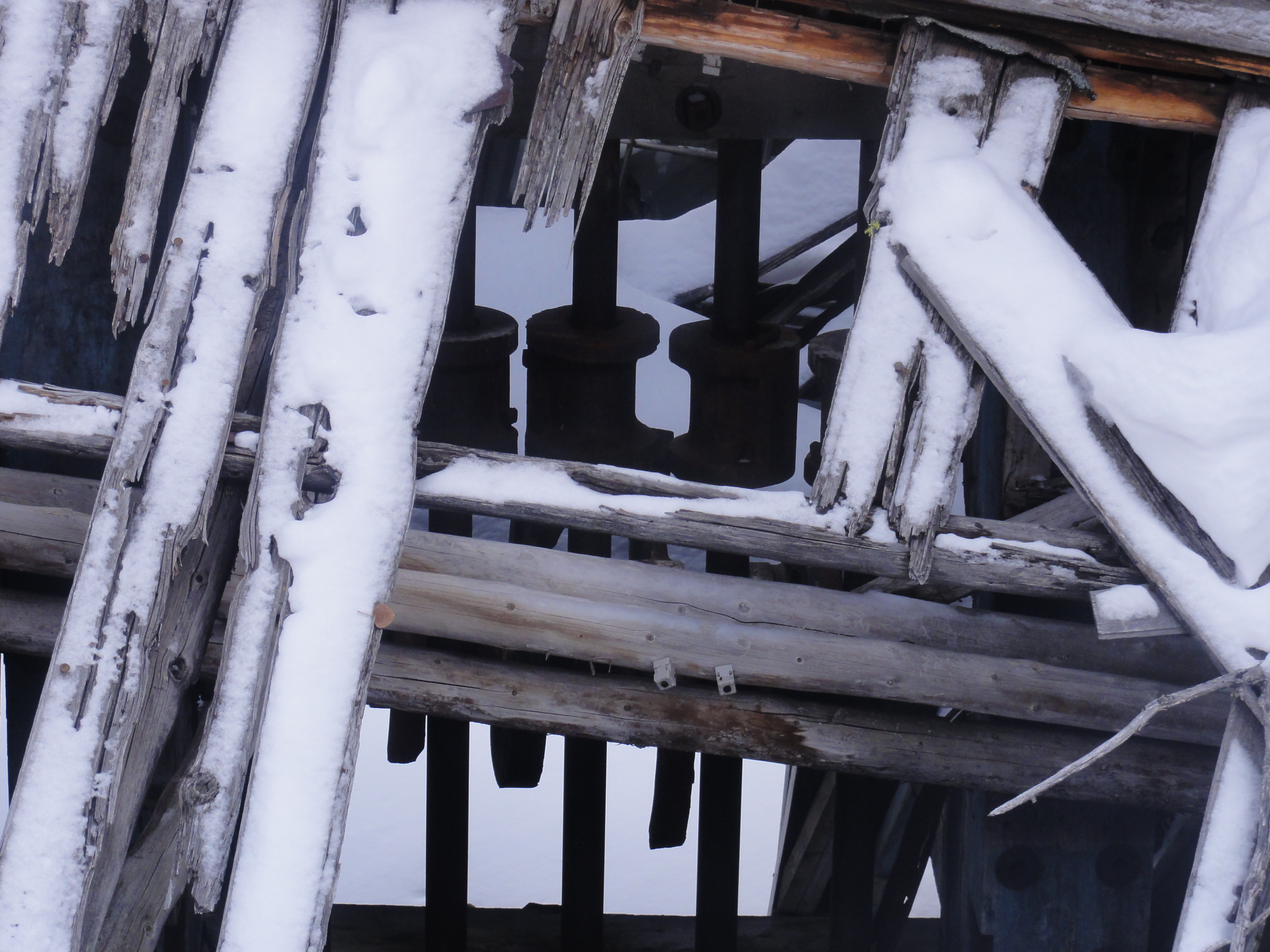
Not sure what this building was used for, but right below it was a small stamp mill:

The "stamps" inside the mill: used to crush the ore

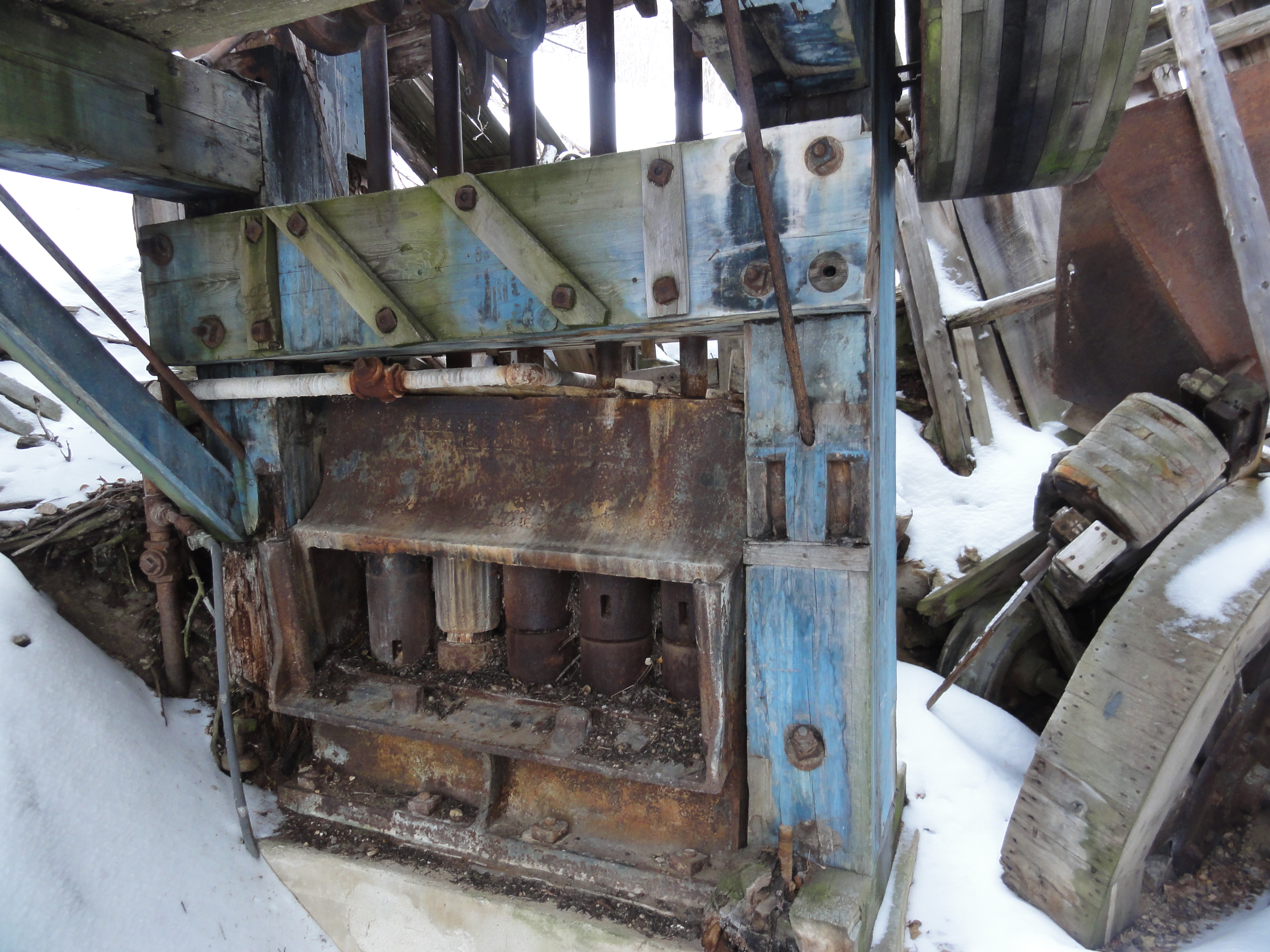
The stamp mill crushed the ore so that the gold could be extracted.  Large stamp mills must have been incredibly noisy; the stamps pounded the ore day and night.  I’m sure that the pounding of the crushers was a constant soundtrack to Estella’s life in Belmont.  Indeed, Estella mentioned in her diary that the mill kept running even after six men were killed in the “Belmont disaster.”  The Belmont stamp mill was a large one, with 30 stamps, and I learned after we returned that it was destroyed in 1944 as a training exercise for a demolition team from nearby Fort Harrison.  So this little mill that we found was not the one for the Belmont Mine.  Nonetheless, it was an interesting discovery.  Here are some more pictures of the stamp mill:

Interior: the big chute for the ore

Big wheel for the flat belt that transmitted the power from the steam engine

Another view of the interior. Love that blue paint.

We didn’t find any standing cabins on this trip, but plan to return in the summer and continue the search!

If you’re interested in more detail about how a stamp mill worked, Wikipedia has a great article.

Here are a couple more shots of Marysville today:

Posted in Adventure, Hiking, Montana, Nature, Photography, Travel | Tagged , , , , , , | 7 Comments

Yellowstone in Winter: Let Sleeping Grizzlies Lie

I’ve never come upon a grizzly bear while hiking in the backcountry, and that’s just fine with me.    I’ve backpacked  a time or two in grizzly country, but never in Yellowstone or Glacier.  I just know that I’d be wide-eyed all night, bear spray at the ready, waiting for…well…you know: Night of the Grizzlies.    I do hike in grizzly country, but I’m definitely on my guard the whole time.     And, even though I’m not a huge fan of winter, one of its perks is that the bears are sleeping.   Usually.

Go to sleep, giant grizzly!

Last December we arrived back at our car after a long ski in Yellowstone, and turned around to find this fellow on the hill above us.  For cripe’s sake.   Now, I know that bears don’t really sleep all winter, and that they sometimes get up and wander around (or take a long time to actually start to hibernate)  but I was just counting on the odds of actually meeting one being in my favor.  And I guess they were, since we didn’t run into him on the trail.  And I’ve got to say, he really wasn’t particularly interested in us – he just kept on his way, without a glance in our direction.  And he was one good looking bear.

We just returned from a bear-less weekend in Yellowstone, and it was beautiful.  I think the pictures tell the story best:

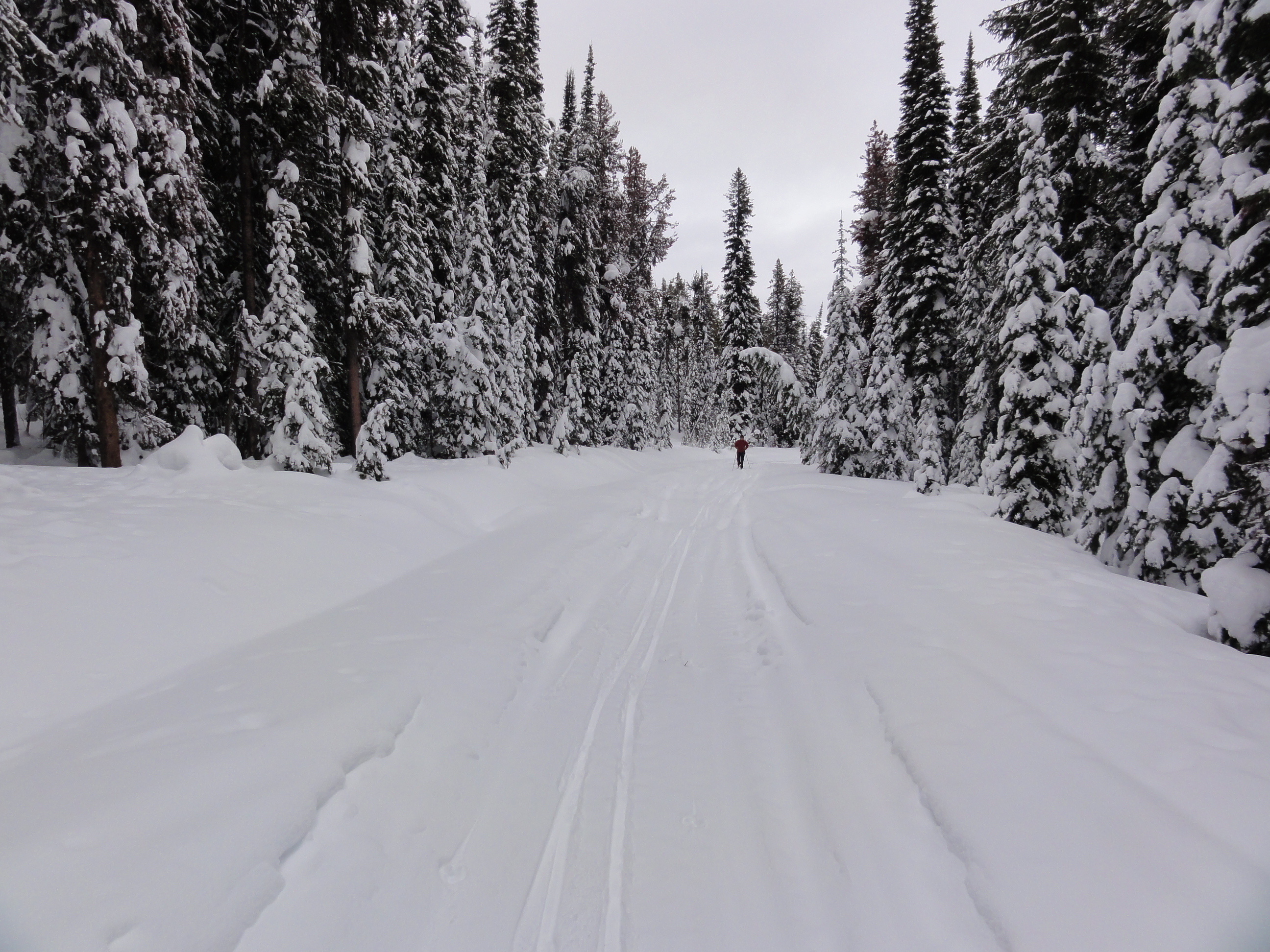
Heading out along Blacktail Creek

Struggling to get out of the creekbed

A bull elk along the way

And a slightly older elk

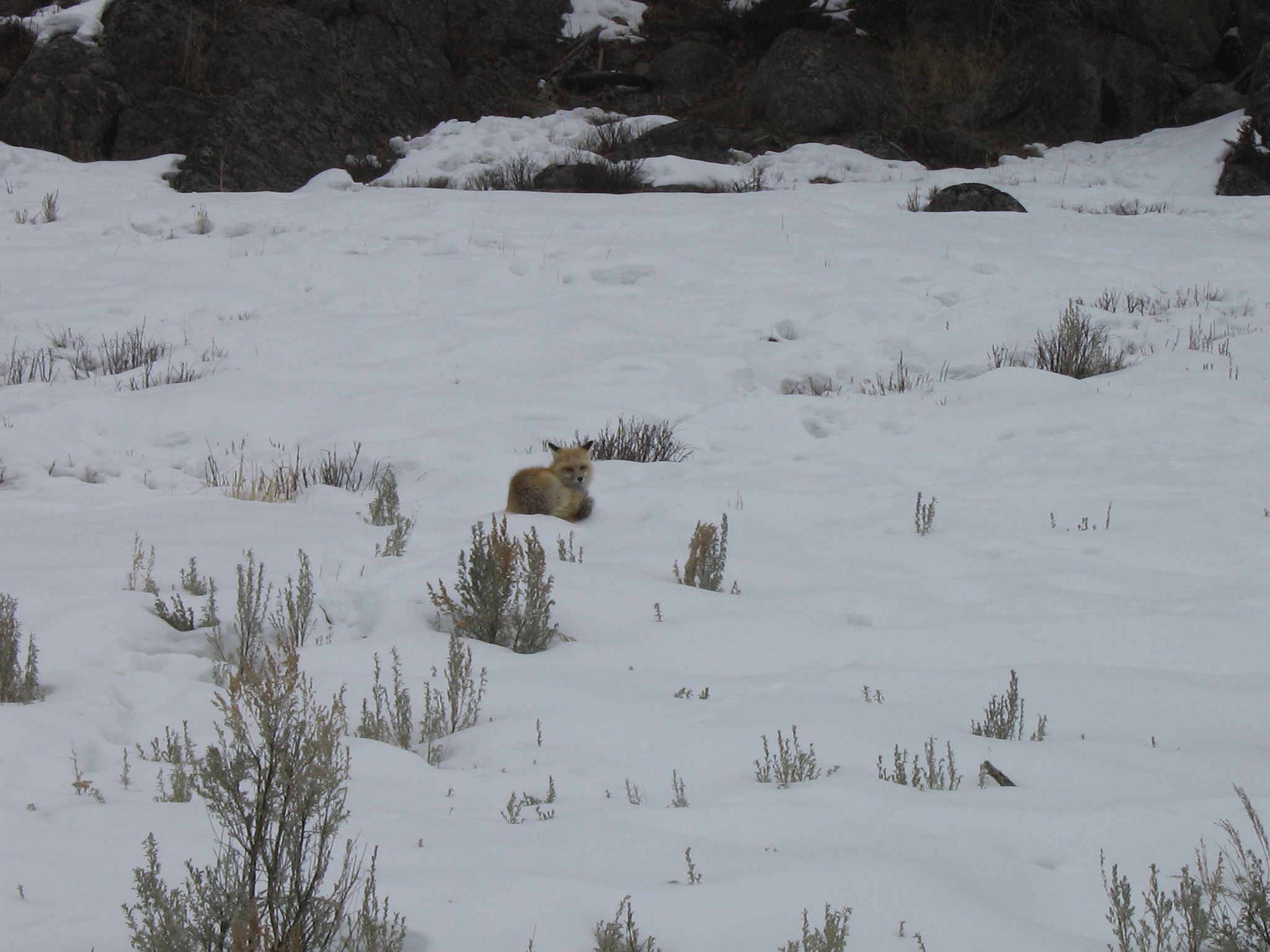
A cozy fox

Coyotes

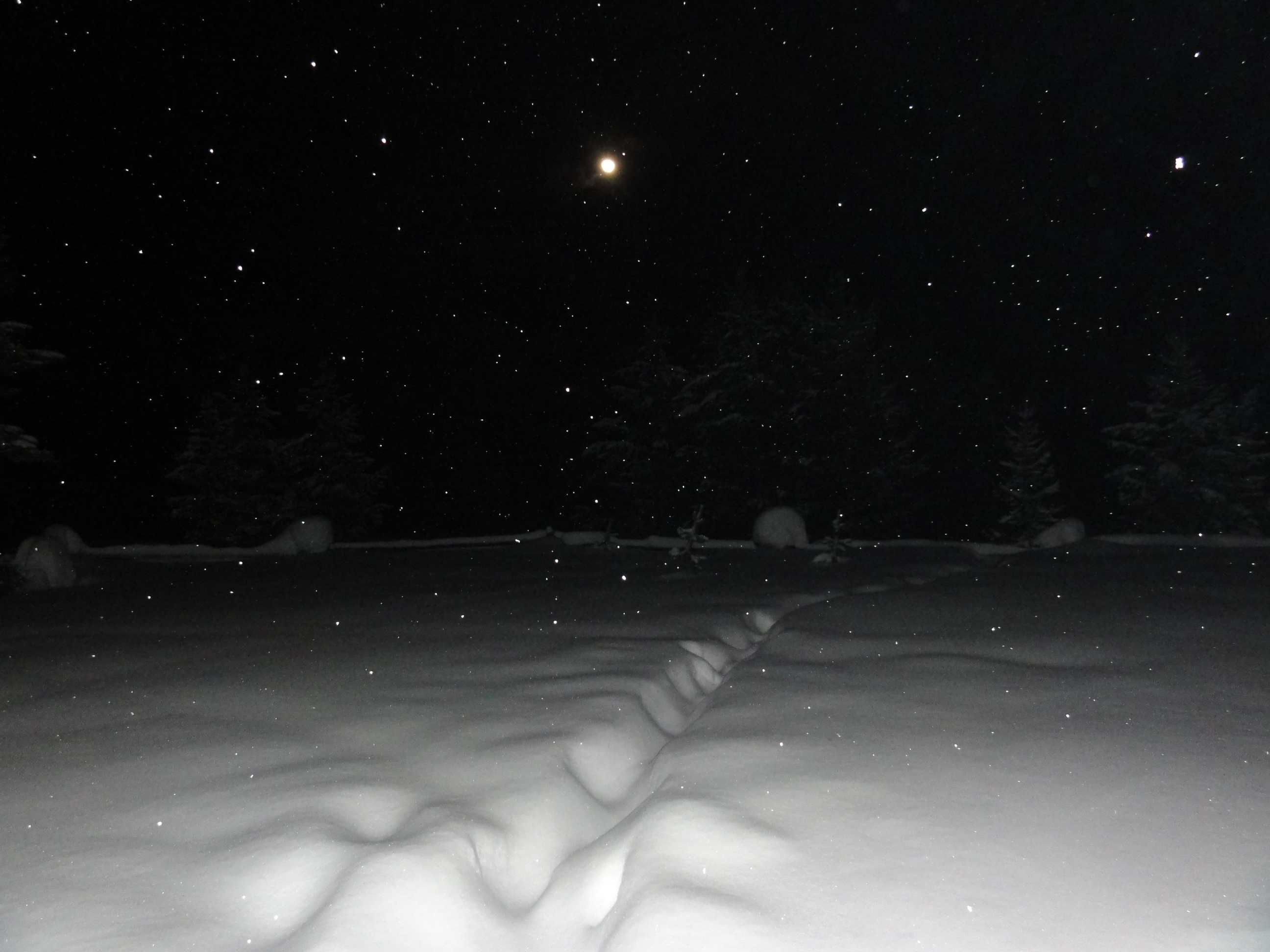
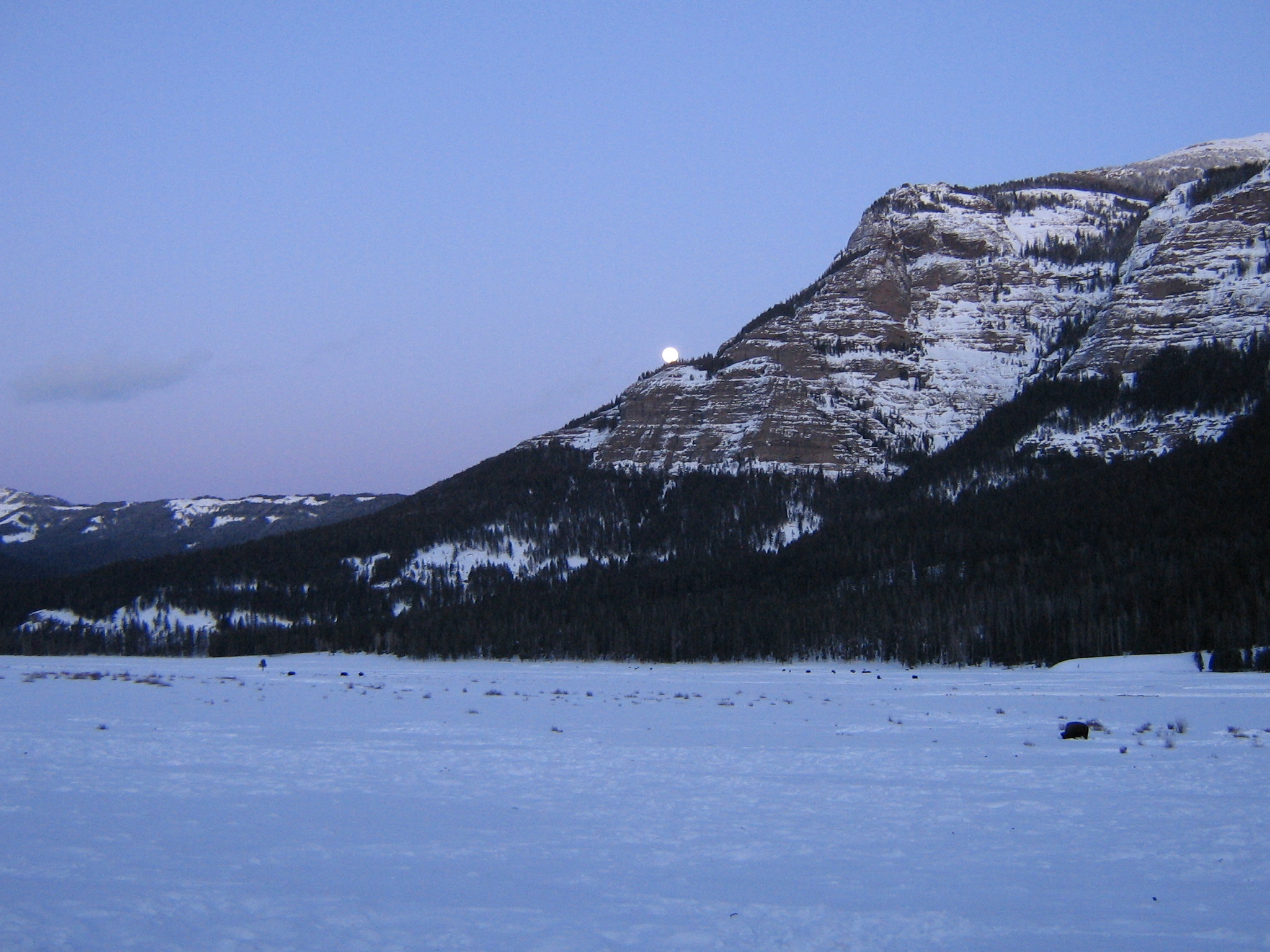
Moonrise over Round Prairie

Posted in Adventure, Camping, Hiking, Montana, Nature, Photography, Travel, Yellowstone | Tagged , , , , , | 135 Comments

Looking for the Procession Panel: Treasure Hunt in Canyon Country

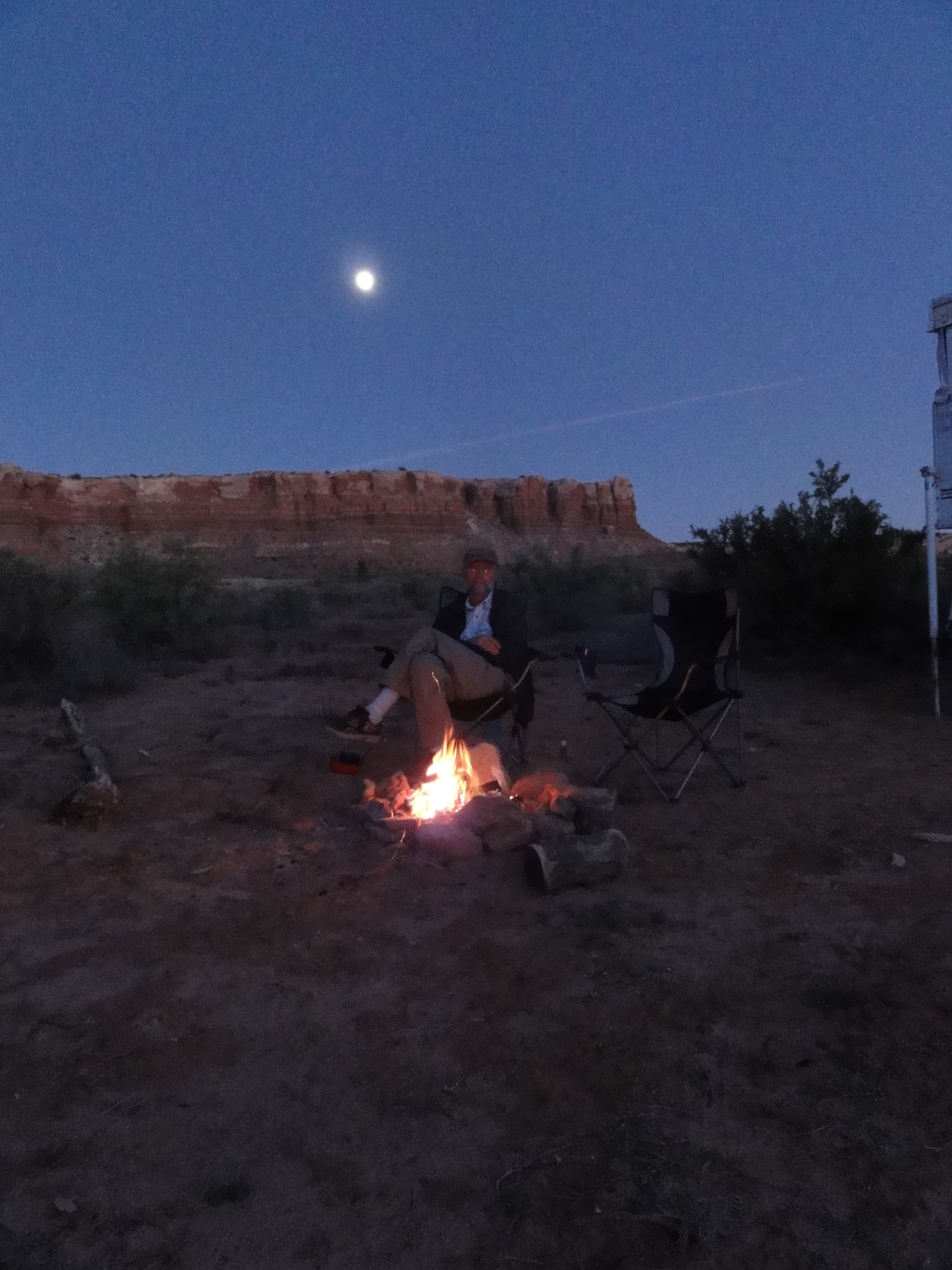
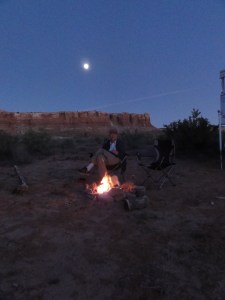
Campsite at Butler Wash. Near Bluff, Utah, October, 2011

I’m sure you can go on-line and find some pretty precise directions to the Anasazi petroglyphs called the Procession Panel, but we’re part of the group of stubborn hikers who like to pretend that we’ve found these cool ancient sites all on our own.  Not sure what that’s about, really, except that I guess we all make up our own rules for our individual treasure hunts.    So, according to our rules, it’s fine to look up the starting point for a site, but beyond that, we’re generally on our own.  Of course, it doesn’t hurt that neither of us are particularly chatty when we’re out on the trail, so we’re not tempted to seek out hints from the occasional hiker we meet when we’re out searching.

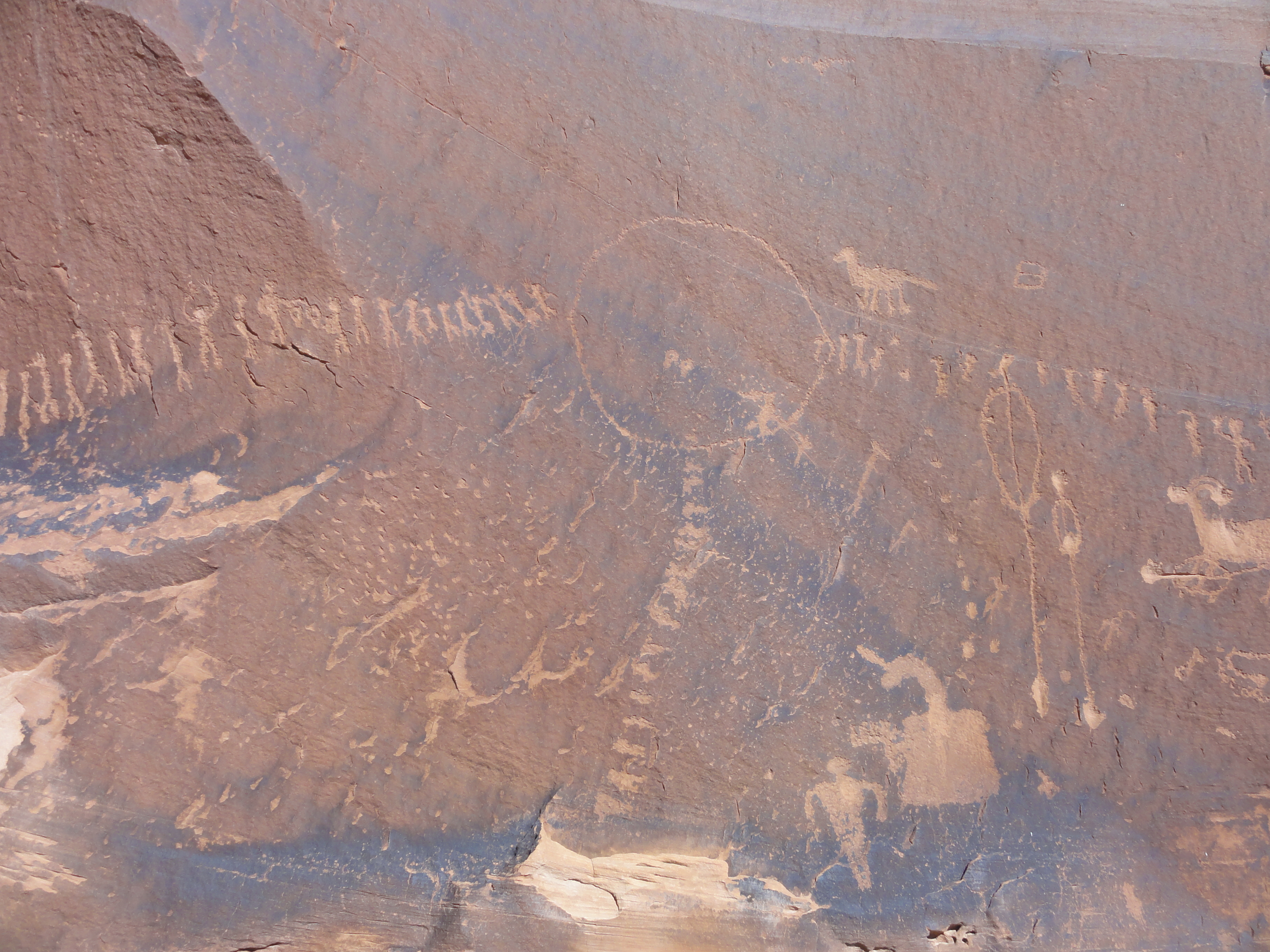
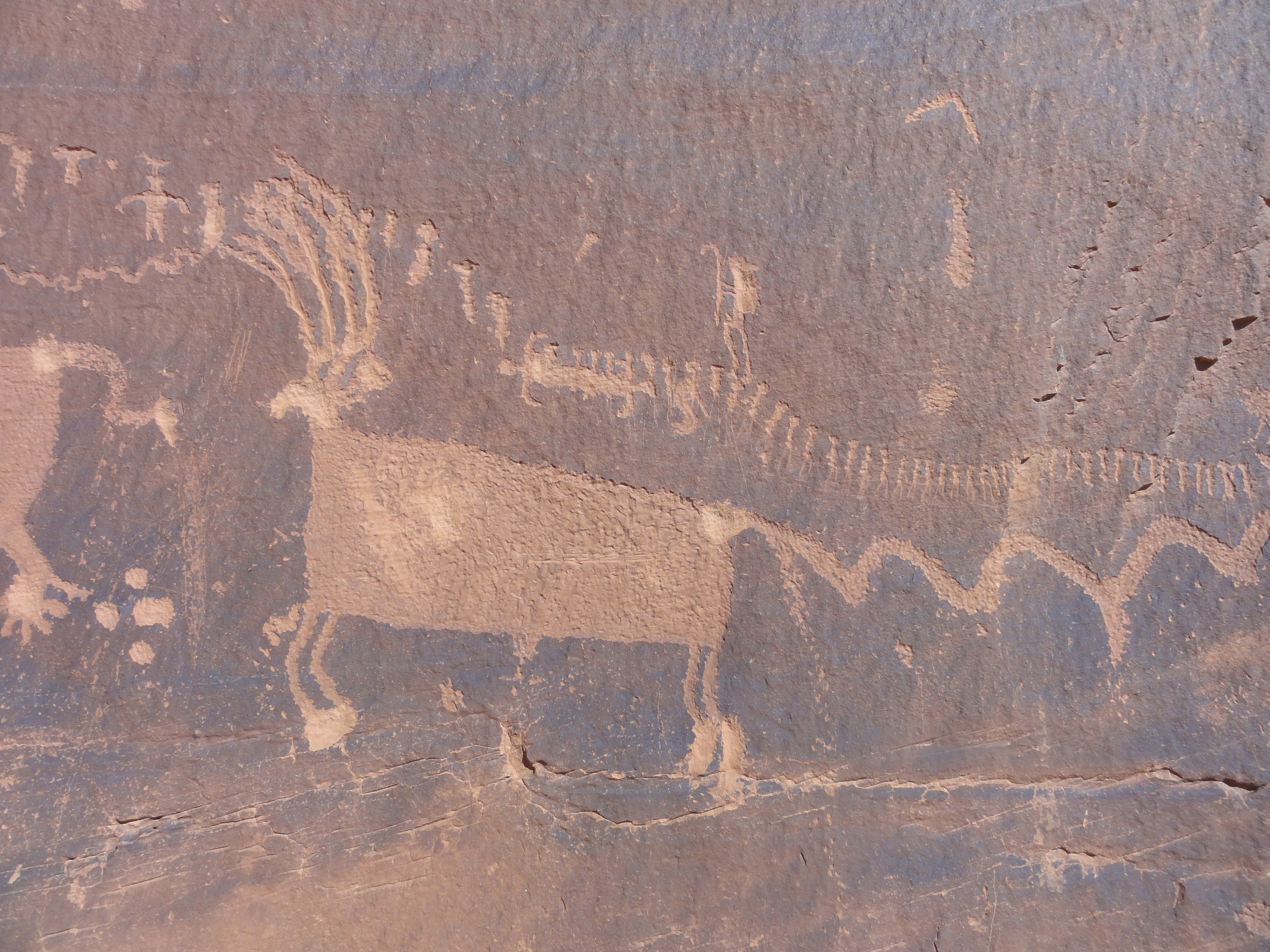
The Procession Panel was only discovered by hikers about 30 years ago, and it is a beautifully preserved example of Ancestral Pueblan rock art.    I’d read about the large panel that shows a procession of people and animals that stream from both sides of the rock face toward a large incised circle, and we wanted to find it.

We found the trailhead,  about 14 miles north on the pretty rough Butler Wash road.    Butler Wash is a tributary of the San Juan River, and was clearly quite populated a thousand years ago; there are ruins and rock art all along the Butler Wash road between Bluff, Utah and Highway 95 near Blanding, Utah.

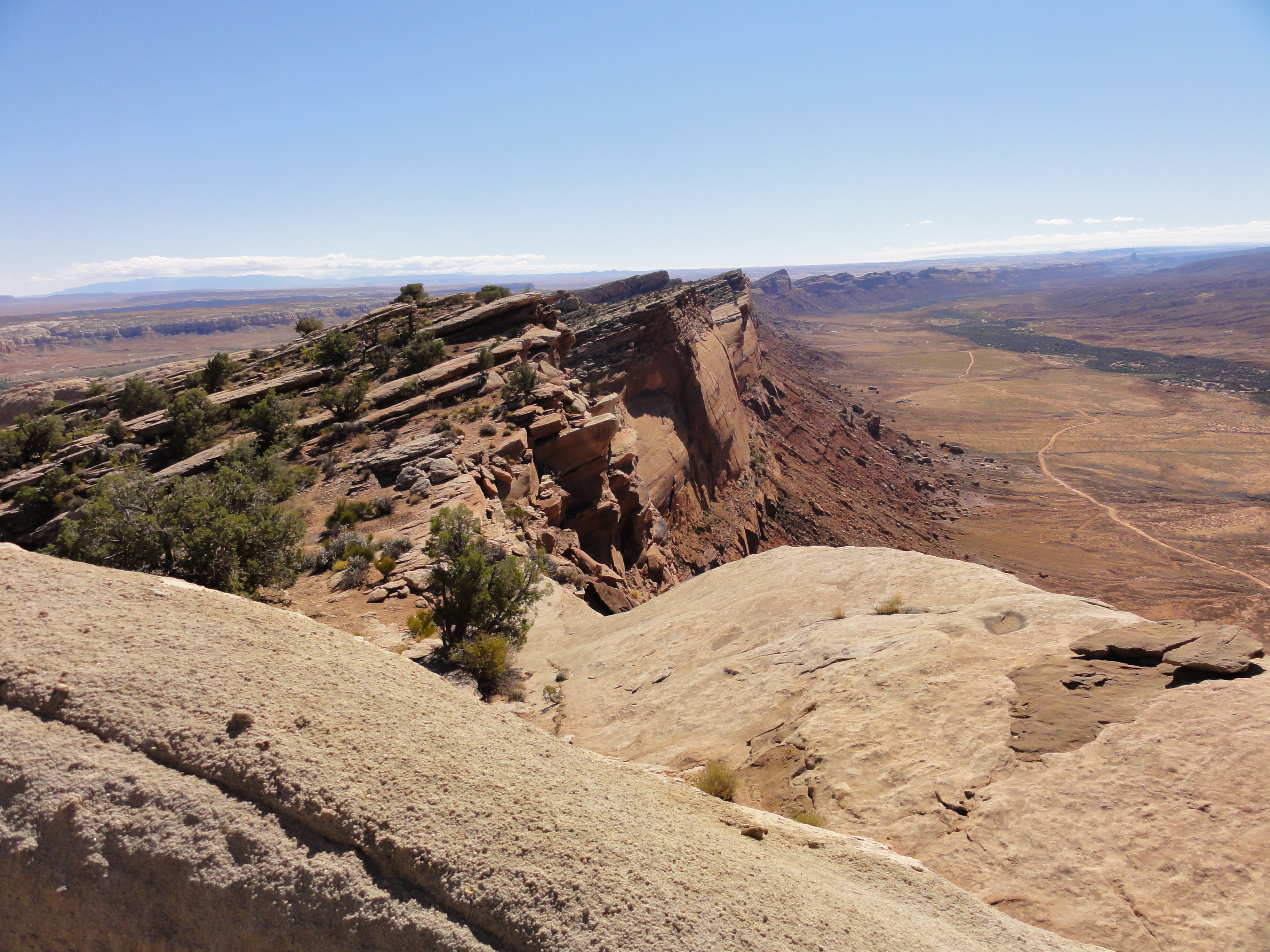
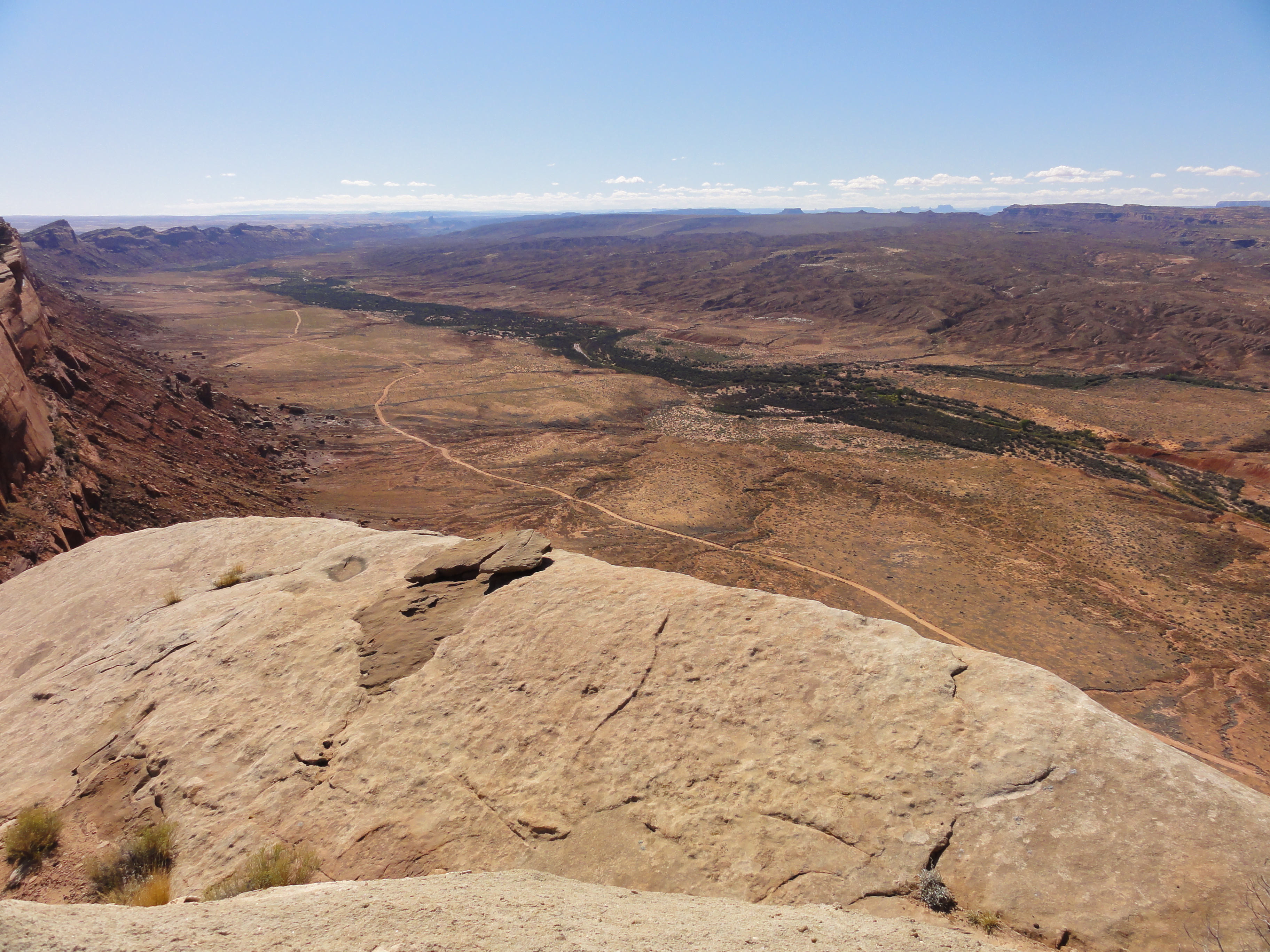
We knew that the panel was near the top Comb Ridge, a long monocline that runs the length of Butler Wash.    Here’s a view of Comb Ridge from the steep western side:
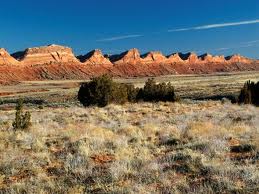
Butler Wash is located on the other side of the Ridge: the eastern side

The biggest obstacle to climbing Comb Ridge from the east is crossing Butler Wash, which has steep 20 foot banks on each side, and is choked with tamarisk.  If the weather had been wet it would have been rough going, but we were able to beat our way through with no difficulty.  Once we emerged from the wash, we could see that we had a choice of two drainages we could follow to get to the top.  We chose the southern one.    We were following cairns most of the way, so were pretty confidant that we were on the right trail.
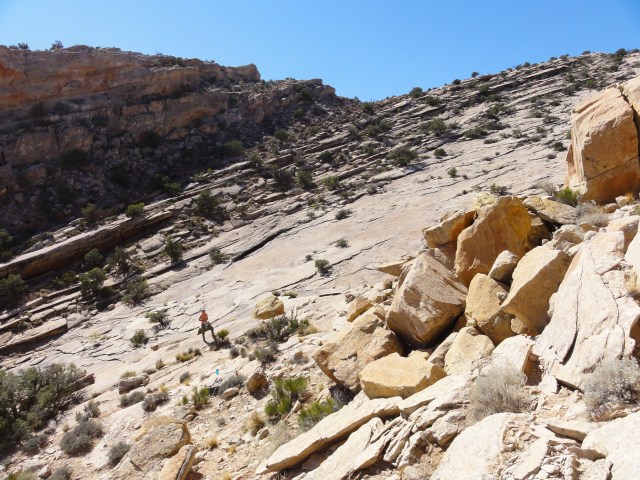
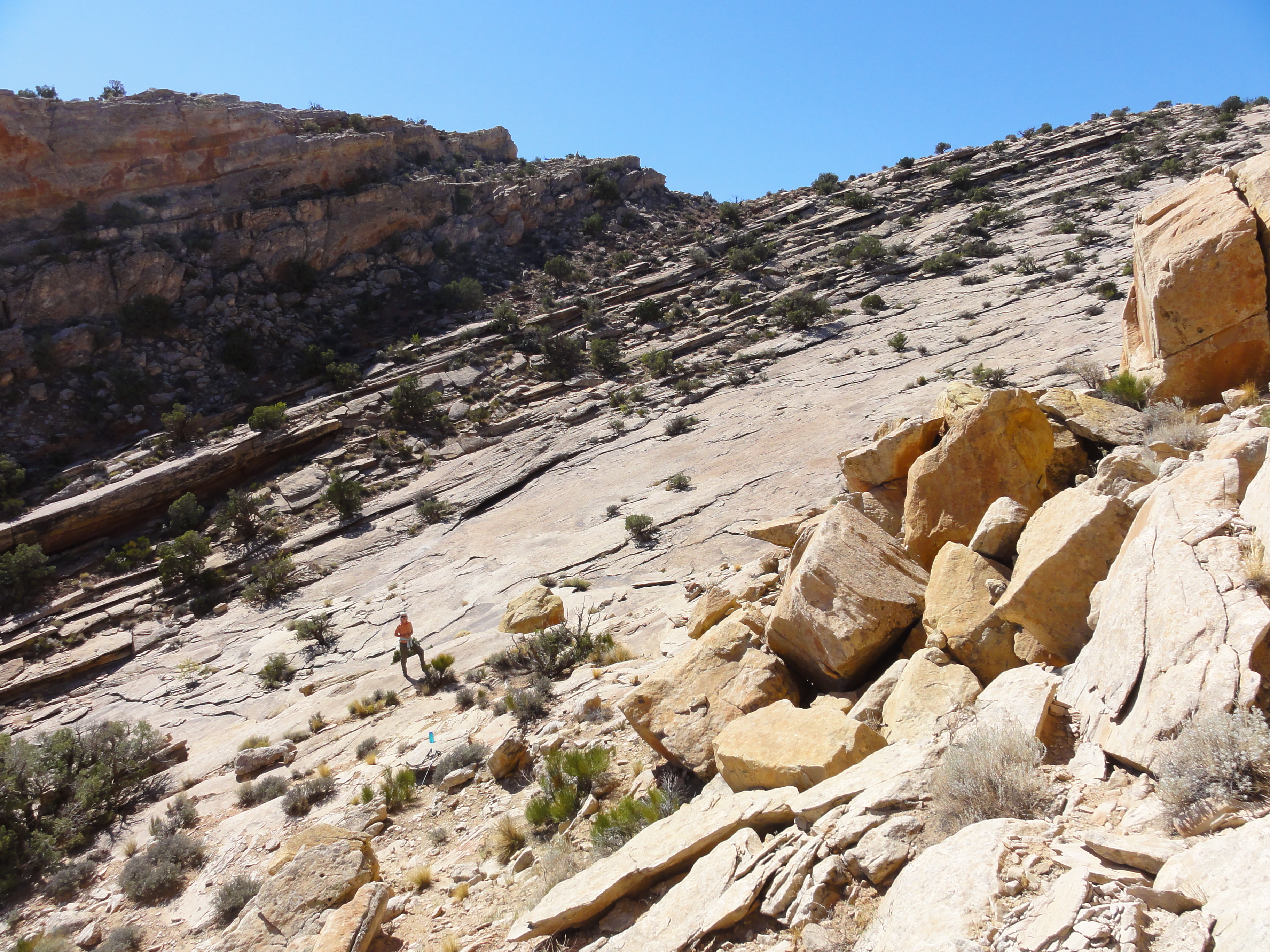
getting close to the top of the ridge

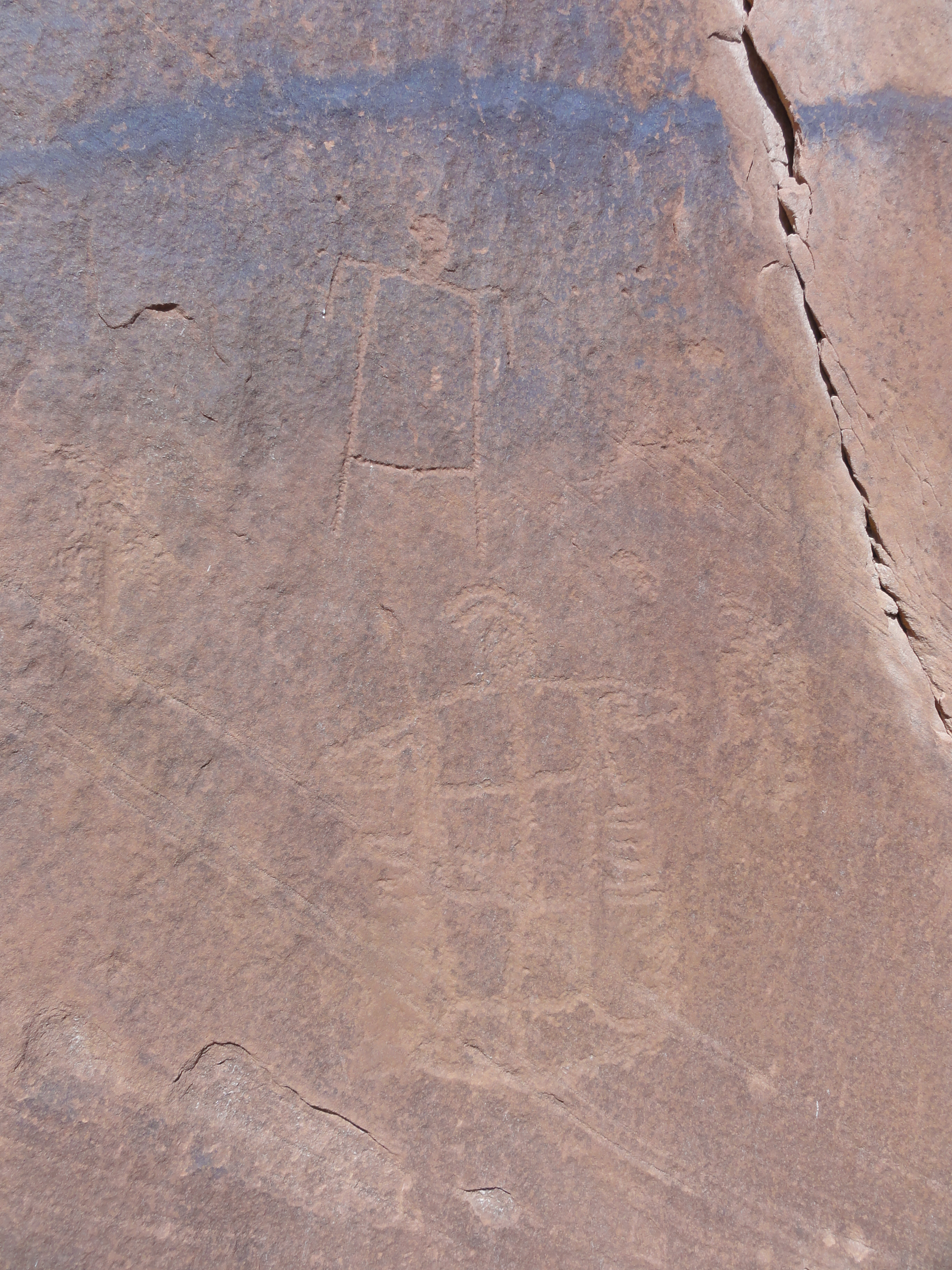
Along the way we scrambled up to the base of the cliffs, looking for the panel.   We found some old, faint petroglyphs that were very cool,
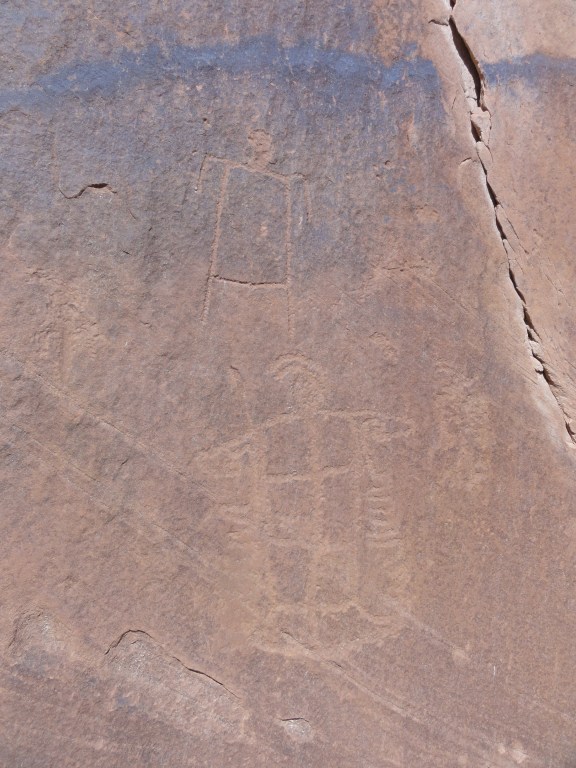
but no Procession Panel.    Once at the top of the Ridge, though, the view was a huge reward.
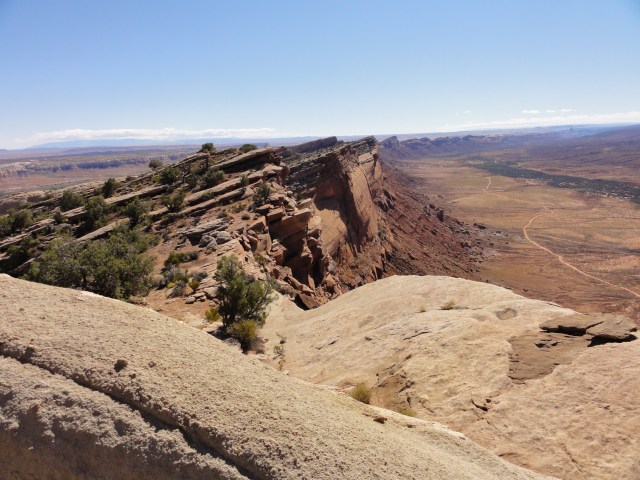
top of the Comb, looking south

looking southwest

Stunning views, but we were pretty worried that we would have to go down without finding the Procession Panel.   After lunch I scoped around with the binoculars, and managed to find the panel that way!  It was one drainage over (we chose the wrong one down at the bottom), and we’d have to go about halfway down and then climb up again, but we were pretty darned pleased with ourselves.  We packed up our lunch, and headed down and across, and this time we found it.  And I’m so glad that we did.  It is one of the best rock art panels I’ve seen.    And, I’ve got to say, it was actually more rewarding to kind of discover it for ourselves than it would have been if we’d walked right to it.

Here it is!
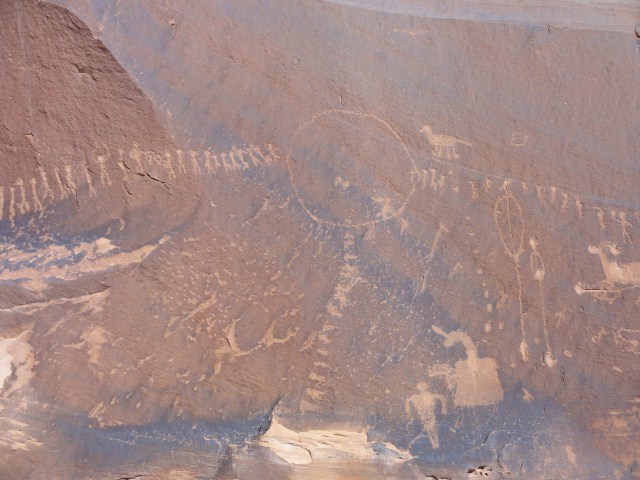
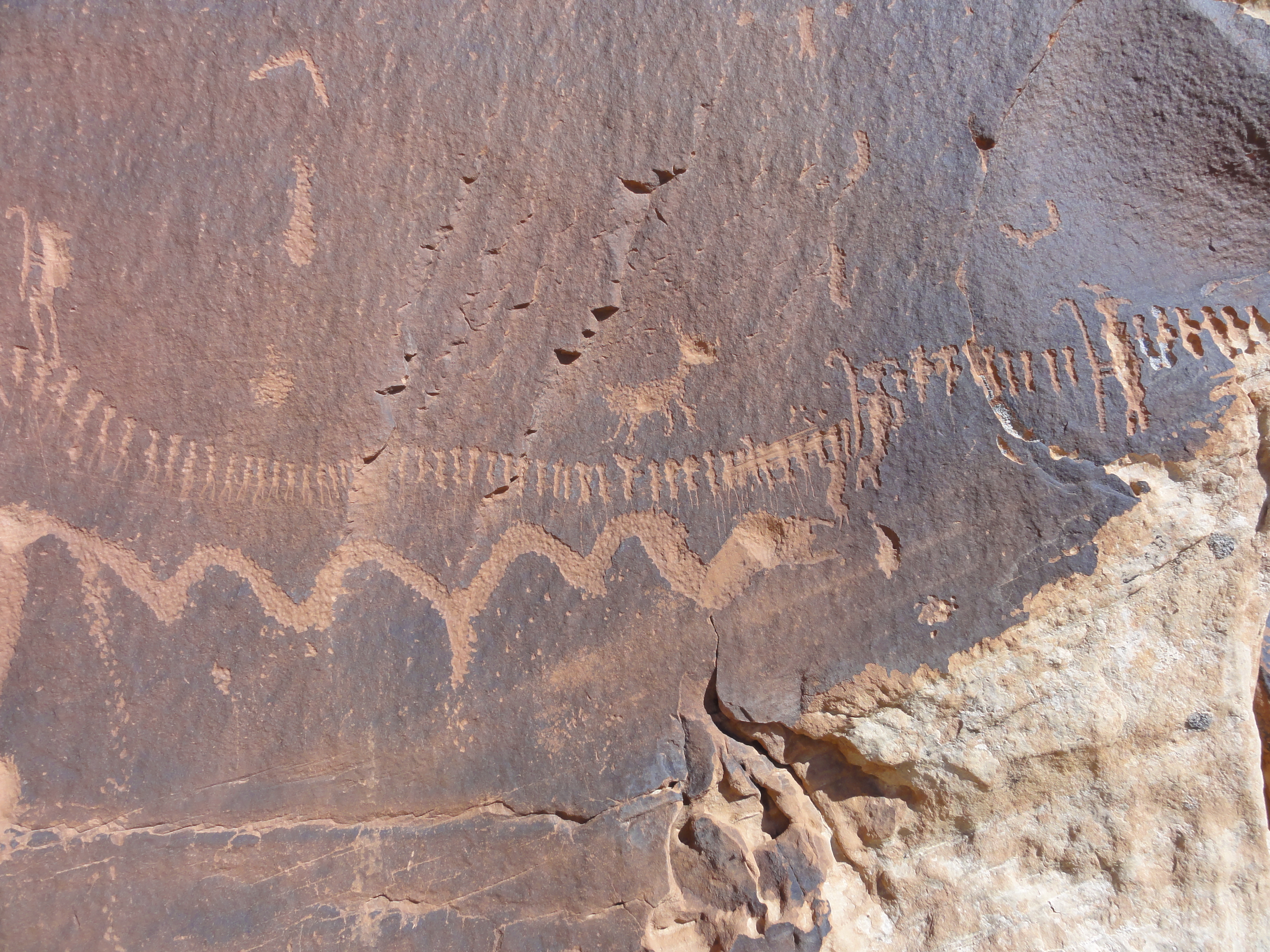
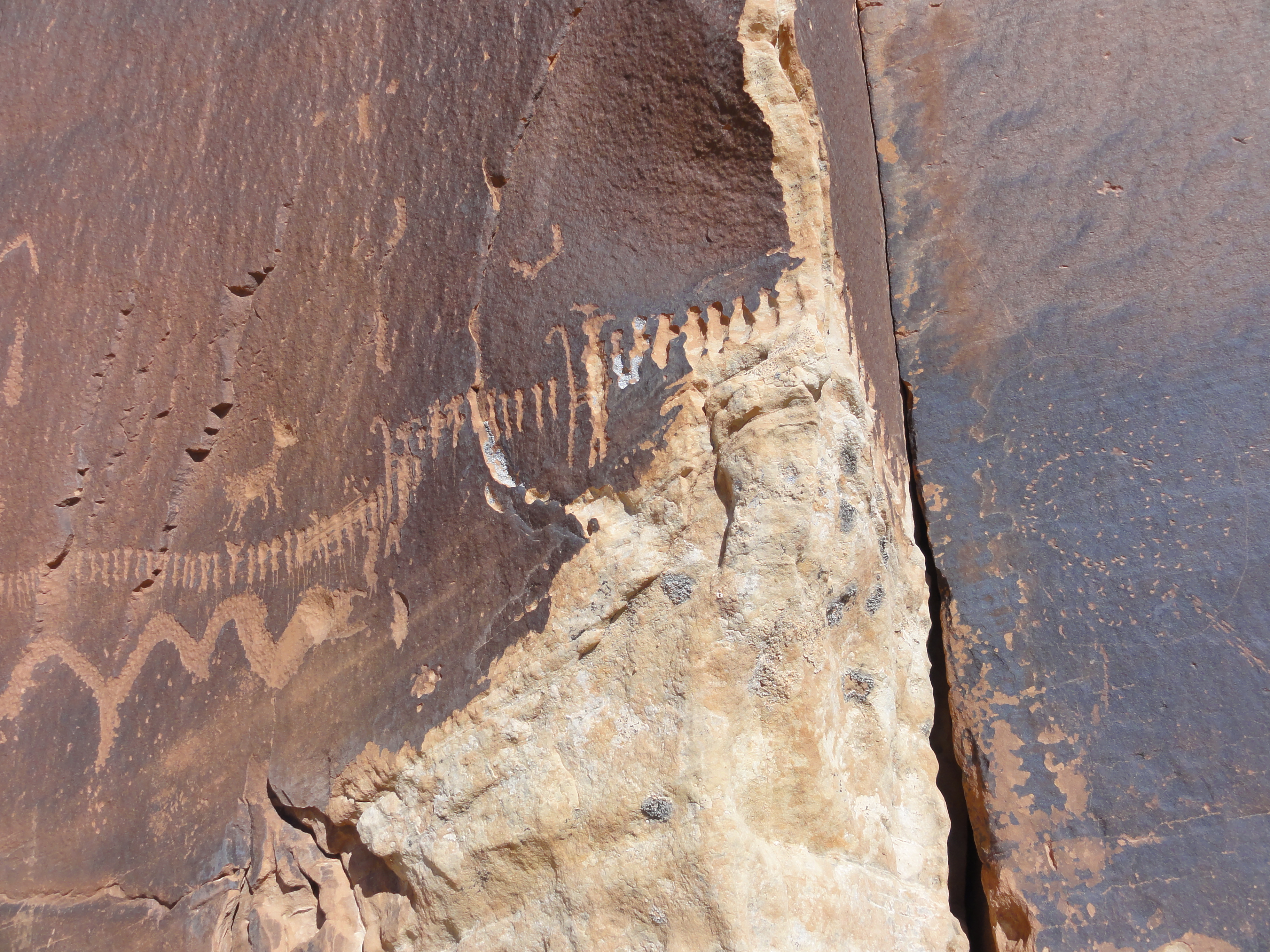
see the people and animals heading to the circle from each side?

Panel details:
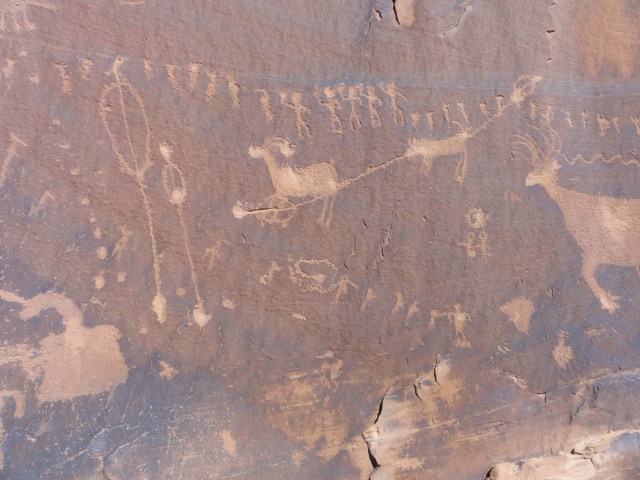
love the waving guys
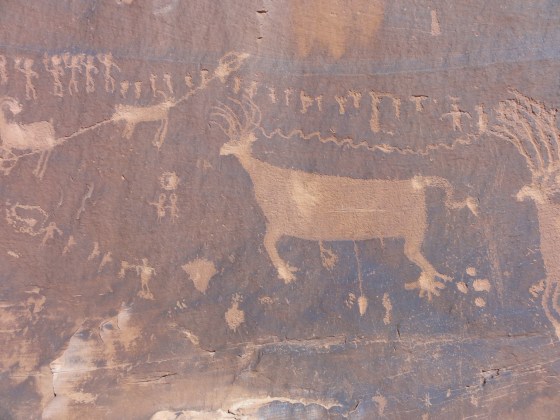
i
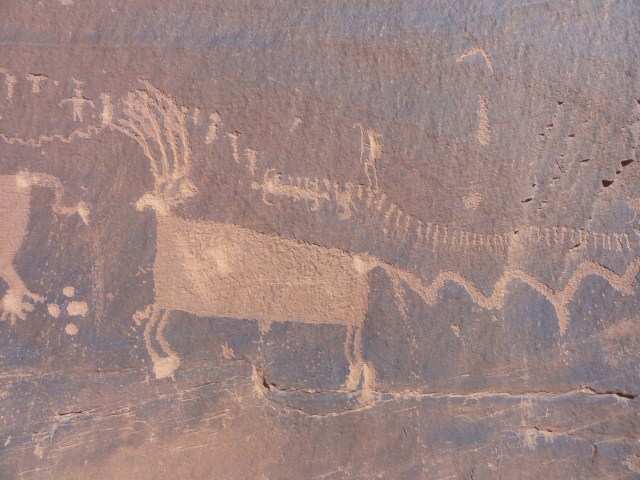
See the fellow with the backpack walking on top of the smaller figures? And do you think this deer is pooping?
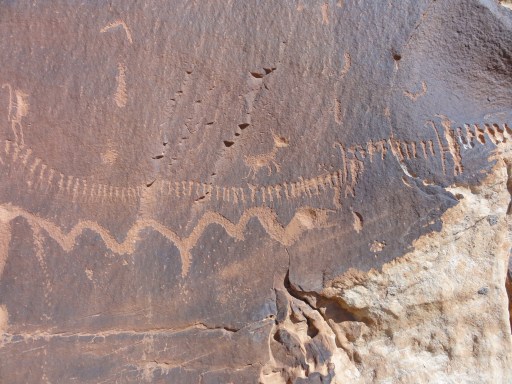
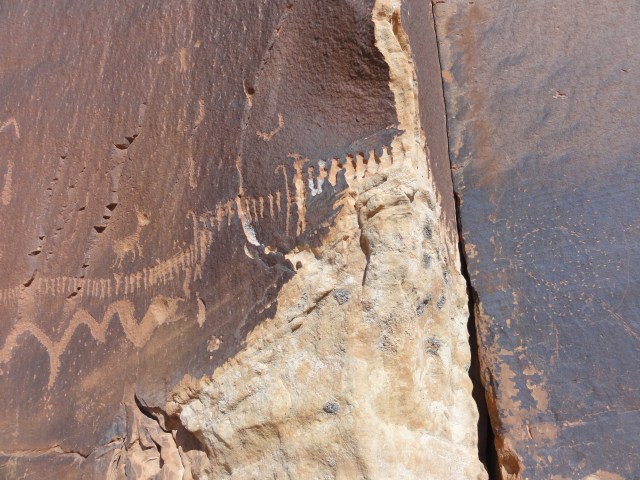
The procession comes out of a crack in the wall and heads around the corner. How cool is that?

Posted in Adventure, Camping, Hiking, Nature, Outdoors, Photography, Southwest hikes, Travel | Tagged , , , | 5 Comments

Ranger Cabin + Caviar + Cosmopolitans = the perfect winter solstice

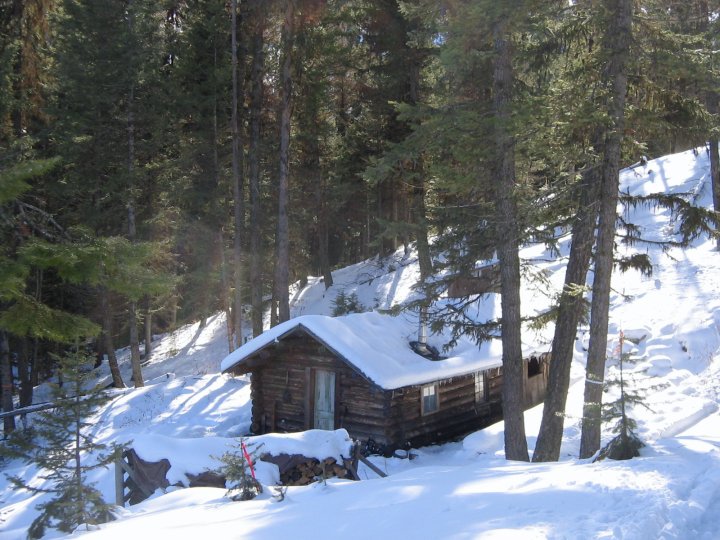
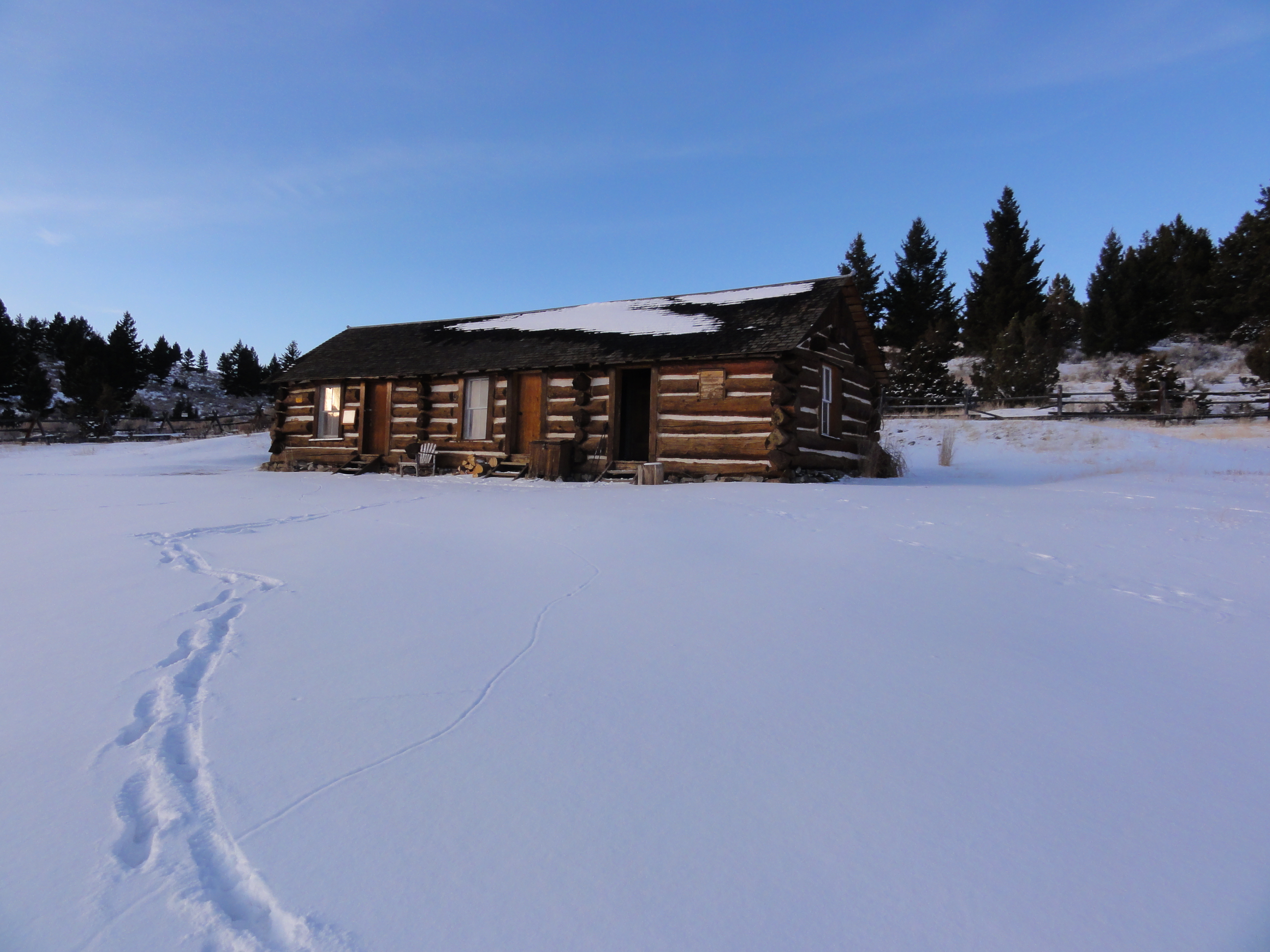
One of the charms of Montana is that we can live in town, but decide on the spur of the moment to rent a ranger station for the night, pack up, and be at the trailhead in a couple of hours.  We did exactly that this week, and rented the Eagle Guard Station.   I particularly like this cabin because it was built in 1895 by a miner for his wife and daughter,  and is probably the oldest cabin that the forest service rents.   
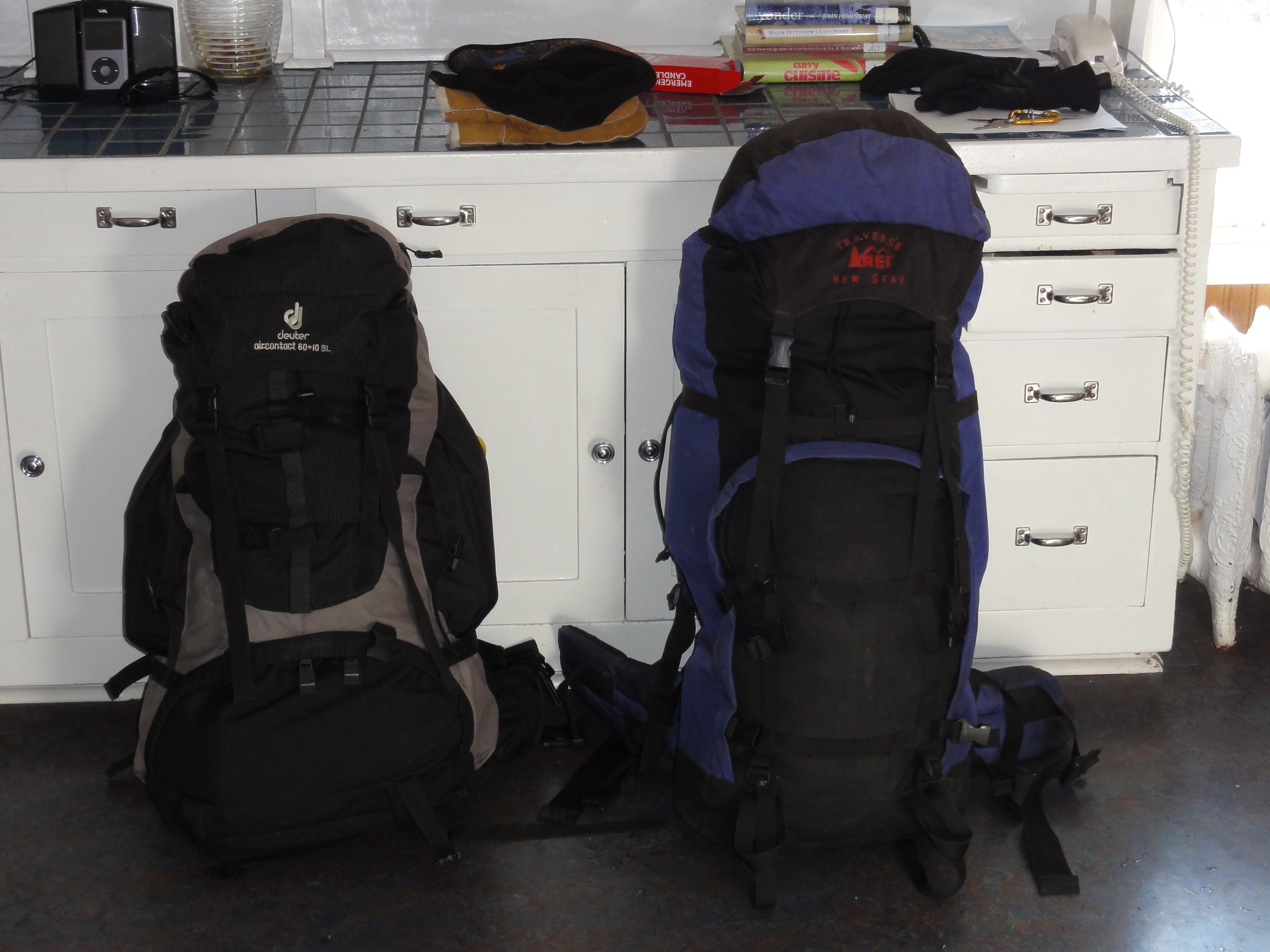
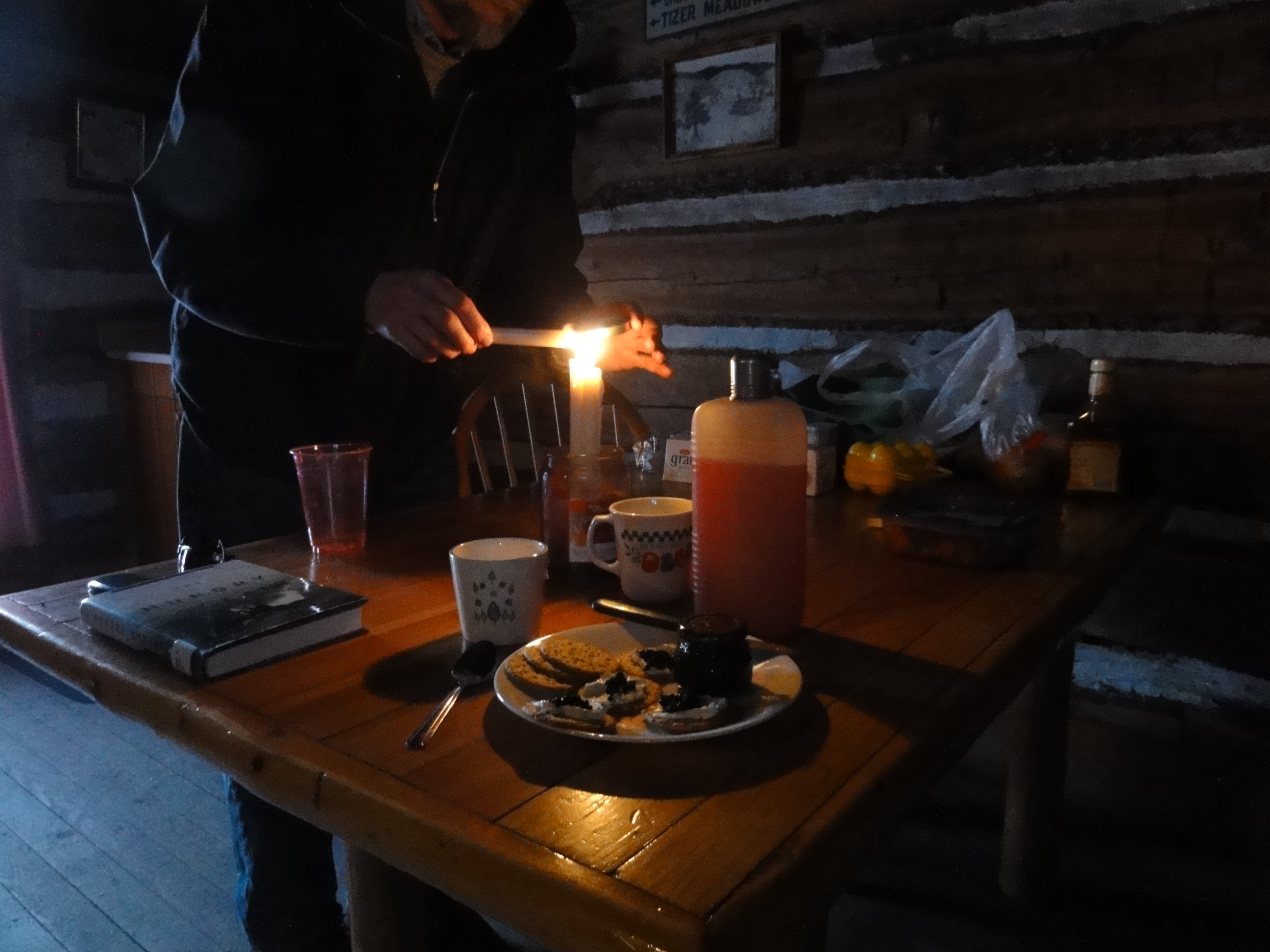
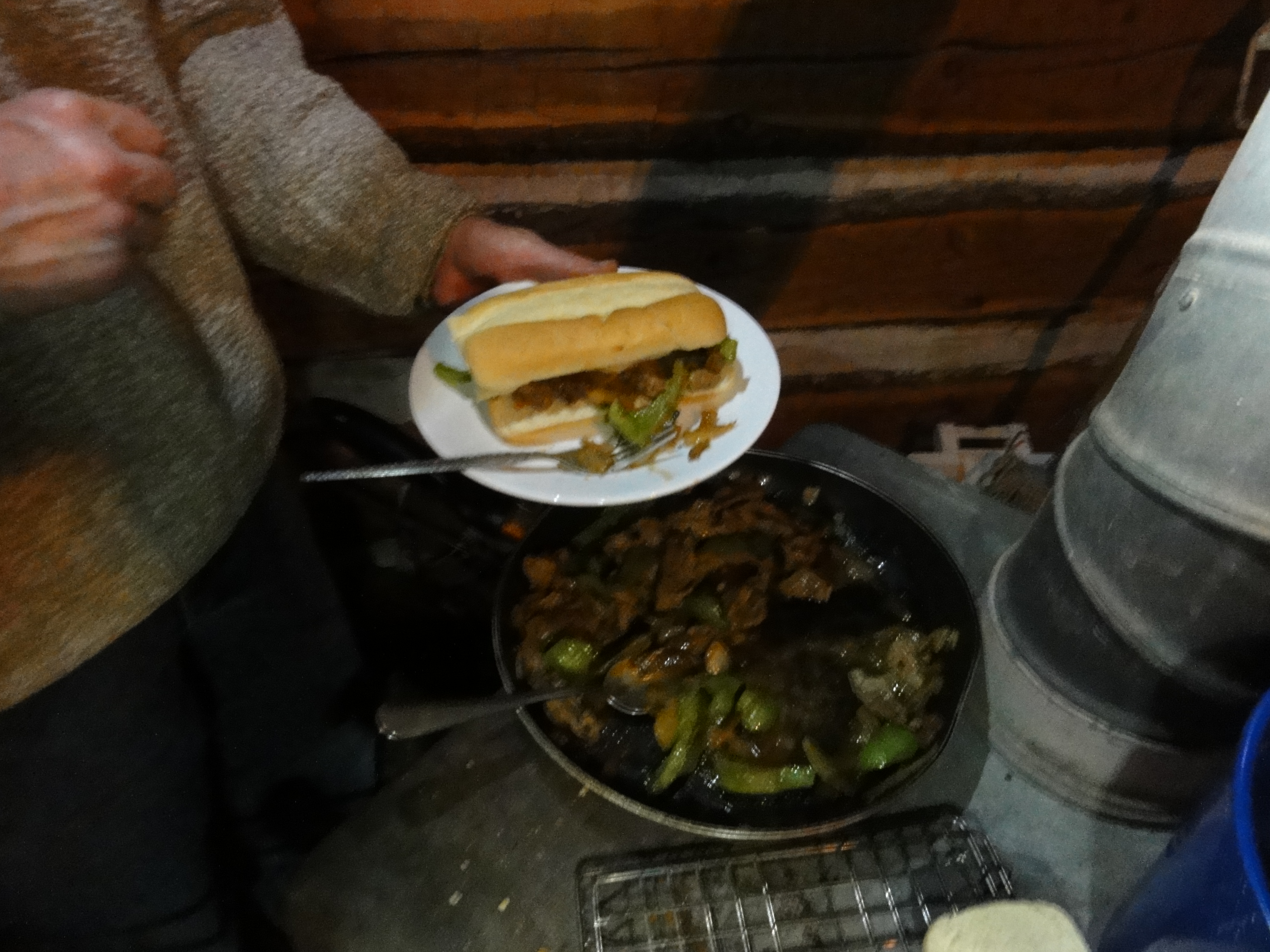
We packed the backpacks with caviar, crackers, cream cheese, cosmopolitans (in our classy plastic flask), marinated steak, peppers and onions for sandwiches, eggs and sausages, oranges and breakfast blend coffee – and  a few of the less important items like sleeping bags and matches – and we were good to go.

girl pack and boy pack

The road to the trailhead can be a little nerve-racking if it’s icy or snowy, but since we’re having a pretty open winter, the 10-mile drive in on the gravel and logging roads was a piece of cake.    The road is closed about 4 miles from the cabin, so we loaded our packs on our backs and started off.     Since we were only planning on a one night stay, and there wasn’t much snow, we left the snowshoes in the car, and headed out on foot.  (In hindsight, probably not too smart.  The weather forecast was for clear skies and no snow, but if it had ended up snowing overnight we would have had a heck of time getting back out.)  

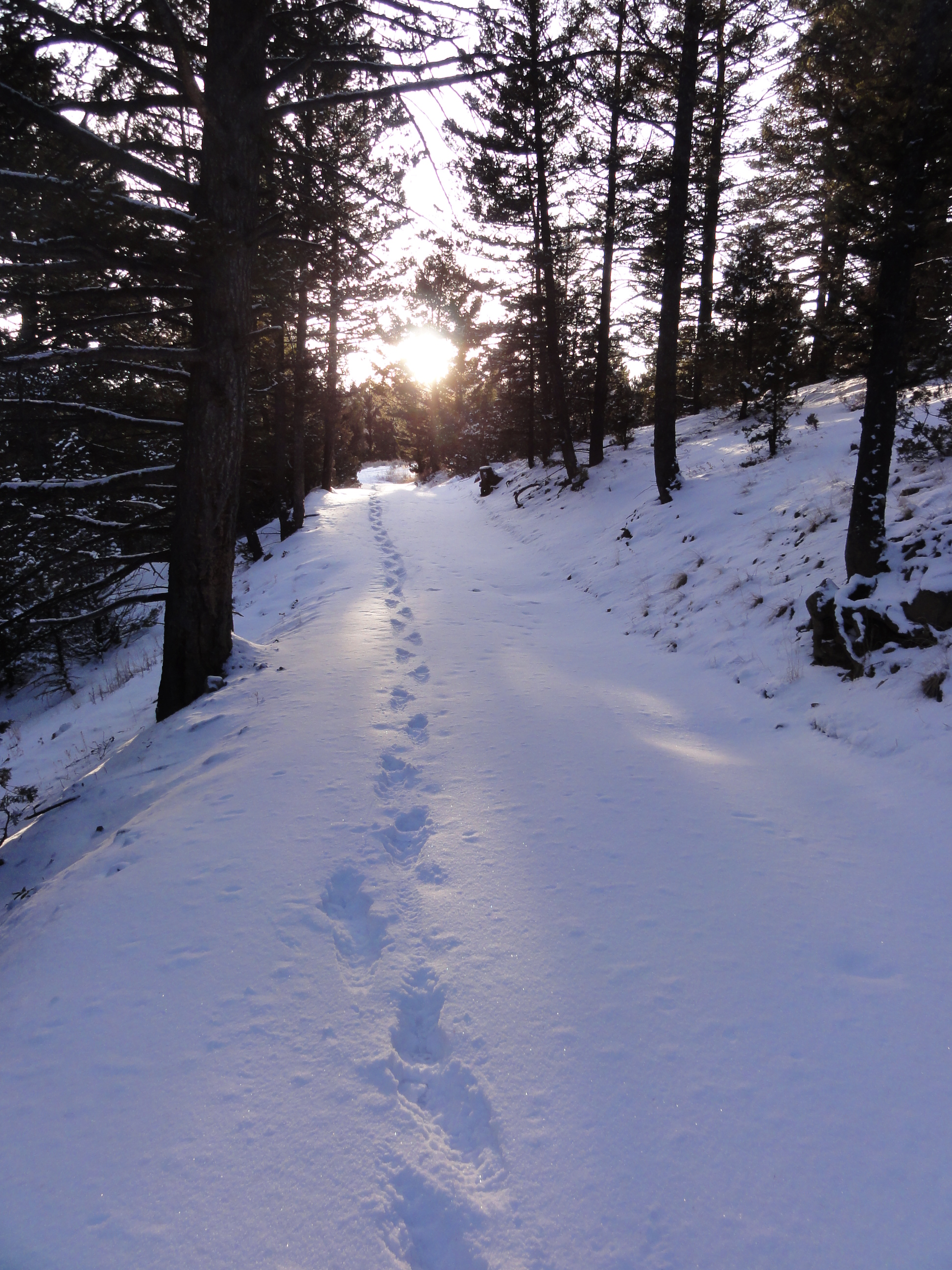
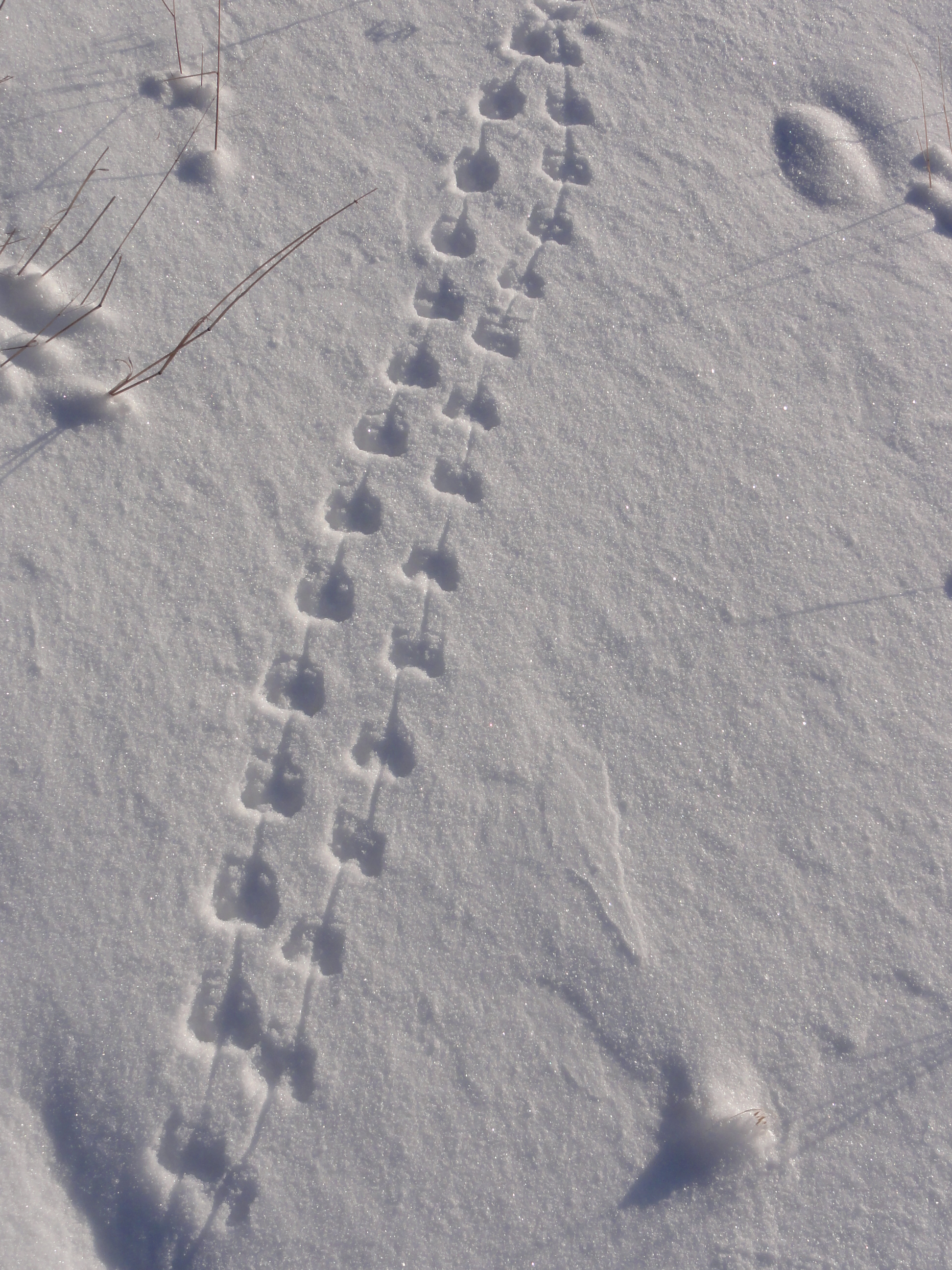
Sunny day, temps in the 20s, and no wind – a perfect winter day.   Lots of animal tracks, but only actually saw a few ravens, and a herd of elk on a hillside about a mile away.    The way in to the cabin is mostly downhill, with just a couple of steep uphill slogs.    Oddly enough, the route out is mostly uphill.  Go figure.

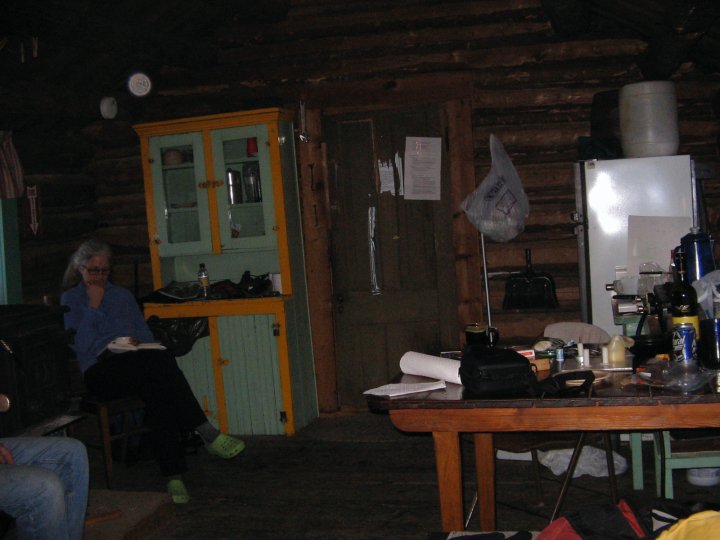
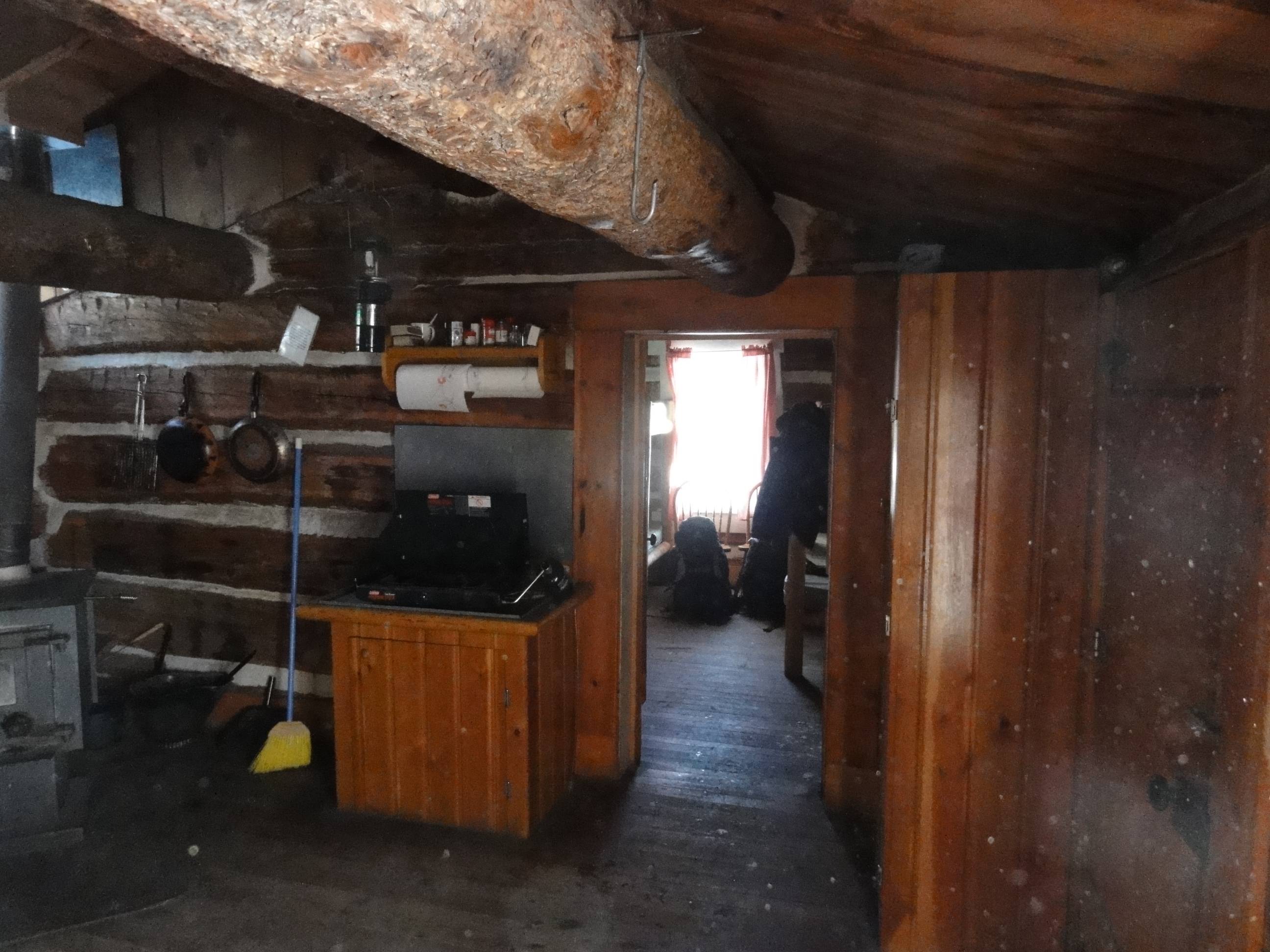
We arrived two hours later, just as the sun was setting.   This cabin is so well built that it only took around 45 minutes to warm it up.   Caviar and cosmos in a toasty cabin in the middle of the mountains is really pretty darn nice as far as I’m concerned:

A little caviar, a little vodka...

And the pepper steak sandwiches were pretty darn good, too:

All in all, a nice way to celebrate the longest night of the year.     A few more pictures:

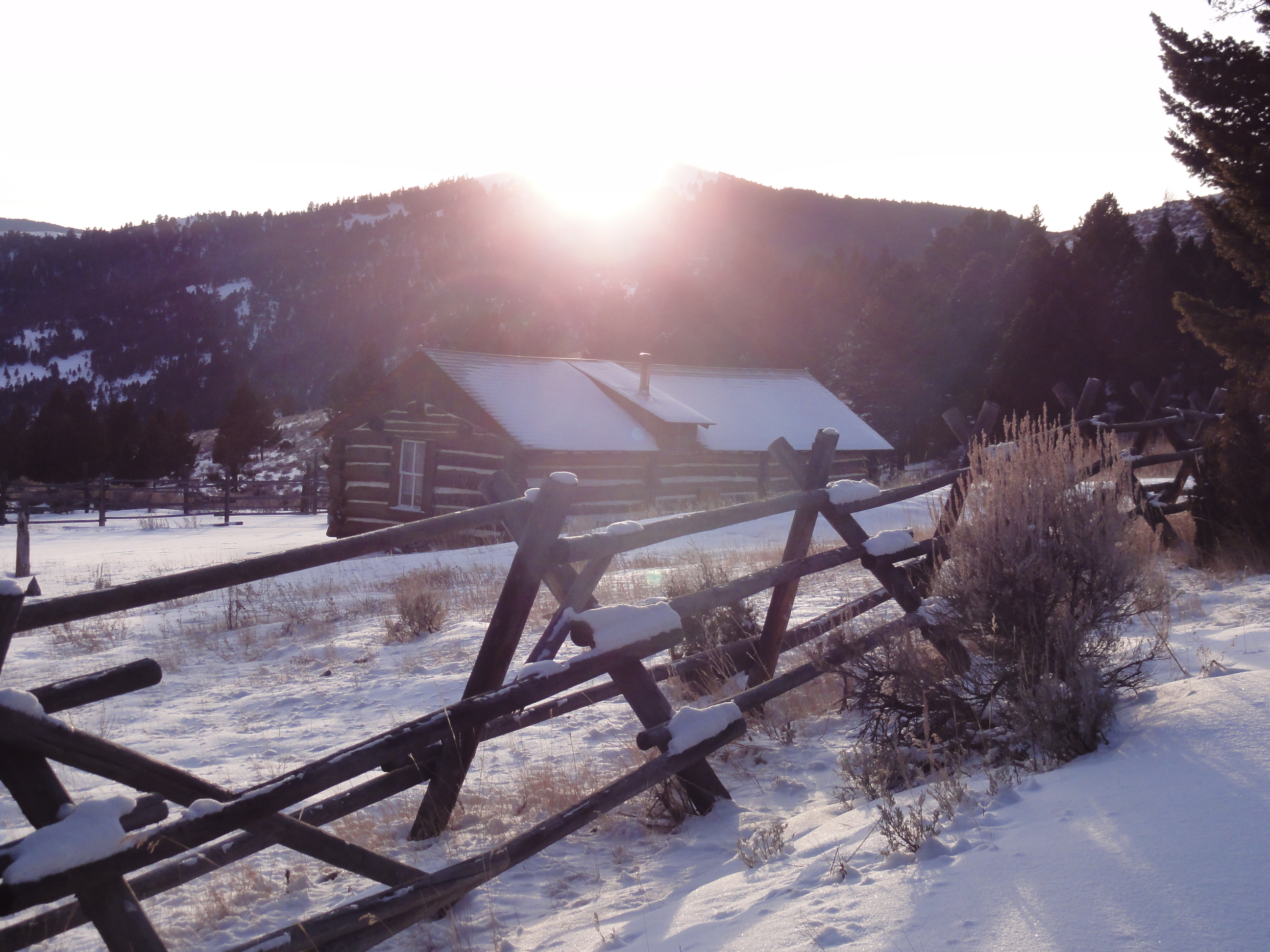
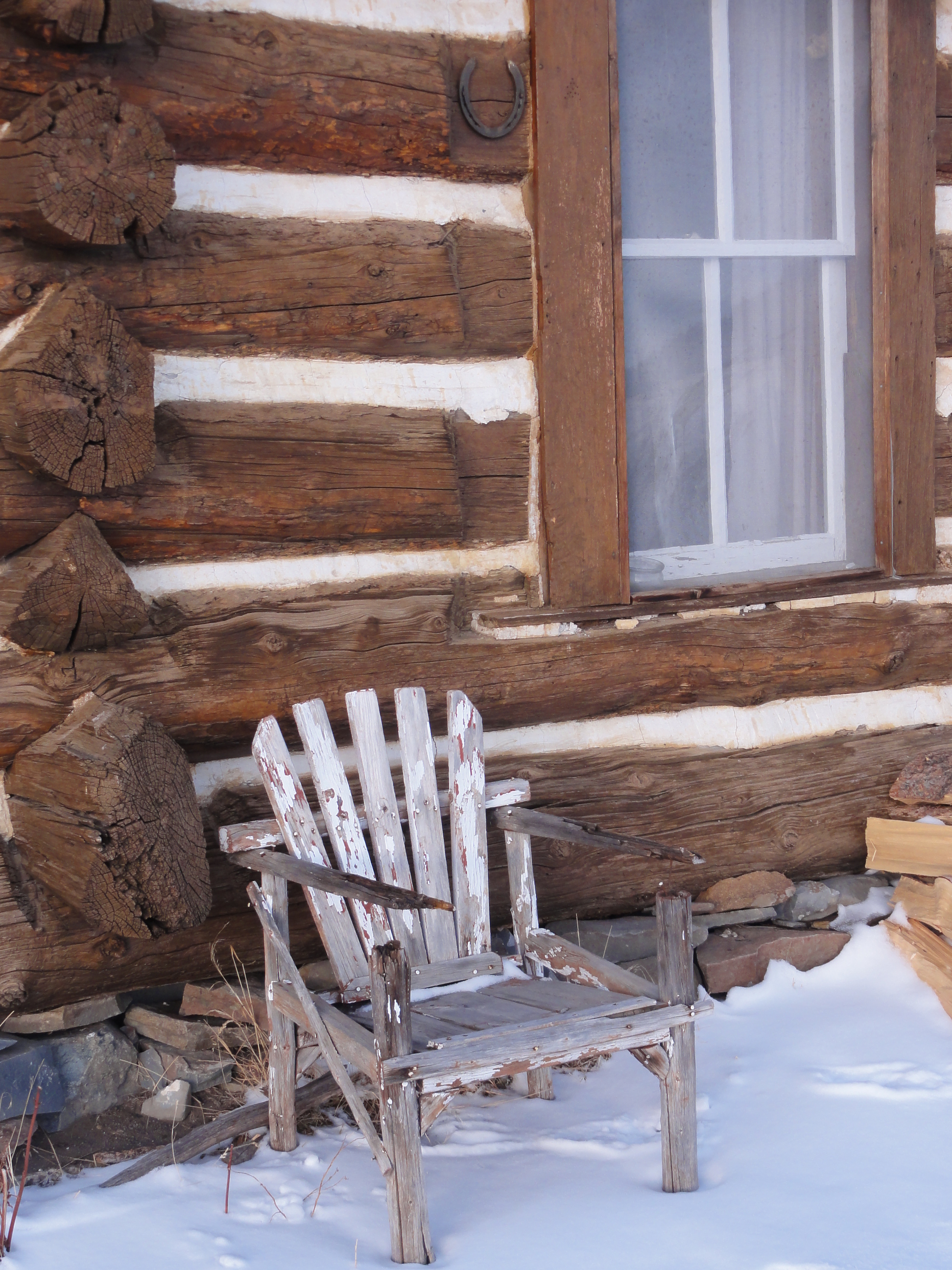
Cabin at sundown

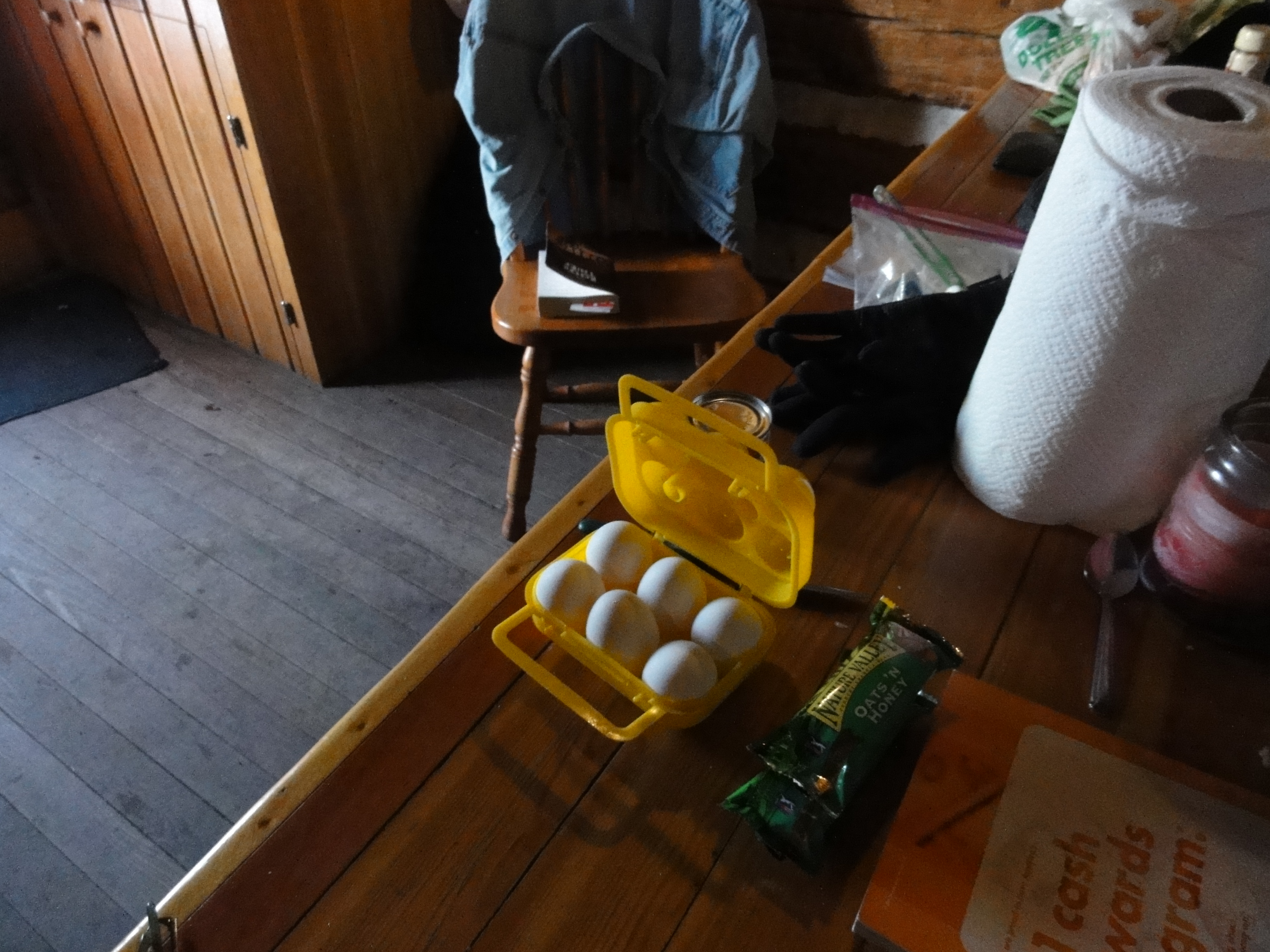
How to carry eggs in a backpack

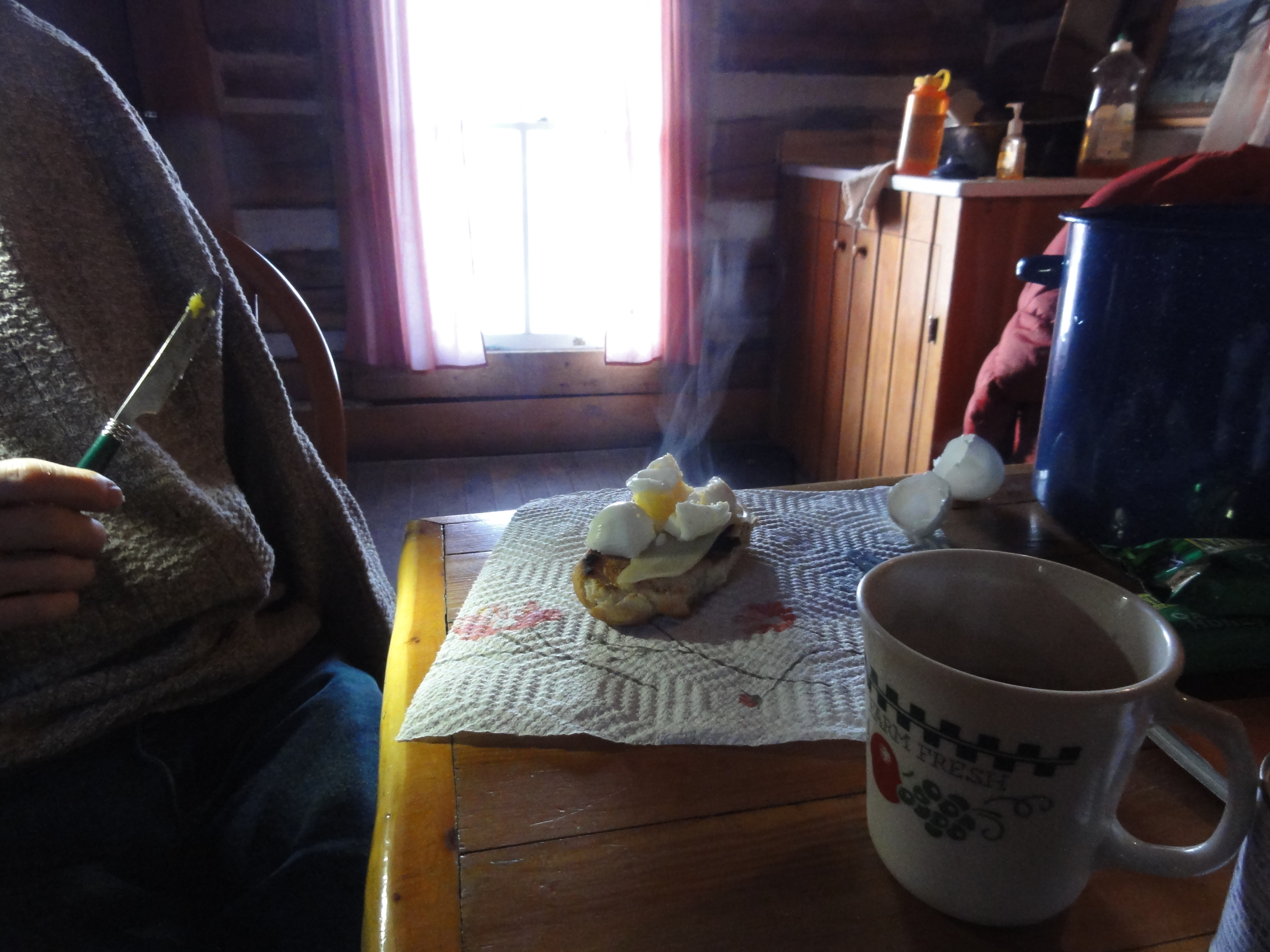
toast, eggs, and coffee


Posted in Adventure, Camping, Food, Hiking, Montana, Nature, Outdoors, Photography, Travel | Tagged , , , , , , , , , | 9 Comments